Phyllida Trounce
Night TrainPhyllida Trounce is Jennifer Rockwell’s former college roommate and the person who confirms that Jennifer visited her in the week before her death. Her story reaches the reader in fragments: a crisis that disrupted college life, a graduation photograph with an unsettling figure at its edge, and a hesitant conversation with Mike Hoolihan years later. She becomes an important link in the investigation, but not its answer. The distinction matters: Mike is tempted to turn her illness and Jennifer’s visit into an explanation, while the evidence Phyllida can provide remains much narrower.
College Crisis and Graduation
Phyllida shared a house at CSU with Jennifer and two other girls. During their time as roommates, she became severely unwell. Trader Faulkner recalls a rapid change: Phyllida could be found staring at a bathroom wall or howling outside, and Jennifer could not manage living alongside the crisis. Jennifer left and returned to the Rockwell home. There she encountered Mike Hoolihan, then drunk and babbling in her brother’s bedroom. The episode places Phyllida’s illness within the unsettled orbit of Jennifer’s youth, but it also shows its practical cost: Jennifer withdrew from the household rather than remain in an atmosphere she could not cope with.
Phyllida was heavily sedated, yet she remained at CSU long enough to graduate. A family member took her in, and for a time she continued to appear in the stories Trader told Jennifer; later, references to her dwindled. The account gives no diagnosis or detailed treatment history. It does, however, establish a concrete sequence—crisis, sedation, graduation, a change in living arrangements, and then diminishing contact—rather than presenting her illness as a single dramatic episode with a neat resolution.
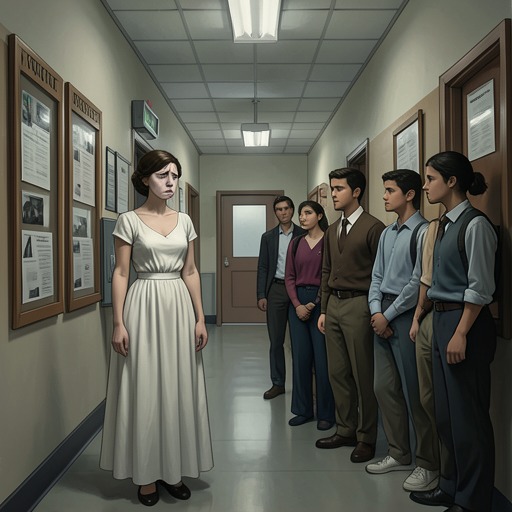
The graduation photograph makes that sequence harder to settle into a recovery story. Three girls in gowns and flat hats are bent over with laughter; a fourth figure is caught at the edge of the frame, apparently untouched by it. The surrounding conversation turns to whether Jennifer might have been taking drugs, and Trader rejects the suggestion. The photograph’s contrast is more troubling than explanatory. In the context of Phyllida’s graduation, the isolated fourth girl appears to draw attention to the distance between the public milestone and the continuing vulnerability associated with her. The image does not establish what she felt or what happened to her afterward, but it gives the remembered graduation an unresolved, watchful quality.
The Connection to Jennifer’s Death
Phyllida and Jennifer lost touch after college, though they wrote to each other for a time. Phyllida says she was not someone who went out much. That sparse account makes Jennifer’s later visit significant without making the friendship more intimate than the evidence supports. When Mike asks whether Jennifer came to see her in the week before she died, Phyllida confirms that the visit happened on the Thursday before the death.
The answer lands against Mike’s already forming theory. Before Phyllida confirms the visit, he tells himself that he knows why Jennifer killed herself: she had entered this house. That certainty reveals the danger in treating proximity as motive. Phyllida can verify a date and a meeting; she does not disclose what passed between them or why Jennifer later died. The distinction between a confirmed visit and an unknowable reason is central to the encounter. Phyllida supplies a real investigative connection, but the record of that connection does not become an explanation of Jennifer’s state of mind.
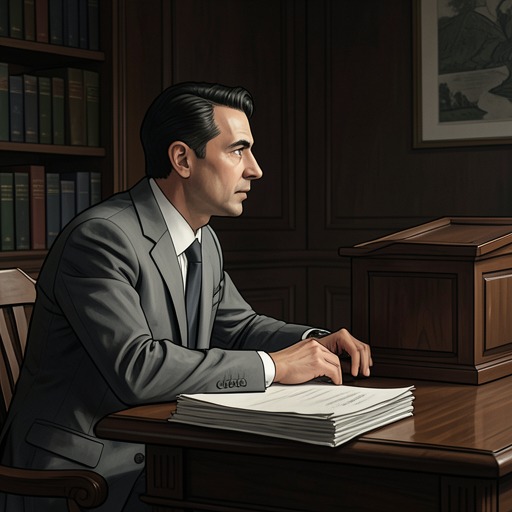
The conversation takes place in Moon Park, where Phyllida is living in the Crescent with her stepmother. Mike has called the CSU Dean of Admissions to find her address, then drives across the river and over Hillside. Moon Park is also where he was born, and passing the poorer neighborhood where he grew up brings back fear attached to his childhood home. The route gives the visit a double bearing: Mike is going to question a former roommate, but he is also driving through a landscape already charged by his own past. That emotional pressure helps explain his impatience; it does not make his first interpretation of Phyllida’s role reliable.
The Visit and Its Limits
Phyllida’s house is cold and muffled with dust. She sits in her chair with a distant gaze, while a quiet man wearing earphones remains nearby and her stepmother moves about in another room, stumbling and groaning. These details register the conditions of the visit, not a clear account of Phyllida’s diagnosis or household. Mike hears the stepmother’s distress and wonders aloud whether she is ill too, but the scene does not confirm what is wrong with her.
Mike asks Phyllida to count her stabilizing pills, naming Tegretol as a possibility. While she is away, he listens to the earphones’ steady buzz and the stepmother’s exhausted movements. Phyllida returns and says that six pills are missing. The count gives Mike a specific fact to check, but the passage does not establish that the missing medication explains Jennifer’s death, or even what the count ultimately proves. As with the visit itself, a concrete detail raises a question without settling it.
Mike eventually describes Phyllida as having no real weight in the matter, only as the connection through which he can reach Jennifer’s last days. The judgment is revealingly double-edged. It limits what can be claimed from Phyllida’s testimony, yet it risks reducing her to a device in someone else’s investigation. Her pauses, her reported difficulty getting lost while giving directions by phone, and the subdued household around her make the interview slow and difficult for Mike. The account shows his frustration plainly, but offers no basis for treating her halting manner as concealment.
Memory, Illness, and Narrative Significance
A later memory places Phyllida at the Rockwell home in an earlier period, when Mike was sweating alcohol into the blankets in Jennifer’s brother’s room. He turned toward the window and found Phyllida staring at him from only a few feet away. The recollection is brief and gives no account of what either understood about the other; its force lies in the mutual, silent recognition. Mike remembers the pair as ghosts, an image that links this earlier sighting to the later interview, where Phyllida appears to him like a figure preserved in a photograph.
Phyllida’s continued presence in the narrative resists a clean ending. She was sedated and graduated, was taken in by family, lost contact with Jennifer, and later lived in Moon Park while taking stabilizing medication. Mike’s closing reflection that Phyllida and her stepmother are still walking places her among people who persist through ordinary, difficult routines. It neither resolves her condition nor turns her into a symbol detached from her circumstances. Instead, her character marks the limits of what an investigation can recover: a person can remain alive, reachable, and connected to a death without holding the key to its meaning.