Suicide and the unknowable “why”
Night Train“Suicide and the unknowable “why”” is the unresolved question at the heart of the investigation into Jennifer Rockwell’s death. Mike Hoolihan can gather facts, test explanations, and call the case solved, yet none of those acts can make Jennifer’s decision fully legible. The search moves from the expected puzzle of who did it toward the more difficult question of how a person’s inner life can remain unknown even to those who loved her.
The case and its central question
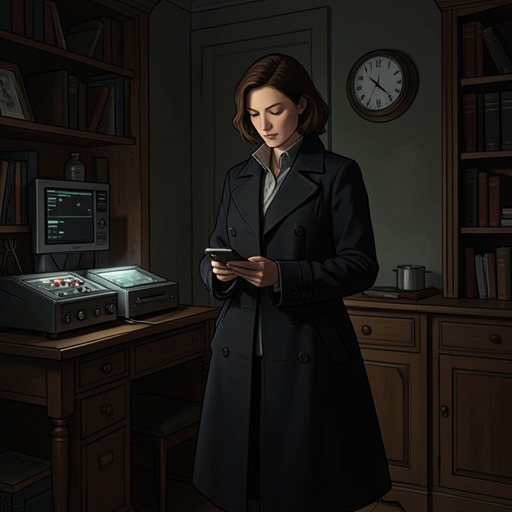
On April 2, Mike considers the case solved and closed, but recognizes that the solution has produced further complexity rather than settled meaning. He is about to meet Paulie No, a state cutter who examines bodies and determines how people died. Mike anticipates two questions and two answers, as though the meeting could complete the investigation. Yet his own account undercuts that expectation: he calls the case the worst one and describes its result not as a clean resolution but as a firm knot loosened into separate ends.
That tension distinguishes a finding about death from an explanation of a life. Jennifer is dead, and the investigation has accumulated information about the circumstances. But the evidence does not yield a single motive that would make her death feel inevitable or comprehensible. Mike’s declaration of completion and his continuing bewilderment coexist; the case can be procedurally closed while its most important question stays open.
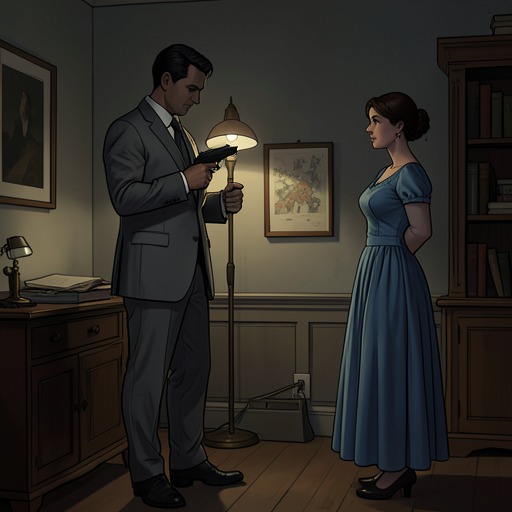
The narrative gives that uncertainty a clear image. Tom Rockwell describes Jennifer’s death as a woman falling out of a clear blue sky. The image is not an alternative account of what happened; it conveys how sudden and causeless the death appears to those around her. Tom says that, on the night she died, his feelings toward her had remained devoted and secure. He even wishes, in his grief, that he had killed her, because a homicide would at least offer a definite culprit and an open-and-shut explanation. His distress makes the contrast plain: a solved crime might be easier to bear than a death whose cause cannot be made emotionally intelligible.
Patterns, statistics, and the individual
Mike’s notes turn to patterns in suicide, but the information repeatedly resists application to Jennifer. She was twenty-eight, an age that the notes place within a relatively flat stretch of the statistical risk curve between the twenties and the increase associated with midlife. The numbers give the investigator a population-level frame; they do not explain why this particular person died at this particular time.
The notes also record that many people who die by suicide have attempted it before, that many give warning, and that many have histories of escape. As far as Mike knows, Jennifer had not attempted suicide before and had given no warning. He recalls that she saw things through. These observations sharpen rather than resolve the contradiction between an apparently steady public life and her death. They describe what is absent from the available history, not a hidden motive that the investigation can confidently supply.
A further note concerns access to means: suicide rates can change when a commonly available means is removed, while Jennifer owned a gun. The investigation therefore considers practical conditions as well as psychological ones. Mike also writes that suicide notes are reported at markedly different rates in different studies and may be removed by bereaved relatives; he believes Jennifer wrote a note, although apparently no note was found. The distinction matters: his feeling that a letter existed is not the same as recovered evidence. The notes themselves insist that suicide can be camouflaged and can generate misleading data.
The inquiry’s working list, headed Stressors and Precipitants, makes the same difficulty visible in another form. Its early entries include Trader Faulkner and unanswered questions about what he might not have seen, as well as money. Later, Mike considers whether mental health might be psychological, organic, or metaphysical. He crosses out those possibilities and another name, Arn Debs, until the list has no remaining explanation. The act of crossing items out does not prove that stress, relationships, or illness were irrelevant; it records the failure of the investigation to establish them as a sufficient account.
Why does not function like a clue
The investigation also exposes a difference between the conventions of homicide and the expectations surrounding suicide. Mike observes that homicide investigators have little use for motive: the work is directed toward identifying a perpetrator and establishing a case. Popular crime stories promise a tidy fit between crime, psychological profile, alibi, and punishment, but that familiar structure is not a reliable model of this investigation. Suicide, by contrast, makes the question of why difficult to avoid. Family members and investigators seek an account that would connect a person’s death to a recognizable cause.
Tom’s anguished question about who Jennifer was presses Mike to answer for the dead woman, even when he cannot. It follows a period in which Tom had been unable to speak with those close to him; now that he can speak, he wants the conversation to continue, while acknowledging that Mike may have invented parts of his account. The exchange makes knowledge itself unstable: the investigation may contain false explanations, but dismissing those explanations does not restore an accessible truth.
Mike’s account of Trader offers a compact illustration of the limits of an event-based explanation. Trader recounts small mishaps on his way down the stairs and out of the building, then says he was suicidal. The sequence provides circumstances and a state of mind, but it does not establish that such incidents explain Jennifer’s death. Placed alongside the emptying stressor list, it warns against treating a moment of distress, a relationship problem, or one apparent precipitant as a complete cause.
Law, classification, and judgment
The question of why is entangled with the question of how society names suicide. Mike notes that in the city Jennifer’s act was a crime, even though she escaped punishment and public disgrace. He contrasts this with an earlier legal history in which suicides could lose their property like other felons. The historical account gives legal classification material consequences: the dead could be treated not only as subjects of medical inquiry but as offenders whose estates were at stake.
In the present, the coroner’s work is located in the Chief Medical Examiner's office. Jeff Bright returns a finding of undetermined. Tom had pushed for an accidental ruling but ultimately accepted the undetermined classification, as did the others. That finding does not mean that nothing is known; it marks the boundary between the available evidence and a conclusion the authorities can support. Jennifer is absolved of a definitive public label, but the classification cannot provide a motive or close the emotional question.
Mike refuses to make that absence a reason to condemn her. He remembers that Jennifer had cared for him when he was recovering at the Rockwells' home, and recalls her own difficulties as a young woman: a rejected boyfriend who would not let go and an unsettled housemate. She had been frightened by the phone and doorbell, yet still read to him and tended to him. These memories do not explain her death. They establish instead that vulnerability and care had coexisted in her life, and that Mike’s refusal to judge her is bound to his memory of how she treated him when he was defenseless.
Clear skies and impaired seeing
Near the end of this line of thought, Mike exhausts his categories and realizes that the night train has already passed. On the evening Jennifer died, the sky had been clear and visibility excellent; the failure lay in the seeing. The contrast gathers the concept’s central distinction into a single image: outward conditions may be plain, observations plentiful, and the scene apparently visible, while understanding remains limited.
The image also resists turning uncertainty into a hidden solution. Mike’s investigation can correct a false account, recognize the limits of its evidence, and preserve Jennifer from a judgment it cannot justify. It cannot convert statistics, old legal categories, personal recollection, or the final medical classification into a definitive answer about her inner life. “Suicide and the unknowable “why”” therefore names not an unsolved whodunit but the harder remainder after the who and the official finding have been addressed: the difference between knowing that a death occurred and knowing why the person died.