Egor
Night WatchEgor is a young Moscow boy whose encounter with vampires on a winter night thrusts him into the hidden world of the Others, revealing his extraordinary latent magical potential and an undetermined destiny that makes him a crucial pawn in the struggle between the Night Watch and the Day Watch.
Identity and Background
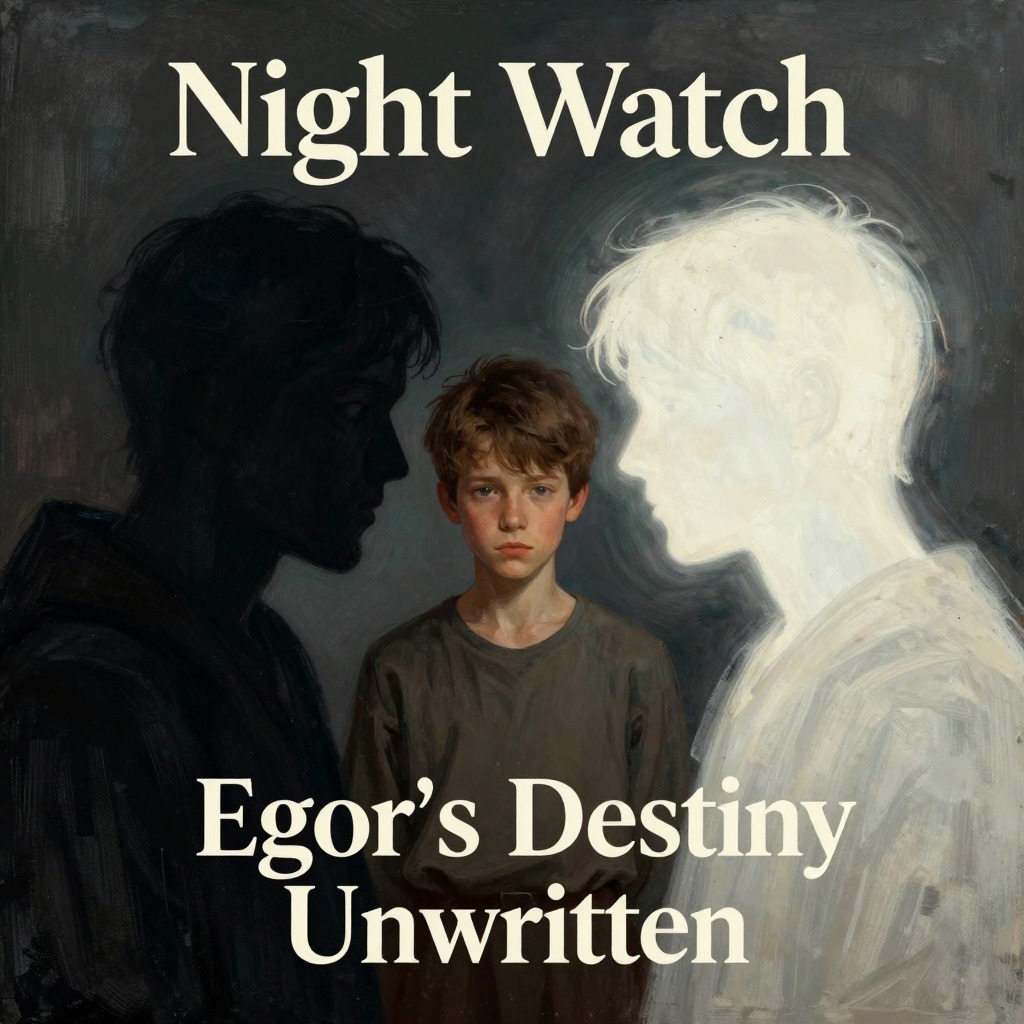
Egor is a boy of about twelve or thirteen, described as skinny and frail, with a thin neck and a tendency to be afraid of things like young thugs, maniacs, and terrorists—dangers he previously considered distant. He is a swimmer, returning home late from the pool on the night of the attack. His family lives in a massive, slab-like apartment building on stilts, a structure Anton Gorodetsky describes as a "good house for killing in." Egor's parents are ordinary humans, unaware of the supernatural world. His most defining trait is his aura: a shimmering, semi-transparent glow that shifts between red, green, and dark blue, a rare sign of a destiny still undefined and undifferentiated potential. This aura, normal for children up to two or three years old but almost completely absent in older people, marks him as a "real delicacy" for vampires and a prize for both the Light and Dark sides.
The Vampire Attack and First Contact with the Twilight
On the night of the attack, Egor feels a strange, pricking sensation of being watched as he rides the metro home. He hears an alluring, soothing melody—the vampires' Call—that compels him to leave the main avenue and enter a dark alley. There, he is confronted by a young male and female vampire. The female vampire, with her black, magnetic eyes, attempts to lure him closer, and Egor finds himself unable to resist, taking a step toward her despite his terror. He sees her fangs extend and is on the verge of being bitten when Anton Gorodetsky, a Night Watch agent, intervenes. Anton kills the male vampire and drives off the female, shattering the Twilight dimension the vampires had created. Egor, instead of fainting as expected, flees the scene, demonstrating a remarkable resistance to the Call and the magical trauma. He retains a clear memory of the event, a fact that deeply troubles him, as he knows no one will believe what he has seen.
Entering the Twilight and Meeting the Night Watch
The following day, terrified and alone in his apartment, Egor tries to protect himself with garlic and a silver chain, relying on folklore he has seen in films. When Anton and his partner, the owl Olga, enter his apartment through the Twilight, Egor's fear triggers an involuntary and unprecedented act: he enters the Twilight world on his own, without any training or magical assistance. He sees Anton and demands to know who he is. Anton introduces himself as a Night Watch agent and explains the existence of the Twilight world and the Others. Egor, however, loses consciousness and slips into a Twilight coma, a dangerous state for a novice. Anton rescues him by cutting his own wrist and using his blood to pull Egor back to the human world. During their conversation, Anton reveals the harsh truth of the Great Treaty, which allows licensed vampires to hunt humans. This revelation shatters Egor's trust, and he angrily tells Anton to leave, feeling betrayed by the very system meant to protect him.
The Roof Confrontation and a Choice
Egor is later taken hostage by the female vampire who escaped the initial attack. She uses the Call to lure him to the roof of his building, where she holds him at knifepoint, demanding negotiations. During the standoff, the Dark Magician Zabulon appears, claiming both the vampire and Egor for the Day Watch. In a moment of desperation, Egor demonstrates his growing power by withdrawing deeper into the Twilight, escaping the vampire's grasp. Anton follows him into the second level of the Twilight, where Egor, disillusioned and questioning the point of living, contemplates staying there forever. Anton convinces him to leave, but not before Egor asks a pointed question: "Why do you want to save me? Does your Night Watch need me?" Anton admits he doesn't think Egor will join the Watch, a moment of honesty that seems to resonate with the boy. After the confrontation is resolved, Egor refuses the Night Watch's offer of protection, telling Anton and Boris Ignatievich that they are "all bastards." He leaves the roof, his aura still undetermined, having rejected both sides.
The Climax on the Roof: Destiny Erased
Months later, Egor is brought to the roof of the same building for a final, climactic ritual. Gesar, the head of the Night Watch, has orchestrated a plan for Svetlana Nazarova, a newly emerged Great Sorceress, to use the Chalk of Destiny to rewrite Egor's fate, turning his undetermined potential into a force for the Light. Egor is initially happy, believing he is about to be helped. However, when the moment of decision arrives, Svetlana, influenced by Anton's own act of self-sacrifice and refusal to give her advice, chooses not to rewrite his destiny. Instead, she erases the lines in the Book of Destiny, leaving Egor's future completely blank. He collapses, curled into a pitiful bundle, his destiny erased rather than rewritten. This act, while freeing him from being a tool of either Watch, leaves him in a state of profound uncertainty, his potential now a void rather than a promise.
Thematic Significance
Egor's character arc embodies the novel's central conflict between predetermined destiny and free will. His undetermined aura makes him a symbol of pure potential, a blank slate upon which both the Light and Dark forces attempt to write their own narratives. His journey from a terrified victim to a disillusioned survivor who rejects both sides highlights the moral ambiguity of the Watches' methods. His ultimate fate—having his destiny erased rather than shaped—represents a radical act of liberation, but also a profound loss. He is left as a figure of pure possibility, a living question mark in a world that demands clear allegiances. His story underscores the novel's theme that the greatest battles are not between Good and Evil, but over the right to define what those terms mean, and that true freedom may lie in refusing to be defined at all.