
The Cyril Alardyce Family Scandal
Night and DayThis flow follows the discovery of Cyril Alardyce’s long-standing unmarried family and the Hilbery relatives’ struggle to impose their moral and social expectations.
increasing Bearing strength in each event
 decreasing
Bearing strength in each eventdecreasingA Family Secret
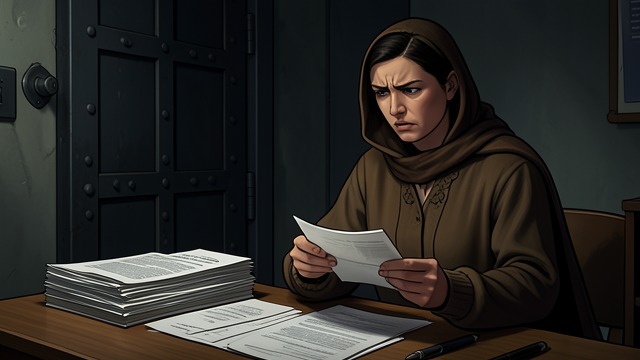
News from the Relatives
Conflicting accounts
Katharine receives letters revealing that Cyril Alardyce has lived for years with a woman and has children by her. The accounts disagree over blame, propriety, and what the family should demand.
A name at stake
The relatives emphasize the Alardyce name and the unborn child’s social legitimacy. Their anxiety is as much about family standing as about the needs of the woman and children.
The Family Deliberates
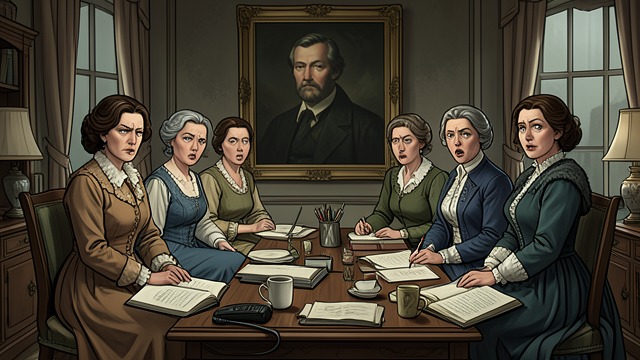
Competing Moral Stories
Duty and concealment
Trevor Hilbery says the family has little to do and prefers to avoid unnecessary discussion. Katharine is troubled by how quickly he turns a human situation into a question of discretion.
The women intervene
Mrs. Milvain and Cousin Caroline argue that Cyril should marry the mother of his children, while Mrs. Hilbery moves between indignation and imaginative excuses. Their differing responses expose the family’s unstable moral language.
The Relatives’ Investigation

Evidence and Assumption
A visit to the address
Mrs. Milvain describes searching for the woman and children in a poor London street. Her account turns observation into a moral verdict before the family knows the couple’s own understanding of their situation.
Katharine resists easy judgment
Katharine wants to understand Cyril’s point of view, even as she recognizes that he concealed important facts from the family. Her response differs from the relatives’ desire to settle the matter by convention.
A Story Left Unsettled
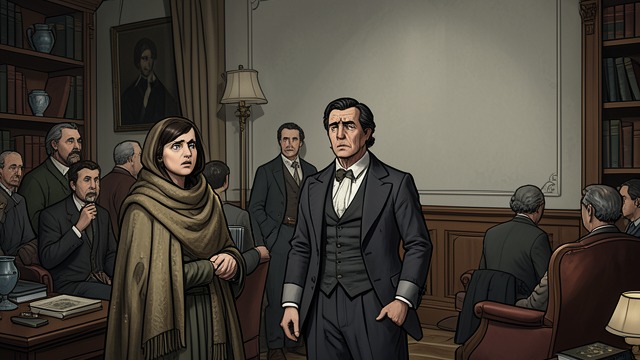
Consequences Beyond the Parlor
No neat resolution
The relatives discuss marriage and legitimacy, but the novel does not show them resolving the future of Cyril’s household. Their concern remains filtered through status, family duty, and the preservation of appearances.
A counterpoint to courtship
The scandal unsettles the assumption that marriage is the only meaningful measure of a relationship. It also reveals how conventional authority can claim to protect people while speaking over them.
Katharine’s Moral Independence
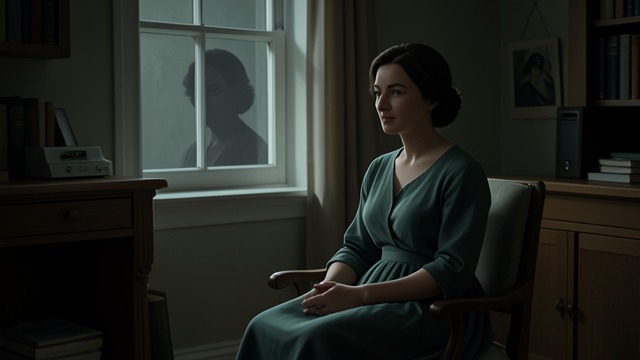
Private Judgment
A personal implication
Cyril’s case makes Katharine consider what Ralph Denham and Mary Datchet might think about her family’s response. She begins to question the moral framework in which her relatives discuss love and marriage.
The cost of convention
Her reflections contribute to a wider refusal to accept inherited rules as sufficient guides. The episode matters less for a final verdict on Cyril than for the question it places before Katharine about her own choices.
when letters arrive before the Christmas visit
the following morning
during the family gathering at Cheyne Walk
after the Christmas confrontation
as she begins to question her own engagement
