Women’s suffrage vote setback
Night and DayThe Women’s suffrage vote setback is the renewed failure of women to secure the vote after a Parliamentary maneuver pushes the question beyond their reach. For Mary Datchet and her colleagues, the defeat is at once a political reversal and a test of method: despair in the office gives way to a practical reorganization of the campaign, while the movement’s persistence is framed as work extending beyond any one lifetime.
Causes and Background
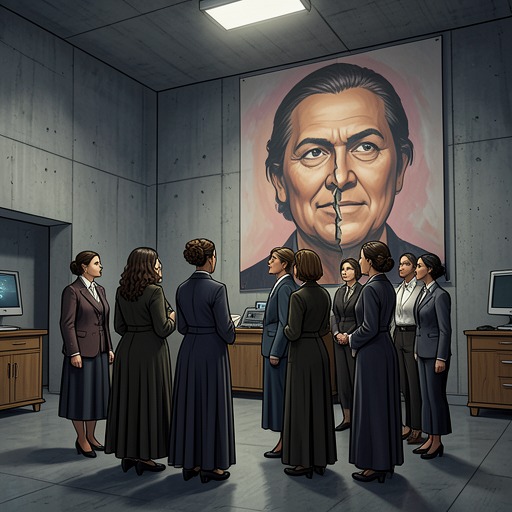
The setback takes place against the continuing work of a suffrage office in Russell Square. Mary is an unpaid amateur worker, but she treats the cause as a serious vocation: she arrives among the clatter of typewriters, attends to correspondence, and is charged with organizing entertainments to raise funds for a society already short of money. Her ambition reaches beyond keeping the office running. She hopes to gather notable participants into a week-long program that will catch the attention of Cabinet Ministers and give familiar arguments new force.
The effort is built from routine as much as public persuasion. Mary thinks about conserving notepaper without hurting Mrs. Seal’s feelings, and about remaking the society rather than allowing it to settle into habit. Her concern with small arrangements sits beside a larger political aim: to make the organization effective enough to carry its case into public life. That combination of office labor, fundraising, and attempted influence forms the immediate background to the vote’s disappointment.
The Parliamentary Reversal
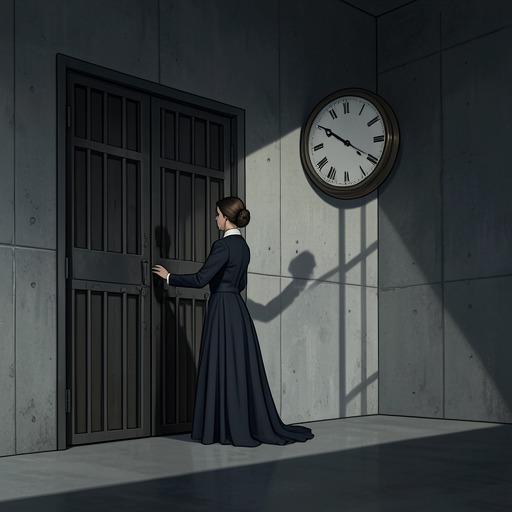
Mary returns to the office to learn that an obscure Parliamentary maneuver has once again placed the vote beyond women’s attainment. Mrs. Seal responds with barely contained fury. She sees the outcome as duplicity by Ministers, an insult to women, and a blow to civilization and to her life’s work; newspaper cuttings marked with her blue annotations litter the office. The defeat also forces her to admit that she misjudged human nature.
Mrs. Seal’s anger does not become a rejection of the cause. Looking toward the pedestrians and omnibuses passing Russell Square, she distinguishes the people from their leaders: she continues to believe the public might grant justice if the case were put directly to them, and directs her indignation instead at the men in Parliament. The setback thus sharpens her account of the obstacle. In her view, the failure belongs not to the justice of the claim but to those who control the political decision.
Reorganization and Response
Mr. Clacton meets the news in a different spirit. He treats reverses as familiar features of political campaigns and takes the setback as a reason to outwit the opposition. His proposed response is laborious and administrative: revise the card index, issue new lemon-colored leaflets, and map suffrage organizations across England. Under the plan, local information would be sorted by district and kept with its own flag, ink bottle, and documents, so that the society could retrieve facts county by county.
Clacton imagines the organization as a telephone exchange connecting it with districts across the country. The metaphor gives a new shape to the work: the office should gather information about what people think and circulate arguments in return. The plan is still only roughly sketched, and its dependence on filing, correspondence, and sustained labor is conspicuous. Yet it turns defeat into a practical question of reach and coordination rather than a reason to stop.
Persistence and Significance
Mrs. Seal presents the cause as a succession of generations. Her father was a pioneer; she has continued after him; now, she tells Mary, the future rests with younger women. She would give a thousand lives to the work and calls it not merely the cause of women but the cause of humanity. Her insistence that the task will outlast any one worker gives the setback a long horizon: political failure is not the end of the campaign but another point in its inheritance.
The scene holds conviction and frustration together. Mrs. Seal believes the distinction between right and wrong should be plain and that justice ought to be embodied in legislation, yet the vote has again failed to follow what she regards as elementary reason. Clacton answers the same reversal through organization; Mrs. Seal answers through renewed faith in the cause and its successors. The episode makes the movement’s persistence visible in the office itself—in its cuttings, cards, leaflets, maps, and continuing labor—where a blocked political outcome becomes the occasion for another attempt.