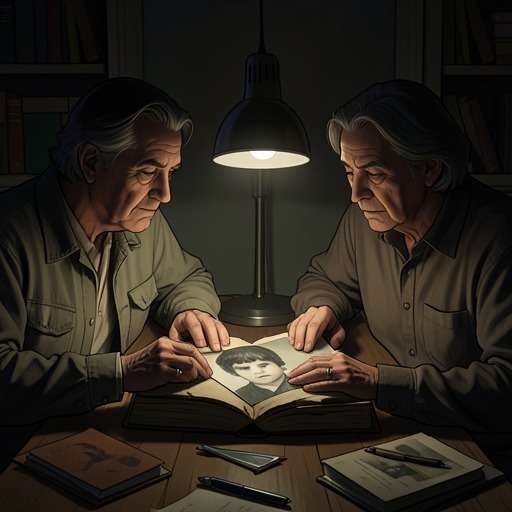
At least you weren’t close
Nine Perfect Strangers“At least you weren’t close” is a consolation offered to Zoe after the death of her twin brother, Zach, and a refrain she later repeats to herself. The phrase’s apparent comfort rests on distance: if the twins were not close, perhaps the loss should hurt less. But its recurrence exposes the opposite. It cannot explain away grief; it gives Zoe’s anger and pain a form she can hear again and again.
Origin and Context
The words come from Cara, Zoe’s friend, who said them the day after Zach’s funeral. Cara was close to her own sister, a contrast that makes the attempted reassurance especially stark: she offers Zoe a measure of comfort drawn from a sibling bond unlike the one Zoe describes. The phrase therefore enters the story not as a neutral assessment, but as something said to a bereaved person in the raw aftermath of a funeral.
When Frances asks for her brother’s name, Zoe answers that he was Zach and explains that they were twins. Saying his name feels strange and painful; she hears a roaring in her ears and feels close to fainting. She calls their names “very cutesy,” while Frances responds warmly that they are lovely. The exchange makes the phrase’s hidden pressure visible: Zoe can say that she and Zach did not get on, but naming him and naming their twinship still brings grief into her body.
Repetition and Meaning
Zoe recalls Cara’s words in her head as she struggles with what Zach’s death means. She feels as though she is merely waiting out her life, counting off days and years without reaching a point when things improve. She is angry with Zach and cannot forgive him; his death feels to her like the ultimate rejection. Against that experience, the phrase “At least you weren’t close” offers a blunt, inadequate counterweight.
The thought becomes a repeated formula: “At least we weren’t close. At least we weren’t close. At least we weren’t close.” Repetition does not settle the matter. Instead, it shows Zoe trying to live inside an explanation that cannot contain her loss. The phrase may describe the twins’ relationship as she understood it, but it cannot make Zach’s death inconsequential or free her from the anger and grief that follow it.
Reassessment and Afterlife
Later, Zoe tells Frances that she had felt Zach killed himself on purpose to make her feel bad forever, and that she had experienced this as the cruelest thing he could do to her. After a vivid encounter during the psychedelic experience, however, she feels as though they have talked again. This does not erase the earlier distance or turn Cara’s words into a solution; it marks a change in how Zoe can relate to her brother and to the unresolved hurt between them.
The phrase also sits beside the novel’s other accounts of bereavement without making those losses interchangeable. Napoleon knows the morning of Zach’s death through repeated scrutiny of his own memories: he sees his thumb pressing snooze, Heather finding Zach, and hears her scream. Masha’s recollection of her infant son’s accidental death turns on the few minutes she spent finishing a task before opening his bedroom door. These scenes show how a death can become bound to recurring memories and imagined alternatives. For Zoe, Cara’s sentence is one such return: an effort at consolation that keeps the distance between the living and the dead in view, even as the repeated name Zach reveals that the bond remains consequential.