Body acceptance
Nine Perfect StrangersBody acceptance in Nine Perfect Strangers takes shape as both a vivid psychedelic fantasy and a physical recognition: Carmel imagines abandoning her body for a more fashionable one, but returns to her own when her daughters reach for her. The episode places the promise of bodily reinvention against the lived body’s capacity to feel, hold, and care, while Masha interprets Carmel’s decision as a therapeutic breakthrough.
The body as burden and commodity
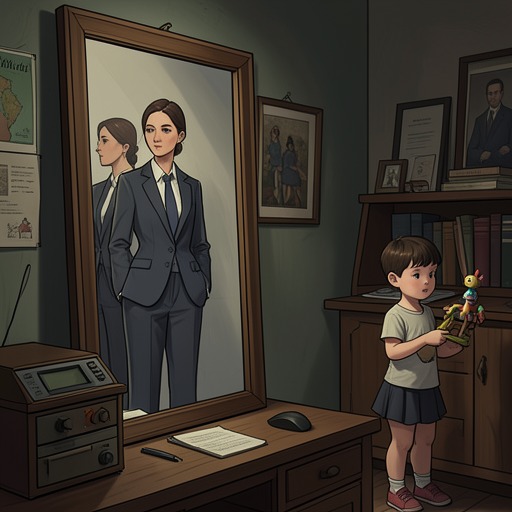
In a vision, Carmel sits in a plush velvet chair in a fashion shop specializing in designer bodies. She is not wearing one. The imagined release is itemized through what has disappeared: thighs, stomach, arms, cellulite, wrinkles, a caesarean scar, sun damage, and the upkeep of hair and appearance. Without the demands of concealment, correction, or maintenance, she thinks of herself as simply Carmel, apart from her body.
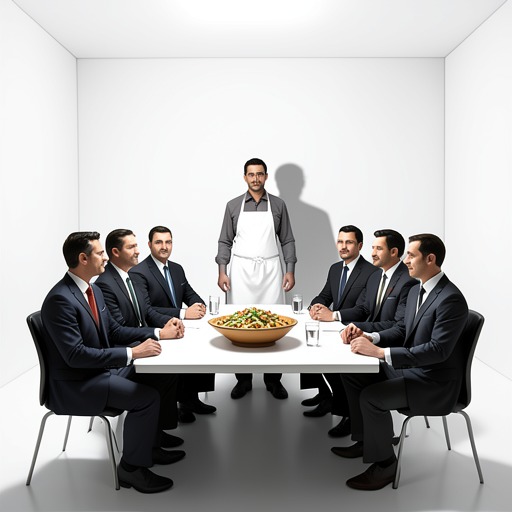
The shop turns that wish into a consumer choice. Masha, its manager in a Disney-princess costume, presents bodies from a rack as though they were garments, praising their shape and fashionability. One is Sonia’s body, with sleek blonde hair and a trim waist. Carmel rejects it not because it is unattractive but because its ankles are wrong for her taste and it is the same body as her husband’s new girlfriend has. Even inside the fantasy of bodily escape, her judgments remain entangled with comparison and the social meanings attached to appearance.
Lulu’s recognition and Carmel’s return
The decisive interruption comes from Carmel’s daughter Lulu. When Carmel tries to wipe peach from Lulu’s mouth, she remembers that she has no fingers. The missing fingers make the fantasy’s freedom concrete, but also expose what it costs: a body is not only a collection of features to assess. It is how Carmel acts in the world and reaches for her child.
Lulu points to Carmel’s old body, sagging from a door handle without even a hanger, and insists that it is her mother’s body. Carmel calls it her old body and says she needs a new one; Lulu remains firm. Faced with this simple refusal to treat her body as disposable, Carmel asks whether it can at least be taken in a few inches. Masha agrees to make it beautiful. Carmel sighs and puts it back on.
The change is registered through touch and effort rather than through a new ideal image. As her daughters throw themselves at her, Carmel cups their heads and notices the blue veins in her hands, her beating heart, and the strength of her arms as she lifts a little girl onto each hip. The body she had mentally catalogued by its flaws is now apprehended through what it enables: holding her daughters. She chooses to keep it, saying she will take it, while Masha assures her that she will love her body.
Masha’s therapeutic interpretation
The following chapter shifts to Masha’s perspective. She regards Carmel’s decision as a breakthrough in her body-image issues and believes the therapy is working as the research predicted. She also recalls that Carmel had tried to take off her clothes, an impulse Masha stopped, and characterizes their subsequent conversation as one about body acceptance. Masha experiences the result as a trophy: the metaphor gives her confidence in the program’s success, but also shows how readily a complex, intimate encounter becomes evidence in the leader’s account of therapeutic progress.
That confidence exists within a program in which guests have been given hallucinogenic drugs in smoothies without their consent. The novel therefore distinguishes Carmel’s meaningful experience from the certainty Masha assigns to it. Carmel’s vision supplies a powerful image of returning to her own body, but Masha’s conviction that the therapy has worked is her interpretation, not independent proof that the drug or the program has produced a durable change.
Embodied acceptance and the novel’s wider pattern
Carmel’s scene makes acceptance less a declaration of liking every feature than a shift in what her body means. At first, the imagined absence of her body seems to free her from age, scars, and the labor of presentation. Yet that absence also leaves her without fingers; the body cannot be separated from the ordinary acts of care that give her relationships their physical reality. The daughters’ embrace turns those details into a counterweight to the designer-body fantasy.
Other altered-state episodes give this recognition a broader context. During the same drug-assisted retreat, Napoleon imagines Zach present and experiences the family as restored for a moment; Frances later recalls vivid visions involving her dead friend Gillian and her father, and Zoe says she felt she had spoken again with Zach. These experiences show how the retreat’s visions can make emotionally charged relationships feel immediate. Carmel’s episode is distinct in its focus: its central revelation arrives not as a presence from the past but through the living weight of her daughters against her arms.
The episode’s resolution is deliberately modest. Carmel does not choose a replacement body or claim that every insecurity has vanished; she puts her own body back on and accepts it, while retaining the small wish to alter its measurements. The tension between that wish and her recognition of the body’s present value keeps the scene from reducing acceptance to a miraculous makeover in reverse. Its strongest evidence is tactile and relational: the hands, heart, and arms she once wished to escape are the means by which she holds her children.