Heather Marconi
Nine Perfect StrangersHeather Marconi is a midwife, Napoleon Marconi’s wife, and the mother of Zoe and Zach. At Tranquillum House, she is at once a grieving parent, an acute observer of her family, and a woman struggling to contain anger and guilt. Her change turns on a distinction she had resisted: mourning Zach’s suicide is not the same as remembering the whole of his life.
Identity and family
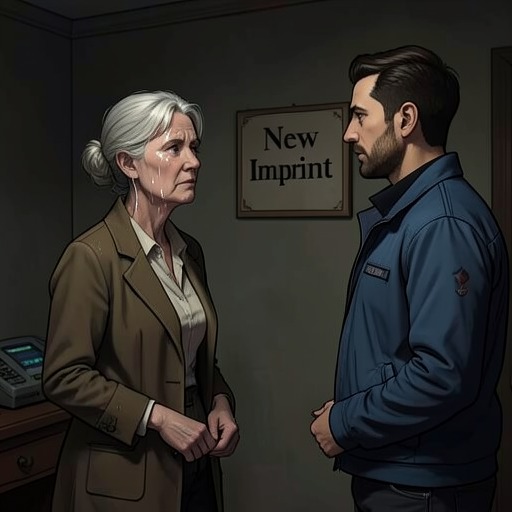
Heather arrives at Tranquillum House with Napoleon and Zoe. Frances notices Heather’s grey hair, tight ponytail, bloodshot eyes, and intense manner, while Zoe appears athletic and self-possessed. The family’s height and physical presence make them conspicuous, but Heather’s defining presence is emotional: she is carrying a sorrow that others, including Napoleon, can see even when she does not speak about it.
Heather and Napoleon’s marriage contains both affection and friction. She remembers their first sexual encounter as a surprise, because Napoleon proved far more attentive and capable than she had expected; his own recollection of their first date, she believes, is sweeter and more conventional. The difference between their memories offers a small example of their separate ways of making sense of their shared past. In the present, she sees Napoleon’s insistence on following the retreat’s rules as irritatingly perfect, and feels a surge of anger she has to manage rather than act upon.
Arrival and the silence
The family can afford the retreat because Napoleon’s inheritance has remained in a term deposit, although they have not taken a proper holiday for years. Heather asks Zoe whether she is sure she wants to spend ten days at a health resort with her parents. Zoe says she only wants to sleep, a brief answer that signals her exhaustion without explaining its source.
When the third bell sounds and the retreat’s silence begins, Heather experiences it as a palpable change in the atmosphere. She had considered ignoring what she regarded as an absurd rule, but the bells make the silence feel solemn, and she decides that disregarding it even in her room would be disrespectful. Her response shows how quickly an imposed structure can become a moral obligation for her, even as the retreat later gives her reason to question what is happening there.
Anger, grief, and responsibility
Heather’s anger at Napoleon rises sharply in their room while he carefully follows the retreat rules. She tries to keep herself from lashing out and steadies her breathing by using a technique she teaches mothers in labour. The moment connects her professional knowledge to her private crisis: the method helps her contain the feeling, but does not resolve the resentment underneath it.
Napoleon’s view of Heather is shaped by the contrast between the woman he first knew and the woman he now sees. He remembers her as athletic, capable, funny, and reluctant to ask for help; even early in their relationship, she injured herself trying to move a bookshelf alone rather than wait for him. At the retreat, watching her with Zoe, he thinks of her as broken and fragile, and recognizes that she remains sunk in sadness. His perception is not the whole of Heather, but it registers the depth of the change their son’s death has brought to their family.
Heather’s most painful reckoning concerns her part in Zach’s death. She recalls opening the drawer of his bedside cabinet and identifies herself with the snake moving through the grass, an image that expresses her sense of having approached the truth indirectly and too late. Later, she admits that she told Napoleon there were no side effects when Zach’s asthma specialist wanted to prescribe preventative medication. She remembers that Napoleon had asked specifically about side effects, and recognizes that depression and suicidal thoughts could be among them. Her confession reveals a consequential failure of communication and becomes another source of self-reproach; it does not establish that the medication caused Zach’s suicide.
Recognition and change
During the group’s account of why they came to the retreat, Zoe says the family cannot bear to be home in January, the place and time associated with her brother hanging himself. Heather’s own later reflection makes clear that the loss has shaped not only their choice of holiday but also the family’s way of remembering. She had wanted the anniversary to be spent together talking about Zach and wanted to mark what would have been the twins’ twenty-first birthday without allowing shame or grief to erase Zoe’s birthday. Yet she had not been able to accept Napoleon’s insistence that Zach’s life should not be reduced to the way it ended.
Heather eventually recognizes that Napoleon is right: the family can remember Zach’s eighteen years by sharing their best memories, rather than letting his suicide eclipse everything else. This does not make the anniversary painless. She expects the grief to be unbearable, but understands that unbearable grief can be borne; what changes is its object. She has spent three years grieving the suicide and now sees that she must also grieve Zach himself as a whole person—beautiful, silly, smart, and impetuous.
Her changed understanding includes Zoe’s grief. Heather knows Zoe was close to Zach despite what Zoe has said about their relationship. The twins crawled into each other’s beds when they had nightmares until they were ten, and Heather resolves to tell Zoe repeatedly that Zach’s death was not her fault. At the same time, Heather places responsibility on herself: she believes she failed to notice her son’s change in behaviour and failed to give anyone, including Zach, a reason to look for it. Her care for Zoe and her blame of herself thus emerge from the same painful recognition of what the family did not see.
Suspicion and narrative role
Heather is also the first in the family to voice a suspicion about the retreat’s treatment of its guests. Seeing Zoe in a concerning state, she moves the smoothie glass out of the way, brushes hair from her daughter’s eyes, and tells the group that something is not right. She then asks Masha whether they have been medicated. Her attention to Zoe leads her to challenge the retreat’s apparent account of events, shifting her from private endurance toward direct questioning.
During the psychedelic session, Heather tries to preserve a sober, watchful part of her mind to monitor the effects of psilocybin and LSD. That effort reflects her persistent need to remain alert and responsible even when her own grief is in motion. By the end of her reckoning, she is holding together two forms of accountability: the need to report Masha’s actions to the police and the need to stop allowing Zach’s final act to stand in for all of his life. Her arc does not erase guilt or grief; it gives remembrance a wider frame, making room for the son she lost and for Zoe, who remains beside her.