Heather’s confession about the potential side effects of Zach’s asthma medication
Nine Perfect StrangersHeather’s confession about the potential side effects of Zach’s asthma medication is a pivotal disclosure in the Marconi family’s grief: she admits that the medication could cause depression and suicidal thoughts, and that she falsely reassured Napoleon about its risks. The revelation gives her guilt a specific focus, but it does not prove that the medication caused Zach’s suicide. Instead, the scene exposes the painful distance between what the family knows and what they desperately wish they could know.
Background: Grief and the search for an explanation
After Zach’s death, the Marconis came to Tranquillum House because January had become unbearable: it was the month in which their son had hanged himself. In a group discussion, Zoe explained that the family had become expert in suicide and stopped telling people how Zach died because they feared suicide contagion. She also resisted the assumption that being twins meant she and Zach had been close, describing their different schools, interests, and values. The family’s careful management of what could be said about his death sits beside a more private, unresolved question: whether anything might have prevented it.
Napoleon had tried to make meaning of suicide for other bereaved parents through his Tuesday-night support group. He told them that research suggested many teenage attempts followed brief periods of suicidal thinking, sometimes only hours or minutes, and that interrupting access to a means could allow an impulse to pass. He withheld details he feared would be unhelpful, including the uncertainty and bad luck involved in some deaths. That knowledge did not settle his own loss. It instead sharpened the counterfactual question of whether a timely intervention, or a different decision, could have changed Zach’s outcome.
The disclosure during the psychedelic session
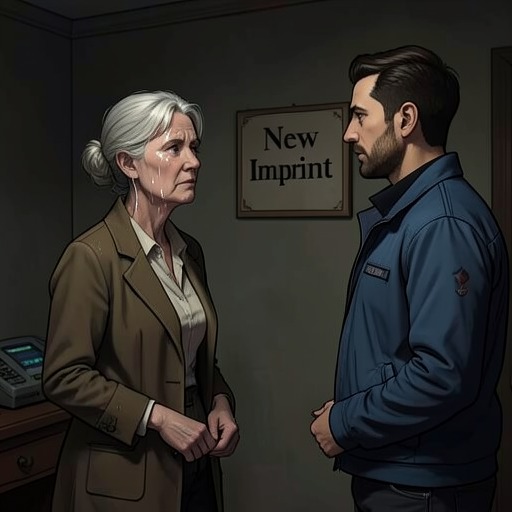
The confession occurs during Zoe’s psychedelic experience, as the surrounding visions begin to recede and she feels herself sobering. Heather tells her that Zach had been taking medication to prevent asthma symptoms. The detail initially seems to Zoe like one of the things her parents consider momentous without her understanding why. Heather then makes the implication explicit: one possible side effect was depression and suicidal thoughts.
Heather recalls that the specialist had wanted to prescribe the medication and that Napoleon had asked whether it had side effects. She had answered no. Her admission is not merely that she failed to notice a warning; she acknowledges that she had not read the leaflet at all. She trusted the specialist and assumed he would not prescribe something dangerous, then presented that assumption to Napoleon as if she had checked. The distinction between what she believed and what she told her husband becomes the immediate source of the confession’s force.
She says she found the leaflet in Zach’s bedroom drawer about six months after he died. The delayed discovery gives the medical information a painful chronology: the warning was available in the package, but Heather encountered it only after the loss, when no monitoring or discussion could be revisited. She now imagines that Napoleon would have read every word, asked questions, and insisted on understanding the risks. In that comparison, her own medical training makes her failure feel still more damning to her, even though the scene does not establish that reading the leaflet would have prevented Zach’s death.
Family responses and unresolved causation
Napoleon repeats that Heather had said there were no side effects, but his response does not become an accusation. He says he would have trusted the specialist too and argues that Zach’s asthma needed to be controlled. His words offer a counterweight to Heather’s self-blame: in his view, the treatment decision had a legitimate medical purpose, and knowing about a possible side effect would not necessarily have changed what happened.
Heather cannot accept that reassurance as a complete answer. She believes that, had they known depression was possible, they would have monitored Zach, and she insists that Napoleon would have done so carefully. Her remorse is visible in the way she rubs her hands down her cheeks, as though trying to erase herself. The scene gives that guilt bodily expression while keeping its central counterfactual unresolved: closer monitoring might have mattered, but the family cannot know whether it would have altered the outcome.
Napoleon says there had been no signs and remembers Zach as perfectly happy. Zoe contradicts him. Her reply does not supply a settled account of what Zach was feeling or connect his death conclusively to the medication; it shows that the family’s memories and interpretations do not align. The confession therefore opens a difficult family exchange rather than closing the mystery of causation. Heather’s regret, Napoleon’s efforts to resist blame, and Zoe’s disagreement coexist without producing certainty.
Aftermath and significance
The disclosure becomes part of the Marconis’ continuing effort to interpret Zach’s suicide, not proof of a single cause. The account of the medication identifies a possible risk and a missed opportunity to discuss or monitor it, while the narrative preserves the limits of retrospective knowledge. Heather’s belief that monitoring might have helped remains a counterfactual; Napoleon’s conviction that the treatment was necessary and that Zach seemed happy remains another family member’s recollection.
Six weeks after returning from Tranquillum House, Napoleon is waiting for an appointment with a psychiatrist referred by his GP. He has continued teaching, cooking, speaking with Heather and Zoe, and running his support group, yet describes himself as surviving rather than recovering. He tells the psychiatrist about Zach, the drugs given to him at Tranquillum House, and his fear that he may be depressed. He also raises his concern that medication can affect people differently and wonders whether Zach might have had a similar sensitivity. His later help-seeking shows that the family’s encounter with the confession does not resolve grief or remove uncertainty; it makes space for Napoleon to speak directly about fear and seek professional care.
The episode’s significance lies in its refusal to convert a possible side effect into a definitive explanation. A leaflet discovered too late, a reassurance given without checking, and a parent’s imagined alternative all become charged with meaning after a suicide. By placing Heather’s admission alongside Napoleon’s and Zoe’s conflicting responses, the scene shows how bereaved families may search for responsibility while confronting what cannot be established. The confession reveals a painful omission and deepens the family’s account of its grief, but it leaves the decisive question open: what, if anything, would have changed had they known sooner?