Henry
Nine Perfect StrangersHenry, Frances’s second husband, appears in her imagined sleigh ride alongside her first husband, Sol. In this playful scene, the former husbands share jokes and companionship while Frances sorts through her changing marital history and considers the stories she tells about her life. Henry’s brief appearance gives the scene a pointed contrast: the men Frances once married can now get along, even as she continues to question how those marriages fit into the narrative of her own life.
Identity and Appearance
Henry is identified through Frances’s marital history: he was her second husband, while she was his first wife. The distinction becomes a running joke about age and attractiveness. Frances says she enjoyed being a second wife because second wives are young and pretty, then turns the comparison back on herself: as Henry’s first wife, she was not, by that logic, as pretty. The exchange presents their former marriage through comic self-deprecation rather than through details of its beginning, duration, or ending.
The Sleigh Scene
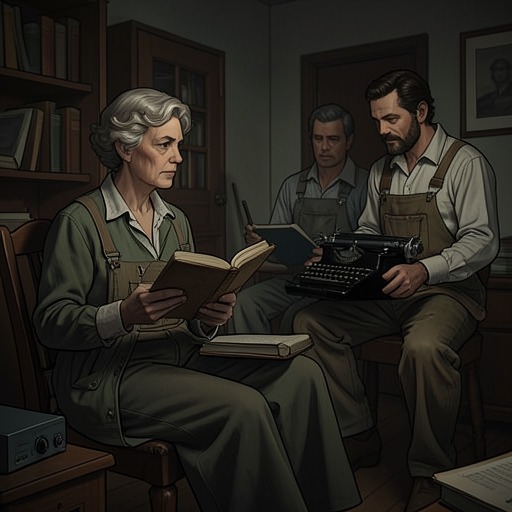
Henry appears in Frances’s imagined scene with her friend Gillian and her former husbands. Frances and Gillian travel through a starry sky in a sleigh, while Henry and Sol sit at the back, smoking and using catapults to remove unnecessary adjectives from Frances’s books. Sol calls out when he has found one; Henry’s presence in the scene makes him part of the joke about editing and Frances’s work as a novelist. Frances tells them to leave the words alone, while Sol proposes targeting the adverbs as well. The episode places Henry inside a fantasy shaped by Frances’s authorship: her books become a physical store of language, and her ex-husbands playfully intervene in it.
Relationships and Reunion
Henry and Sol are both Frances’s former husbands, and the imagined scene allows them to meet and bond. When they share a joke about a scam, they fist-bump; Frances sighs that they are too old for it, but notes that she always knew they would like one another if they ever met. She regrets not inviting them both to her fiftieth birthday. Their easy rapport retrospectively joins separate chapters of Frances’s romantic life, while her rueful aside makes clear that the meeting belongs to the story she is imagining rather than to a previously described real-life reunion.
Gillian also figures in the scene as a friend who had once kissed Henry at someone’s thirtieth birthday party. Frances says Gillian was drunk; Gillian agrees and says she felt bad about the kiss until she died. The exchange supplies a small piece of Henry’s social history, but the scene’s attention remains on Frances’s commentary and on how she arranges the people in her life into recognizable roles.
Frances’s Life as a Story
Frances explains that she identifies her husbands because readers can become impatient if they cannot tell the characters apart. The remark makes the sleigh scene self-aware: Frances is not only recalling relationships but presenting them as material that must be made legible. Gillian challenges the pattern of Frances’s novels and her life, criticizing the repeated changes of husband and urging her to plan the final chapters. Frances answers that Gillian had made the same criticism while alive. Henry therefore appears within a conversation that deliberately blurs life and fiction, with Frances’s former marriages treated both as personal history and as plot.
In this imagined account, Paul Drabble disappears, leaving Frances without pain; she concludes that he had meant nothing to her and describes him to Gillian as merely a credit on her bank balance. That contrast separates Henry and Sol, whose presence is associated with familiarity and playful companionship, from Paul, whom Frances dismisses as emotionally insignificant. The scene does not provide a fuller account of Henry’s marriage or what followed it; his significance here lies in his place in Frances’s remembered and narrated history, and in the unexpected ease with which her former husbands share the same frame.