Keypad Door
Nine Perfect StrangersThe Keypad Door is the heavy oak exit from the Yoga and meditation studio, secured by a new gold keypad whose unknown code keeps the guests trapped for nearly a day. It is both a practical barrier and the hinge of Masha’s experiment: while the guests treat the lock as a problem to solve, Masha insists that they must open it themselves, even as Yao urges her to let them out.
Physical Form and Setting
The door stands at the bottom of the stairs and is the studio’s only access point. The guests establish that it is locked, not merely stuck; beside its handle is what looks like a brand-new gold security keypad. The combination of solid oak and a conspicuously new electronic lock makes the exit seem deliberate and controlled, rather than an ordinary door that might yield to force.
By the time the group has been confined for close to twenty-four hours, they are exhausted and grimy, and have received no word from any staff at Tranquillum House. Napoleon, the only guest with a watch, puts the time at nearly two in the afternoon. The door’s physical certainty contrasts with the uncertainty surrounding why it is locked and what will make it open.
The Guests’ Attempts to Escape
The guests try number combinations without success. Frances proposes using the code for Tranquillum House’s front gate, but Napoleon says he has already considered that possibility and cannot remember the number. Frances then wonders whether the code might correspond to letters; the group tries words including Tranquillum, Cleanse, and Masha, with no result.
Zoe suggests that the situation might be an escape-room game. She explains that such games hide clues in ordinary objects and recounts how she and her friends once assembled a torch from scattered parts, then used it to reveal a secret message in a wardrobe. But the studio offers none of the expected machinery of a puzzle: there are towels, yoga mats, stretcher beds, water bottles, headphones, eye masks, and burnt-out candles, but no bookshelves or pictures to conceal clues. The toilets have no breakable windows, and the guests find no manholes or air-conditioning ducts that could serve as another route out. The door remains the only way forward, while the available evidence gives them no workable code.
The Code and Masha’s Plan
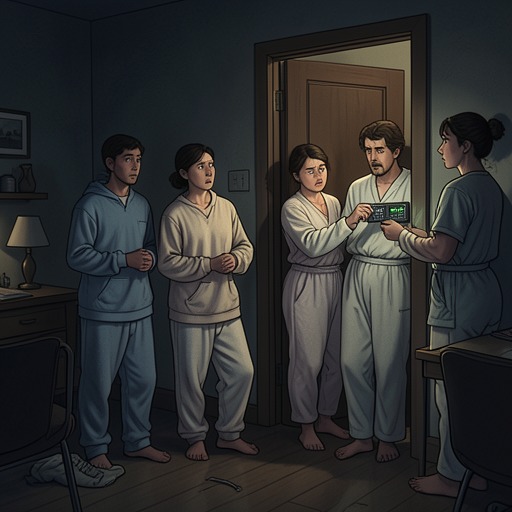
The lock is not only an obstacle to the guests; it is also part of the plan being managed behind the scenes. When the guests gather at the studio door and take turns entering combinations, Yao sees their attempts on a screen. Masha points to the display and declares, “Finally. We have progress.” The line makes the guests’ struggle legible as something monitored, rather than an unexplained failure of staff to respond.
The intended role of the code becomes explicit when Yao turns to Masha and asks why it is not in the doll. He reminds her that the plan was to put the security code in it. Masha agrees that this had been the original plan, but the code is not there. The keypad’s promised solution has therefore been separated from the object that was meant to carry it, leaving the guests to confront a locked door without the planned clue.
Dispute Over Opening the Door
Yao asks how long Masha plans to keep the guests locked up. As he watches them trying combinations and Lars punching the door with his fist, he says that he thinks he should let them out now. Masha does not accept his framing of the problem. She says the guests must open the door themselves; Yao answers that they cannot, and Masha insists that they can.
That disagreement gives the Keypad Door its decisive narrative significance. Its lock turns an abstract demand for transformation into an immediate test with bodily and practical stakes: the guests cannot leave until the mechanism opens, yet Masha treats opening it as something they must accomplish for themselves. The available scenes establish neither a successful code nor the door’s eventual opening. Instead, the keypad concentrates the conflict between Yao’s wish to end the confinement and Masha’s insistence that the guests find their own way out.