Marconi family’s grief
Nine Perfect StrangersThe Marconi family’s grief after Zach’s suicide is a continuing family crisis shaped by guilt, silence, anniversaries, and radically different ways of remembering. At Tranquillum House, Napoleon, Heather, and Zoe arrive together but do not grieve together in the same way: Napoleon searches his memories for a preventable mistake, Heather carries a painful secret about Zach’s medication, and Zoe rejects easy consolations while struggling with the distance that marked their twin relationship. The approaching third anniversary draws those private burdens into view without making them disappear.
The loss and its returns
Napoleon’s memory of Zach is crowded with ordinary details that make the loss harder to contain. The evening before Zach died, father and son talked over barbecue ribs, swam, discussed tennis and conspiracy theories, played table tennis, and watched a film they both loved. Napoleon remembers that he was tired the next morning and pressed the snooze button on his phone. He calls it a split-second decision he will regret for the rest of his life, and repeatedly imagines the alternative: getting up as planned, knocking on Zach’s door, and asking him to go paddling. In that imagined version, the family remains intact. The emotional certainty of the counterfactual is real, but it cannot establish that the different morning would have changed what followed.
It was Heather who found Zach. Napoleon remembers his wife’s scream and his own climb up the stairs as if it took a lifetime. The scene returns in fragments during Yao’s tai chi class: a movement called “Grasp the bird’s tail,” a sound Napoleon realizes he has made himself, and the repeated thought of his boy. The remembered morning does not stay safely in the past; the body and the present setting keep opening onto it.
The approach of the anniversary intensifies that return. Napoleon senses its dark shadow and feels frightened by a date he knows is only a sad day, yet recalls feeling the same impending doom the previous year. He had hoped the peaceful retreat might calm him, but dinner has left his right leg trembling, and the five days of silence give him more time with memory and regret. He is not sure whether the anniversary or the silence is making him skittish. What he knows is that quiet does not mean peace when thought itself has become a place of exposure.
Three different forms of grief
Napoleon responds to Zach’s death by trying to remain useful. In the week after the funeral, he decides that he must not break: he must heal enough to be present for Heather and Zoe. He studies suicide research, attends a Tuesday-night Survivors of Suicide group, eventually runs it, speaks to parent groups and schools, gives radio interviews, edits an online newsletter, and helps with fundraising. The work gives his grief a public task, but it does not resolve its private accusation. Heather’s description of his support work as a new hobby hurts because he experiences it as both a malicious distortion and a shameful truth.
His knowledge also shapes what he tells newly bereaved parents. Napoleon says research suggests that some teenage suicidal crises are brief and impulsive, and that an interruption or the removal of a means can matter. He withholds other findings and examples because he does not want to tell grieving parents how much chance may have been involved. His wish to spare them compounds the tension between explaining a death and admitting what cannot be known: he can offer information, but cannot prove what would have saved Zach.
For Zoe, grief is inseparable from anger and from the uncomfortable fact that she and Zach were not close. When Frances asks his name, Zoe says it aloud and describes the sound as odd and painful; she remembers that they were twins, but also that they had different schools, interests, and values. A friend’s remark after the funeral, “At least you weren’t close,” becomes a refrain Zoe turns over in her mind. It does not comfort her. She resents the assumption that twinship guarantees intimacy, while also living with the knowledge that her brother is gone and she cannot repair what was distant between them.
Zoe’s panic at Tranquillum House begins when Masha speaks about the wonder of her near-death experience. The conversation recalls the poem read at Zach’s funeral, “Death Is Nothing at All,” whose assurance that the dead have merely gone into another room strikes Zoe as false: Zach is absent, silent, and unreachable. She distinguishes that panic from the asthma that made him feel as if ten bricks were on his chest, recognizing that her own breathlessness comes from grief rather than the condition she associates with him. Her anger does not make the bond simple; it marks how fiercely she resists language that smooths death into a comforting metaphor.
Zoe also describes the family’s attempt to manage public knowledge of the suicide. After becoming, as she puts it, experts on suicide, the Marconis stopped telling people how Zach died because they feared suicide contagion. Her account places a practical concern about disclosure beside her own bitterness and their fear for her safety. She says her parents worried that she might “catch it” as if it were chicken pox, then jokes that she never did. The humor does not erase the strain of having her family’s grief continually treated as a risk to be managed.
Family guilt and the question of cause
Heather’s confession introduces another source of anguish. Zach had been prescribed preventative asthma medication, and one possible side effect was depression and suicidal thoughts. Heather tells Napoleon and Zoe that the specialist had asked to prescribe it and Napoleon had asked whether there were side effects; she had answered no. Regret shows on her face as she remembers the answer. Napoleon repeats it back to her. The exchange makes the family’s search for an explanation painfully specific, but the stated possibility is not proof that the medication caused Zach’s suicide.
Napoleon’s own guilt takes the form of a scene endlessly revised: the alarm, the snooze button, the missed chance to knock on a bedroom door. He believes that if he had risen at the planned time, he would have a living son and a family spared its present devastation. At the same time, he knows he has spent years examining the memory like a homicide detective. His certainty gives grief a concrete point to attach to, even as the story’s account of suicide research reminds the reader how limited certainty about prevention can be.
That contradiction is especially acute because Napoleon had been the teacher who understood boys, the man whose former students and their parents sent cards and letters describing how much he had helped them. He believes he failed the one boy who mattered most to him. The praise from others cannot answer that private judgment, just as his support work cannot undo the morning he replays.
Anniversary, testimony, and continuing life
Zoe sees her parents’ grief as physical, not merely mental. She notices the deep crevices in Heather’s face and remembers her mother’s scream as a sound that cut through her own life. To Zoe, grief seems like an incurable illness or an assault: it can ache through the body and disrupt digestion, sleep, skin, and menstrual cycles. As the third anniversary approaches, she doubts that reaching the next milestone will make anything easier; earlier anniversaries have not brought the relief she hoped for. Her sense of time becomes a grim sequence of days and years to endure, rather than a reliable path toward recovery.
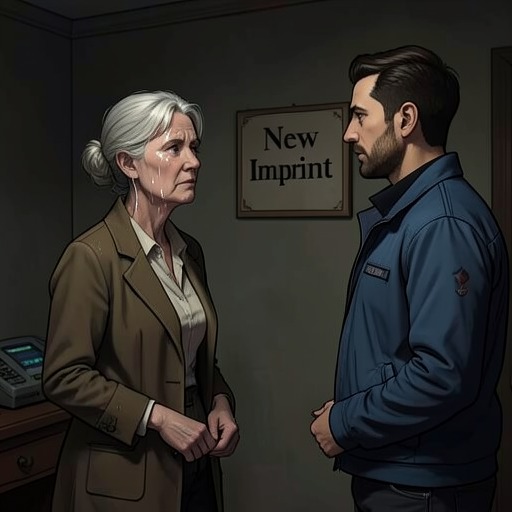
At the same time, the Marconis’ visit to Tranquillum House gives Zoe an occasion to say plainly why the family cannot bear to be at home in January: it is where Zach hanged himself. Napoleon has already introduced their reason for coming, but Zoe’s statement makes the family’s relationship to place and calendar explicit. The month is not simply a date on the schedule. It carries the memory of the death and helps explain why the family seeks distance from home at this point in the year.
The family’s grief does not end in a clean reconciliation. After a vivid experience during the retreat, Zoe tells her mother that she has been angry with Zach and felt that he had done it on purpose to make her feel bad forever. She says that the previous night it felt as if they had talked again. Frances, who has also felt she spoke with her dead friend Gillian and her father, responds without insisting that the experience be dismissed or accepted as fact. Zoe wonders whether they really saw the people they lost. The scene changes the terms of Zoe’s anger: it opens a possibility of renewed connection, not proof that her brother has returned or that bereavement is over.
Napoleon’s later course also resists a simple recovery narrative. Six weeks after returning from Tranquillum House, he is still teaching, cooking, speaking with Heather and Zoe, and running his support group, yet he describes himself as surviving. He has waited six weeks for a first appointment with a psychiatrist; ordinary obligations exhaust him, sleep offers escape, and even the sky seems drained of color. The gap between his visible responsibilities and his inner depletion shows how continued functioning can coexist with severe grief. Across the family, memory remains both a bond and a wound: a repeated morning, a name spoken aloud, an anniversary, and the possibility of a conversation all keep Zach present, but none can make the loss reversible.