Masha Dmitrichenko
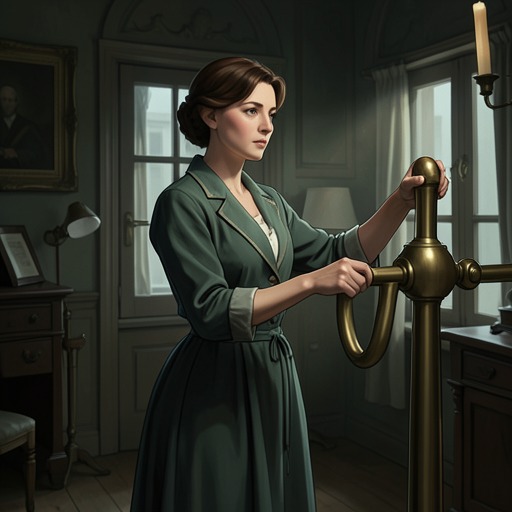
Nine Perfect StrangersMasha Dmitrichenko, known to most people as Masha and to the tax office as Maria Dmitrichenko, directs Tranquillum House. A cardiac arrest nearly ten years earlier divides her life into a corporate past and a new vocation devoted to transformation. She sees the retreat’s nine guests as people she can teach and nurture, but her certainty that she knows what they need makes her care inseparable from control.
Identity and Background
Before opening Tranquillum House, Masha was a global operations director for a multinational dairy company. From an office overlooking the Sydney Opera House, she managed policies and procedures, took pleasure in product development, and relished the authority to bring a room of men to heel. She remembers the job as intellectually stimulating but spiritually empty: her mind, body, and soul seemed to operate like separate corporate divisions. Even her affection for the old life strikes her as false, a glitch in the mind rather than a reason to return to it.
Masha describes her cardiac arrest as the day she died and was born again. She associates that turning point with leaving behind a life in which she was overweight and stressed, and with a new orientation toward the body and spiritual change. At the time of her reflection, she is on the third day of a water-only fast. In her locked office at the top of the house, she feels the silence descend with the release of entering a cave or cathedral, and remembers the country’s scents from when she first arrived in Australia. The retreat’s present and her remembered past meet in that private room, where she tries to keep her attention on the nine people in her care.
Tranquillum House and Its Guests
Masha’s approach to running the retreat grows out of experience with guests who evade its restrictions. Early on, she was startled when a family-sized meatlovers pizza was delivered at the back fence. She responds to such rule-breaking with security cameras, regular monitoring, and bag checks, presenting the surveillance and confiscation of outside food as being for guests’ own good. The episode shows the practical side of her transformation project: she does not merely invite people to change but arranges the property to limit their ability to resist its regimen.
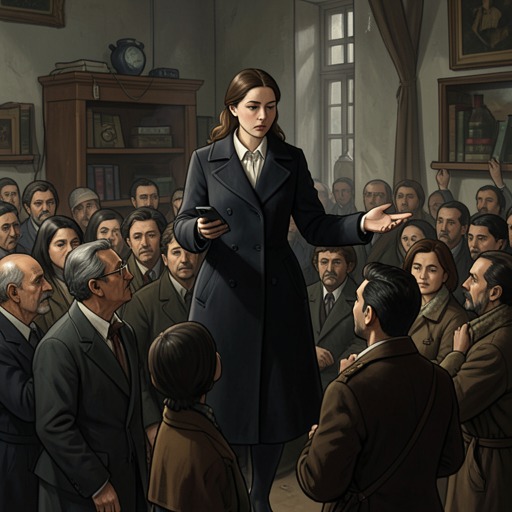
She thinks of the nine strangers as already hers, if only for their ten days at Tranquillum House. Their self-consciousness, self-loathing, lies, and defensive humor do not repel her; she reads them as signs of pain and vulnerability, and imagines herself teaching and shaping them into people they could and should be. She turns to the guest files, beginning with Frances Welty, whose submitted photograph shows her in red lipstick holding a cocktail. Masha’s language of nurture carries genuine warmth, but its possessive edge also reveals the imbalance in her role: the guests are people she means to help, and subjects she intends to shape.
Encounters with Grief
Masha’s attention to other people’s pain appears in intimate conversations as well as in the retreat’s program. When Frances speaks about her father’s death, Masha offers her own history: her father was shot in a market by a hitman who had mistaken him for someone else. She calls it an accident too. The disclosure places her loss beside Frances’s without treating grief as a simple contest of whose story is more remarkable.
At Tranquillum House, Masha is also confronted with the Marconi family’s grief over Zach. Heather’s anger at Masha culminates in the accusation that she knows nothing about their son and has poisoned their family. Napoleon’s self-blame is visible in his repeated insistence that it is his fault; Heather turns from Masha to attend to him. The exchange exposes the cost of Masha’s authority: the family’s bereavement is not an abstract problem for her to guide them through but a history that makes them feel that she has trespassed on what is theirs.
Responsibility and the Limits of Her Method
The novel’s portrait of Masha is framed by another medical emergency. When she collapses at work, her gaze remains fixed on her computer while paramedics assess her. She says she takes no medication, insists she is in good health, and apologizes for taking up their time, adding that she did not ask for an ambulance. Her apparent composure contributes to the difficulty of recognizing what is happening. Yao briefly freezes because he is convinced she is having a seizure, although he knows cardiac arrest can present with seizure-like symptoms. Finn directs the response; after two shocks, the paramedics still cannot establish a consistent rhythm as they carry Masha from the office she will never return to. The event that becomes the foundation of her new life is also a reminder of how a confident interpretation can fail when the body tells a different story.
That tension returns in Masha’s work at Tranquillum House. She believes the guests need a decisive break from their existing lives and regards herself as able to provide it. Yet the Marconis’ anger demonstrates that private suffering cannot simply be folded into her account of personal transformation. Masha’s defining significance lies in that contradiction: she is both a person remade by a medical crisis and a director who assumes the right to direct other people toward change.