Masha’s cardiac arrest and near-death experience
Nine Perfect StrangersMasha’s cardiac arrest and near-death experience is both a medical emergency and the defining story through which Masha explains her transformation. The crisis leaves her clinically dead before she is revived; afterward, she describes leaving her body and encountering a vivid lake of colored light, where she recognizes the adult her dead infant son might have become. She treats the experience not as a brush with death but as an encounter with it, and credits it with changing her life—while the vision’s reunion with her son carries love and grief together rather than resolving either.
The arrest and its aftermath
Ten years before recounting the experience to guests at Tranquillum House, Masha collapsed in a corner office. Her symptoms looked like a seizure, and Yao, then a paramedic, initially accepted that interpretation. For a moment he did nothing while his mind tried to reconcile what he was seeing with the diagnosis he had already settled on. He later understood that a cardiac arrest can present with seizure-like symptoms, but in the moment his confidence in his first reading had made his judgment unreliable. Another paramedic, Finn, ordered compressions, breaking through the delay.
The effort to revive Masha was urgent but uncertain: the responders shocked her twice and could not establish a consistent heart rhythm. She was carried out of the office in full cardiac arrest, not knowing that it would be the last time she entered it. She survived, but the event was not a clean passage from crisis to recovery. A heart surgeon performed a quadruple bypass, and the physical emergency became the beginning of a radical change in how Masha understood and managed her life.
The experience as Masha tells it
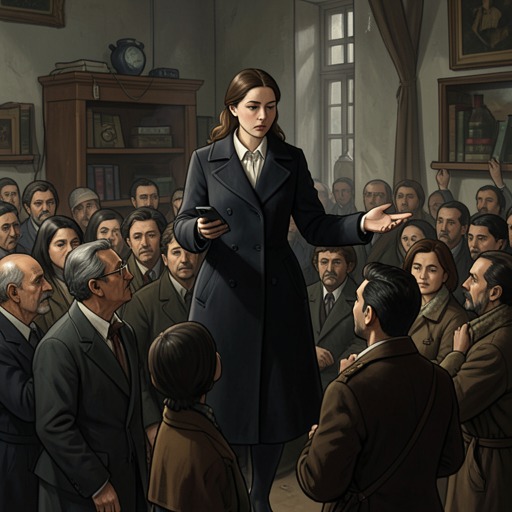
Years later, before a guided meditation, Masha introduces her story by saying she died ten years earlier. She insists that near-death experience is the wrong name: she had not merely approached death but experienced it, and she is grateful for the privilege. Her manner is strikingly joyful, and she invites the assembled guests to ask Yao, who had been one of the paramedics caring for her. His presence makes the testimony more than a story told for effect: he can confirm that her heart stopped, and their subsequent friendship grew from that shared history and a mutual interest in wellness.
Masha says she temporarily left her body. When Tony later asks whether she saw a tunnel, she corrects him: what she remembers was a great lake of shimmering colored light. She describes its scarlet, turquoise, and lemon hues as an experience she breathed, heard, smelled, and tasted, not simply a picture seen from a distance. Her account also resists easy disclosure. She tells Tony that she saw no loved ones, although she is lying: the lake returns her to the image of a young man walking toward her through its colors.
The son in the lake
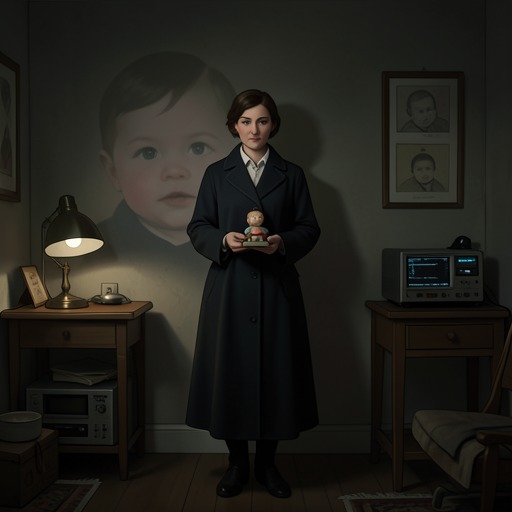
The young man wears an ordinary baseball cap, takes it off, and scratches his head. Masha recognizes him immediately as her son—not the baby she remembers, with his fat cheeks and toothless smile, but the adult he might have become. The recognition restores the force of the love she felt when she first held him, as fresh and startling as before. Yet she cannot decide whether being given that experience was a gift or a punishment; the vision offers reunion without making its meaning comfortable.
Masha has no sense of how long the encounter lasts. Her son disappears, and she finds herself floating near the ceiling of her office, looking down at the men working on her lifeless body. She sees a button from the silk shirt they have ripped open and one of her legs at an unnatural angle. She notices the damp forehead and strawberry-shaped birthmark in the dark hair of a young man sending electrical pulses through her body. At the same time, she somehow feels his fear and concentration. The vision binds an intimate reunion with the physical scene of her resuscitation: love, helplessness, and the rescuers’ effort coexist in the same memory.
Return to the body and reinvention
Masha’s next conscious memory is the following day, when she is back in her body and a doctor greets her. At first she takes the tall, beautiful woman for a nurse; she later understands that this was the surgeon who had performed her quadruple bypass. The distinction matters to Masha because the doctor’s appearance unsettles her assumptions. She imagines that she might have dismissed the advice of a more typical heart surgeon, but instead feels an affinity with this tall woman who has succeeded in a male-dominated profession. That unexpected identification helps Masha listen.
The surgeon tells her to attend to diet, exercise, smoking, and state of mind: the heart, she warns, should not become a casualty of the head. She explains that a patient’s mental condition can affect recovery and urges Masha to care for her whole self. Masha responds with immediate, concrete action. She shaves her legs for the first time in years and begins the cardiac rehabilitation program, determined to come out on top as she once had at work. At a later check-up, the surgeon is astonished by how far she has exceeded expectations. Masha says she never moped; she remade herself for the doctor and for the young man in the lake. Her transformation is presented as effort and discipline, not merely as a miraculous consequence of seeing beyond ordinary life.
Testimony, grief, and its limits
Masha’s account acquires added weight when she shares it publicly at Tranquillum House. The guests are still, uncertain whether to respond with embarrassment or awe; Frances initially thinks of scientific explanations for visions of light, yet feels a physical shiver even as she doubts. Masha’s confidence and Yao’s corroboration establish that the cardiac arrest occurred, while the out-of-body episode remains Masha’s account of what she experienced. The narrative holds those registers together without requiring the guests—or the reader—to treat the vision as medical proof.
The experience also sits beside grief that remains difficult for Masha to voice. She has told Yao about the lake but not Delilah, and when she tells Tony about the young man she denies that she saw loved ones. The denial reveals how unlike a general wellness anecdote this memory is: it contains her dead child, the life he never lived, and the shock of feeling their bond intact. Her later insistence that she remade herself for him gives the vision enduring force, but does not settle whether it was consolation or punishment. The story that explains Masha’s confidence in transformation therefore retains an unresolved center: survival changes her life, while the encounter that helps sustain that change returns her to the loss at its heart.