The Sunday Masha’s son died
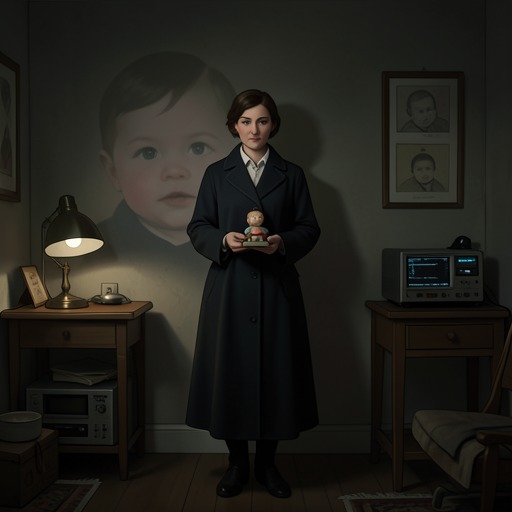
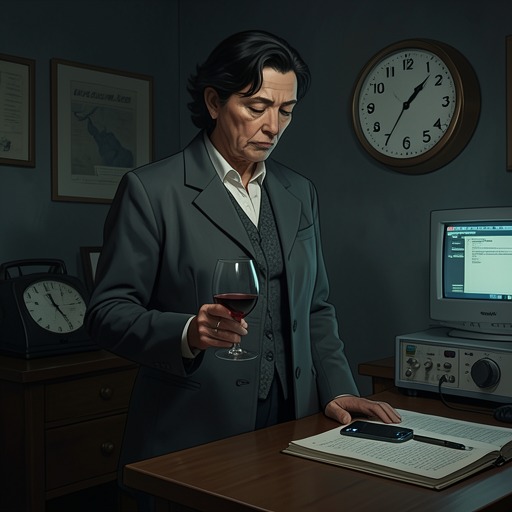
Nine Perfect StrangersThe Sunday Masha’s son died is the defining rupture in Masha’s life: a day shaped by the familiar sounds of a baby at home and a mother finishing her work, until a few minutes become the distance between a call answered and one that cannot be answered. Her son, eleven months old, accidentally strangled himself with a long white window-blind cord. Masha never accepted her husband’s assurance that the death was an accident and that there was nothing to forgive; she held herself responsible for not going to him when he called.
A Happy, Ordinary Sunday
Before the accident, Masha’s life in Sydney felt full and settled. She had an eleven-month-old baby, a demanding full-time job, and a husband; she had stopped trying to establish a social circle because her life already seemed busy and satisfying. She was happier than she had ever been. The baby, whom she considered exceptionally beautiful and intelligent, made other people smile with his deep, delighted chuckle, and those exchanges briefly made her feel that she belonged among the people around her.
The Sunday begins in the space between work and care. Masha is nearly finished working when the baby wakes. Instead of crying, he makes a musical, rising-and-falling sound, then calls, “Ma-ma! Ma-ma!” Masha hears him and answers that she is coming, calling him lapochka. She believes she needs only five more minutes. The task takes less than five—perhaps four—and when she opens his bedroom door she asks whether he has tired of waiting, thinking he may have fallen back asleep. He is already dead.
The Accident and Its Immediate Meaning
The baby has strangled himself while playing with the long white cord from the window blind. Masha later learns that this is not an uncommon accident; other mothers have found their babies caught in the same way and have had to untangle them with trembling fingers. The knowledge gives the loss a terrible familiarity, but it does not lessen its personal force. The cord becomes a lasting marker of danger: even years later, Masha notices warning tags on blind cords whenever she enters a room, from far away.
At the hospital, Masha’s husband tells her it was an accident and there is nothing to forgive. He is still wearing the paint-splattered overalls from his game, with fine blue dots across his jaw, an image Masha remembers alongside the loss. His attempt to console her cannot change her judgment of what happened. She refuses forgiveness because, as she sees it, her son called and she did not go to him. Her refusal turns a few minutes of delay into a moral fact she continues to carry, even though the death was accidental.
Grief, Marriage, and Separation
In the immediate aftermath, Masha unexpectedly wants her own mother, despite knowing that this woman had never really liked or loved her and would offer no comfort. The impulse lasts only as a strange moment amid grief, but it reveals how bereavement can bring an old need for care back into view even when the person who might provide it is emotionally unavailable.
Masha lets her husband go and insists that he find another life. He eventually does, though much more slowly than she wants. His resemblance to their beautiful son makes his presence painful, so his departure brings Masha relief from seeing that face. She refuses to read his emails and wants no news of him. Much later, she learns by chance, from a man in a food court who remains friends with her former husband, that he is healthy and happy, has married an Australian woman, and has three sons. The glimpse of the life he built reaches her despite her effort to keep him out of her world.
The Memory’s Return and Significance
The Sunday returns in the novel as more than background to Masha’s history. Its central sequence is precise and devastating: the baby’s call, Masha’s promise to come, the small amount of work remaining, and the bedroom door opening onto death. The gap is not a grand decision but a handful of minutes, and the ordinary scale of the delay is precisely what makes her self-accusation so enduring. The story distinguishes the accidental cause of the death from Masha’s lasting conviction that she failed her son.
That history shadows later crises. When Masha herself suffers cardiac arrest at work, Yao freezes briefly, unable to recognize what is happening until Finn tells him to start compressions. Yao later understands that his mind had clung to the wrong explanation, and that his delay could have left Masha in cardiac arrest without help. The episode gives the novel a stark echo of the earlier Sunday: a person’s life may depend on recognizing the moment and acting, while the person who arrives too late is left with the knowledge of what might have been done.
Masha’s grief also informs the way she hears other people’s accounts of death. When Frances tells her that her father was killed after a driver failed to stop at a pedestrian crossing, Masha answers with the story of her own father, shot in a market by a Russian-mafia hitman who mistook him for someone else. The conversation does not make the losses equivalent; it shows how Masha’s experience has made death a subject she can meet directly, through the blunt fact of accident and misidentification.
Years later, her history remains relevant to the language of clinical responsibility and risk. After the drug session at Tranquillum House, Napoleon tells a doctor that he has been struggling with what he believes is depression, worries about antidepressant side effects and his own sensitivity to drugs, and fears that his son may have shared that sensitivity. He says he feels he was the one person in the room who should never have been given the smoothie. Against that present-day fear, Masha’s Sunday stands as the loss that has already taught her how responsibility can persist when intent was not harmful and the outcome cannot be undone. The event gives her later encounters with death and care their private history, without reducing the accidental death of her son to a lesson that grief can resolve.