The guests’ psychedelic intoxication
Nine Perfect StrangersThe guests’ psychedelic intoxication at Tranquillum House is at once a sensory and emotional upheaval and a breach of trust: the retreat presents drugging as a planned route to transformation, while the guests encounter intense experiences they had not knowingly agreed to undergo. Across the episode, altered perception loosens the boundaries between memory, imagination, and the present; it also brings grief and affection into view. Yet the visions’ felt reality does not settle what they mean, and the promise of insight cannot erase the coercion that made them possible.
The regimen and its concealed escalation
Masha initially frames the drug use as micro-dosing. She says the doses are about a tenth of a normal LSD dose and claims they can increase creativity, focus, spiritual awareness, and the quality of relationships. She also presents the regimen as a way to support meditation and yoga and to ease withdrawal symptoms while guests abstain from substances such as alcohol and sugar. The explanation places the drugs inside the retreat’s language of wellness: the intervention is described as a small enhancement to practices the guests have already been asked to follow.
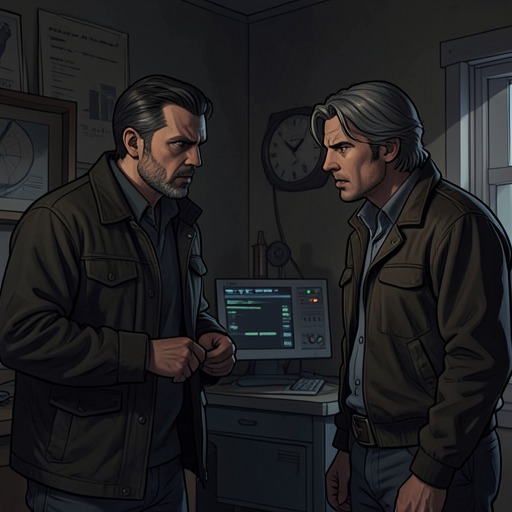
Heather challenges that account when she notices that the effects she and the others are beginning to feel cannot be explained by a micro-dose. She points to the most recent smoothie as different. Masha confirms that the guests are entering a new protocol, calling it rigorously planned and executed, unprecedented at Tranquillum House, and an extraordinary opportunity for its first nine participants. The announcement casts them as pioneers even as it withholds the decisive fact until after they have consumed the drink.
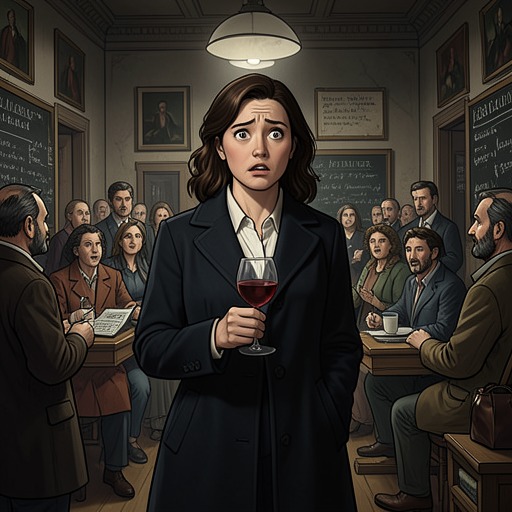
Masha then discloses that the last smoothie contains both LSD and liquid psilocybin, a naturally occurring substance found in certain mushrooms. Tony bluntly identifies the latter as magic mushrooms. Frances responds with startled recognition, likening the disclosure to being back at university, while the revelation recasts the preceding wellness routine: the smoothies have not been merely nourishment, and the new experience is not simply a more intensive version of meditation. The guests’ intoxication begins in an imbalance of knowledge and control, with Masha setting the terms and explaining them only after the drug has been taken.
Altered perception and private visions
The narration renders the intoxication through sharply different, character-centered experiences rather than a single uniform account. For Lars, an insight about Ray briefly becomes absolute. He thinks of Ray’s open, hopeful face and understands that Ray does not want anything from him beyond his love. The thought seems to contain the answer to every question and the key to every lock; then his mind bursts into an image of a billion purple petals. Intimate recognition and sensory disintegration arrive together, so the insight is vivid without remaining stable or easily carried back into ordinary thought.
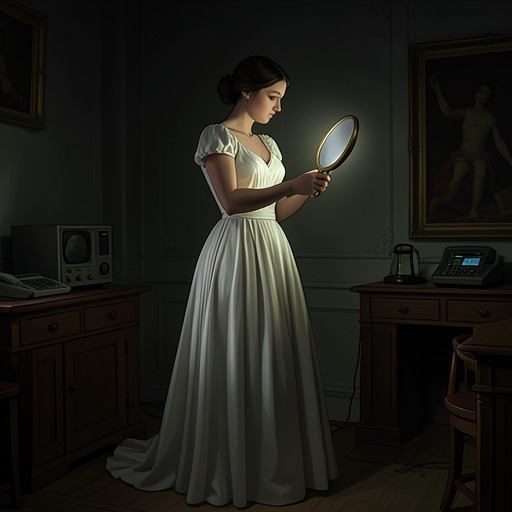
Frances’s vision turns memory and authorship into a fantastic landscape. She sees herself flying with her friend Gillian through a star-filled sky in a sleigh drawn by white horses. The books in her lap include all the books she has written, even editions in other languages; their open tops resemble cereal boxes, and she scoops words from them to scatter across the sky. Sol and Henry ride behind her, smoking and using catapults to eliminate unnecessary adjectives. The scene gives her past writing a physical, playful form, gathering friendship, language, and her working life into one dreamlike journey.
Afterward, Frances remembers the experience as a beautiful, remarkably vivid dream that seemed to last forever. She recalls that Yao, Delilah, and Masha repeatedly interrupted her to ask questions and steer her in particular directions; she ignored them because she was enjoying herself, and sensed that eventually they gave up. Her recollection includes being in space and being an ant as well as the visions she hopes to interpret. That retrospective account keeps two things in view: the vividness of her private experience and the facilitators’ attempt to guide it. Frances remembers resisting their prompts, not simply following an authorized therapeutic path.
Grief, presence, and the limits of interpretation
The altered state also brings Zach into a family scene. Heather calls the experience a druggy father-and-daughter bonding exercise, but Zoe says that Zach would find the whole family getting high together hilarious. Napoleon answers that Zach is there and greets him. Zach appears before him, bare-chested and wearing shorts, and the sight feels unremarkable within the vision: for a moment, Napoleon experiences the four of them together as an ordinary family again. The scene places bereavement inside a familiar domestic arrangement, making the lost son seem present not through a formal ceremony but through the ease of imagined family life.
Zoe’s experience becomes a way to speak about the anger she has carried toward her twin. She says she had felt that Zach killed himself deliberately to make her feel bad forever, and that she could not forgive what seemed to her the cruelest thing he had done. After the experience, she says, it felt as if they had talked again. Frances recognizes the resemblance to her own encounter with Gillian and her father: she, too, says the experience felt different from a dream, vivid and more real than ordinary life. Zoe asks whether they might really have seen the people who died. The exchange establishes the force of the experience for both women while leaving its supernatural status unresolved; its consequence is not proof, but a new way to articulate grief and the possibility of reconciliation.
For Zoe, the altered perception has a discernible physical ebb. The walls stop seeming to breathe, the colors fade, and she feels as though she is sobering up, like leaving a stuffy room for the night air. In that lessening intensity, Heather tells her that Zach had been taking medication for asthma. The information enters the fragile interval between intoxication and ordinary awareness, when the visual effects recede but the family’s unresolved questions remain. The account does not make the drug experience itself a reliable explanation of Zach’s death; instead, it brings an important fact about his medication into a conversation already shaped by loss and responsibility.
From imposed ritual to collective aftermath
The experience is set against the retreat’s broader management of its guests. Masha has introduced a period of silence as a way to establish the tone of the program, anticipating resistance and rule-breaking; the guests are also expected to follow fixed meal arrangements, with warning bells before food or smoothies and no room service apart from specified drinks delivered to their rooms. When the five-day noble silence ends, Masha celebrates the group’s completion and asks them to reintroduce conversation and eye contact gradually, inviting them to speak about why they came, what they have enjoyed, and what they found difficult. This carefully staged return to speech forms part of the same programmatic environment in which Masha later presents psychedelic intoxication as the next step.
Masha’s control of the retreat extends to practical surveillance. After an early guest arranged for a family-sized meatlovers pizza to be delivered at the back fence, she began using security cameras, regular monitoring, and bag checks, all framed as precautions taken for the guests’ own good. Against that history, the drug disclosure is not an isolated lapse in explanation. The retreat has already organized guests’ access to food, communication, and privacy; the psychedelic protocol intensifies the question of who decides what participants receive and when they are told.
The later communal release is notably ordinary in its materials and unregulated in its mood. The guests recover contraband wine, phones, and food; Jessica grills steaks, Tony twirls pizza dough, Frances helps in the kitchen, and Carmel makes a cake. People dance and cry, while Lars’s inability to dance becomes a source of delight. This gathering does not prove that the drug session has healed the group or made its methods acceptable. It does show a contrast between Masha’s engineered transformation and a shared evening organized through food, music, laughter, tears, and the guests’ own participation. The intoxication therefore remains double-edged: it opens vivid imaginative space for recognition and grief, while its undisclosed escalation exposes the ethical cost of a retreat that treats other people’s altered consciousness as a protocol it can administer.