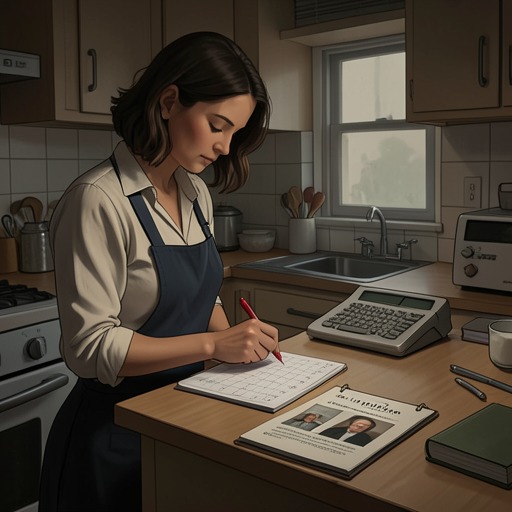
Zach’s death anniversary
Nine Perfect StrangersZach’s death anniversary is the yearly return of the Marconi family’s bereavement, a date that gathers memory, guilt, and dread into the present. As the third anniversary approaches during their retreat, it exposes how grief persists in the body and in family life: Napoleon relives a decision he believes might have changed the outcome, while Zoe rejects consoling accounts of death and struggles with her brother’s absence. The date marks time passing, but offers no reliable promise that pain will pass with it.
The Anniversary’s Approach
For Napoleon, the anniversary casts a shadow before it arrives. He knows it is irrational to fear a day, and reminds himself that anticipatory dread is normal; still, the feeling resembles the previous year’s, as if he already knows what comes next. He had hoped the peaceful setting of Tranquillum House would calm him. Instead, the silence leaves him alone with memories and regrets, and at dinner his right leg trembles until he presses a hand to his thigh to still it.
The retreat’s timing brings the family together with the date rather than shielding them from it. As the third anniversary approaches, Zoe sees her parents’ grief as an illness that continues to ravage them. She has already watched the first two anniversaries pass without the change she hoped they would bring, and expects that returning home will mean finding everything much the same. The calendar offers a threshold, but not a cure.
Memory and Responsibility
Napoleon’s recollection repeatedly returns to the morning Zach died. He has examined that day like a homicide detective going over evidence: again and again, he sees his hand reaching for the phone and his thumb pressing snooze. Alongside the memory, he imagines an alternative in which he turns off the alarm and gets out of bed. His retrospective replay makes the anniversary a scene of self-accusation, organized around the decision he believes he should have made.
Heather was the one who found Zach. Napoleon remembers hearing his wife’s scream and running upstairs, the ascent seeming to take a lifetime, as if he were moving through mud or inside a dream. Zoe, seeing her mother during the retreat, is struck again by the scream’s force. The anniversary therefore returns not only the fact of Zach’s death but the family’s separate positions within the same morning: Heather’s discovery, Napoleon’s remembered delay, and Zoe’s continuing witness to her parents’ pain.
Grief in the Body and in Language
Zoe experiences grief as physical as well as emotional. Looking at her mother, she sees deep crevices in her face and thinks of grief as something that assaults the body: it can ache throughout, disturb digestion, sleep, skin, and the menstrual cycle. This understanding contrasts with her earlier assumption that grief happened only in the mind. The anniversary makes loss palpable in the bodies of the people who remain.
The date also unsettles the reassuring language adults use about death. When Masha speaks in glowing terms about her near-death experience, Zoe panics. It recalls the poem “Death Is Nothing at All,” which her Uncle Alessandro read at Zach’s funeral. Zoe feels that its image of the dead merely going into another room is false: Zach is gone, utterly silent, with no text, post, tweet, or word. Her panic and urgent wish to escape show how an attempted consolation can reopen rather than soothe the wound.
Zoe’s relationship to the anniversary is sharpened by her twin bond with Zach. Saying his name aloud feels painful and strange; the names Zoe and Zach had seemed cutesy, but their shared birthday now carries the weight of his death. She no longer celebrates on that day and says she changed her birthday. In this way, the anniversary has altered not just how she remembers Zach but how she marks her own passage through time.
Repetition Without Resolution
By the third anniversary, Zoe cannot trust the promise that another year will make things better. She remembers expecting that after each of the previous anniversaries, only to find that the family’s suffering continued. Her anger at Zach’s death takes the form of a lasting injury to their relationship: she has felt that he left her with pain deliberately, and that she could not forgive him. The anniversary keeps this conflict active rather than allowing it to become a completed past.
A later conversation suggests a moment of changed feeling without erasing that history. Zoe tells Frances that the night before, it felt as if she and Zach had talked again. Frances shares that she felt vividly reunited with her dead friend Gillian and her father, and Zoe asks whether they might really have seen them. The exchange gives grief a possible form of continuing connection, but its hope remains tentative: it is offered as an experience that felt real, not proof that the anniversary’s pain has ended.
The novel also places the Marconis’ annual return to Zach’s death beside Masha’s memory of her infant son. Masha recalls calling him her little bunny and opening his bedroom door after she had finished what she was doing; he had died in an accidental strangulation involving the long white window-blind cord. This separate bereavement reinforces the book’s attention to loss as an event that survivors revisit through ordinary details and remembered words. Across the family’s story, an anniversary is less a neat marker of elapsed time than a recurring encounter with what cannot be undone.