Big Brother
Nineteen Eighty-FourBig Brother is the supreme, unseen leader of Oceania, the totalitarian superstate in George Orwell's Nineteen Eighty-Four. His face—a heavy black moustache, ruggedly handsome features—is plastered on posters, coins, stamps, and cigarette packets, always accompanied by the slogan "BIG BROTHER IS WATCHING YOU." He is the embodiment of the Party's power, a symbol of absolute authority that penetrates every aspect of life, from the two-way telescreens in every room to the three slogans emblazoned on the Ministry of Truth: WAR IS PEACE, FREEDOM IS SLAVERY, IGNORANCE IS STRENGTH.
Identity and Presentation
Big Brother is never seen in person; he exists only as a face on hoardings, a voice on the telescreen, a presence on every coin and banner. The posters are designed so that the eyes follow the viewer, creating a sense of constant surveillance. His face is vast—more than a metre wide—and appears on every landing of Victory Mansions, in every commanding corner of the street. Even the coin in Winston's pocket bears the same slogans and the watching eyes. The face is described as black-haired, black-moustachio'd, full of power and mysterious calm, at once a protector and a judge. During the Two Minutes Hate, after the hated figure of Emmanuel Goldstein is replaced by Big Brother's face, a wave of relief sweeps the room, and the audience chants "B-B!" as a self-hypnotic hymn.
Role in the Party and Ideology
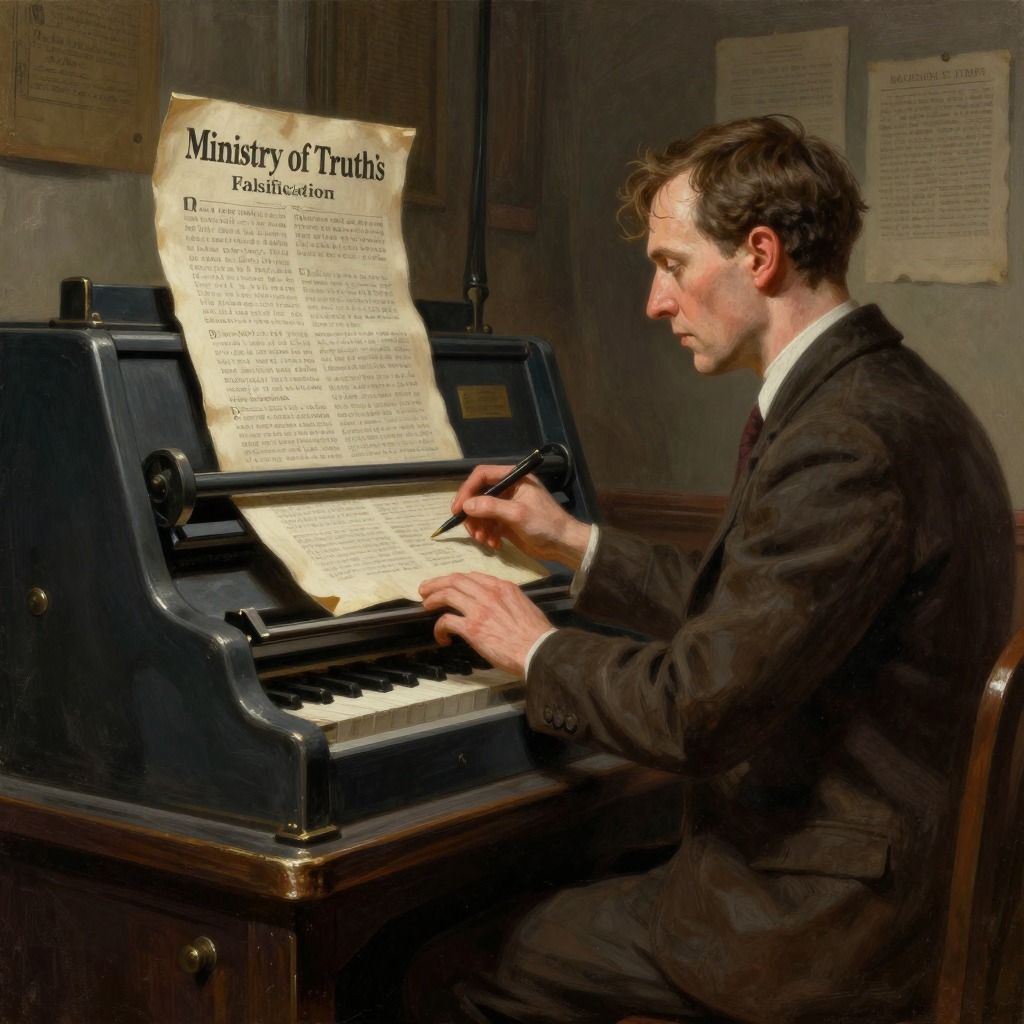
Big Brother is the public face of the Party, the guise in which it chooses to exhibit itself. He is presented as infallible and all-powerful, the source of every success, achievement, and scientific discovery. The Party's history books push his exploits backward in time, so that he appears as the leader of the Revolution from its earliest days. The official ideology makes him the focal point of love, fear, and reverence—emotions more easily directed at an individual than at an organisation. The Party claims that all victories, all improvements in living standards, flow from his wise leadership. The chocolate ration reduction is announced alongside spontaneous demonstrations of gratitude to Big Brother, and the population is conditioned to accept such contradictions through doublethink. Even the names of the Ministries—Ministry of Peace, Ministry of Truth, Ministry of Love, Ministry of Plenty—are deliberate reversals of their actual functions, a form of doublethink that Big Brother's image reinforces.
Psychological Function and Control
Big Brother serves as a psychological tool for the Party. The Two Minutes Hate channels the audience's rage first at Goldstein, the traitor, then at the Eurasian enemy, and finally, through a switch, at Big Brother himself—only to have that hatred transformed into adoration. The chant of "B-B!" is a deliberate act of self-hypnosis, drowning out consciousness. The face provides a comforting, protective presence, allowing the Party to manipulate emotions. The surveillance and control of memory are central: the Party claims to control the past, and Big Brother's image is the constant reminder that the Party is always watching, that there is no escape. The classical conditioning model—linking Big Brother to automatic feelings of safety and obedience—is evident in the way the face appears after moments of terror, restoring confidence.
Narrative Significance and Winston's Arc
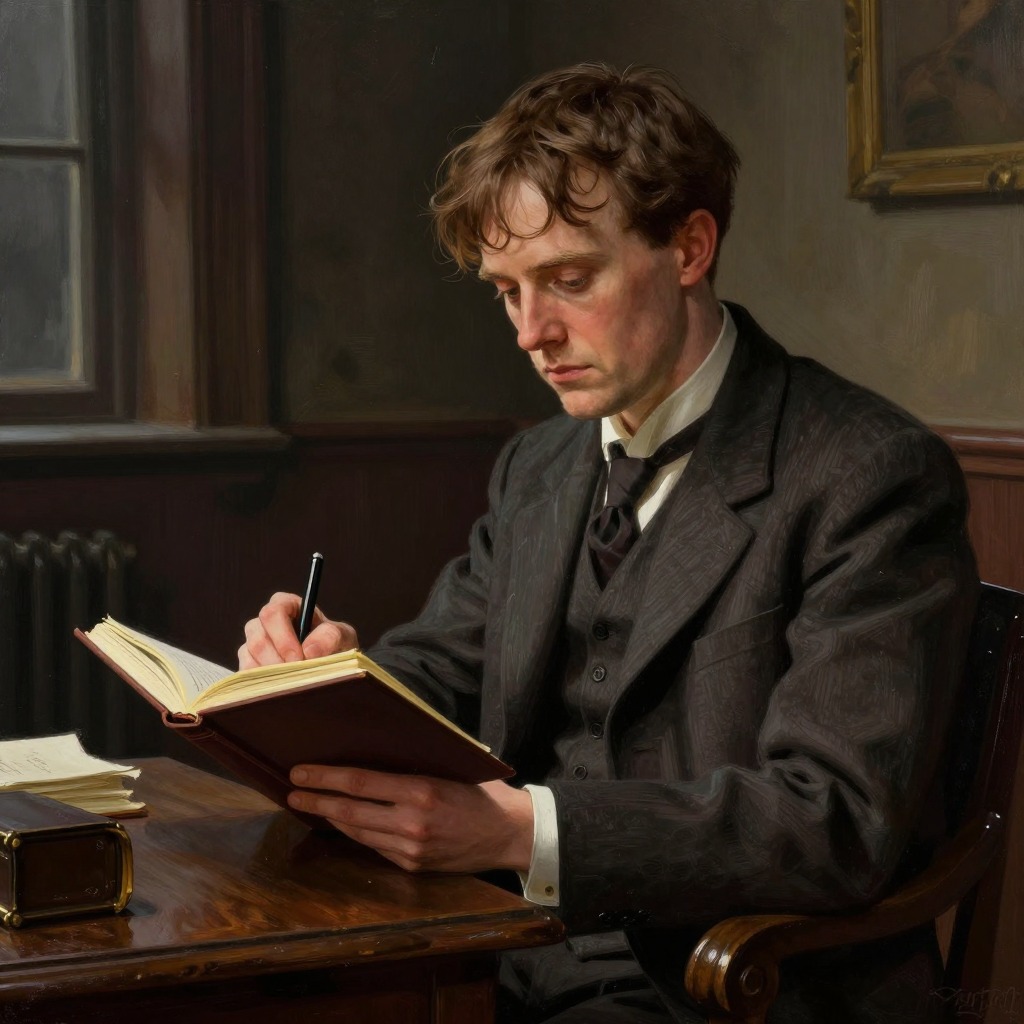
Big Brother is the antagonist against whom Winston Smith's rebellion is measured. Winston's diary begins with the words "DOWN WITH BIG BROTHER," and his secret love for the symbolic enemy O'Brien is intertwined with the hope of overthrowing the Party. Throughout the novel, the face of Big Brother haunts Winston, appearing in his dreams and in the street. The climax of the book occurs when Winston, after torture in the Ministry of Love, finally breaks and experiences a conversion: he looks up at the enormous face of Big Brother and feels love for him. The tears that trickle down his nose are "gin-scented," but the struggle is finished. He has won the victory over himself. Big Brother, then, is not merely a dictator but a representation of the ultimate triumph of totalitarianism: the complete annihilation of the individual will, replaced by joyful submission to the collective.