Chestnut Tree Café
Nineteen Eighty-FourThe Chestnut Tree Café is one of the most significant interiors in Nineteen Eighty-Four. First named in connection with Syme as the haunt of painters and musicians and a place somehow ill-omened, it is also where Winston Smith, at the lonely hour of fifteen, once watched three condemned Party heroes sit in silence before being purged, and where, in the novel's final chapter, he sits in his usual corner until he has learned to love Big Brother. The café's recurring lonely hour of fifteen, with its tinny music and dusty table-tops, becomes the setting for both the novel's most haunting glimpse of the abolished past and its most terrible surrender.
A Gathering Place of the Doomed
There was no law, not even an unwritten law, against frequenting the Chestnut Tree Café, yet the place was somehow ill-omened. Syme, the Newspeak philologist who saw too clearly and spoke too plainly, was a regular; the old, discredited leaders of the Party had been used to gather there before they were finally purged, and Emmanuel Goldstein himself, it was said, had sometimes been seen there, years and decades ago. Winston once saw Jones, Aaronson and Rutherford, the last great relics of the Party's heroic early days, sitting in silence before glasses of the clove-flavoured gin that was the café's speciality, a chessboard set out beside them but no game started. When the telescreen's tune changed to a peculiar cracked, jeering note that Winston called a yellow note, and a voice sang "Under the spreading chestnut tree / I sold you and you sold me", the three men never stirred; but Rutherford's ruinous face was full of tears, and both he and Aaronson had broken noses. Within a little while all three were re-arrested, re-tried and executed, and their café vigil came to seem like a last apparition of the vanished world.
Winston's Final Refuge
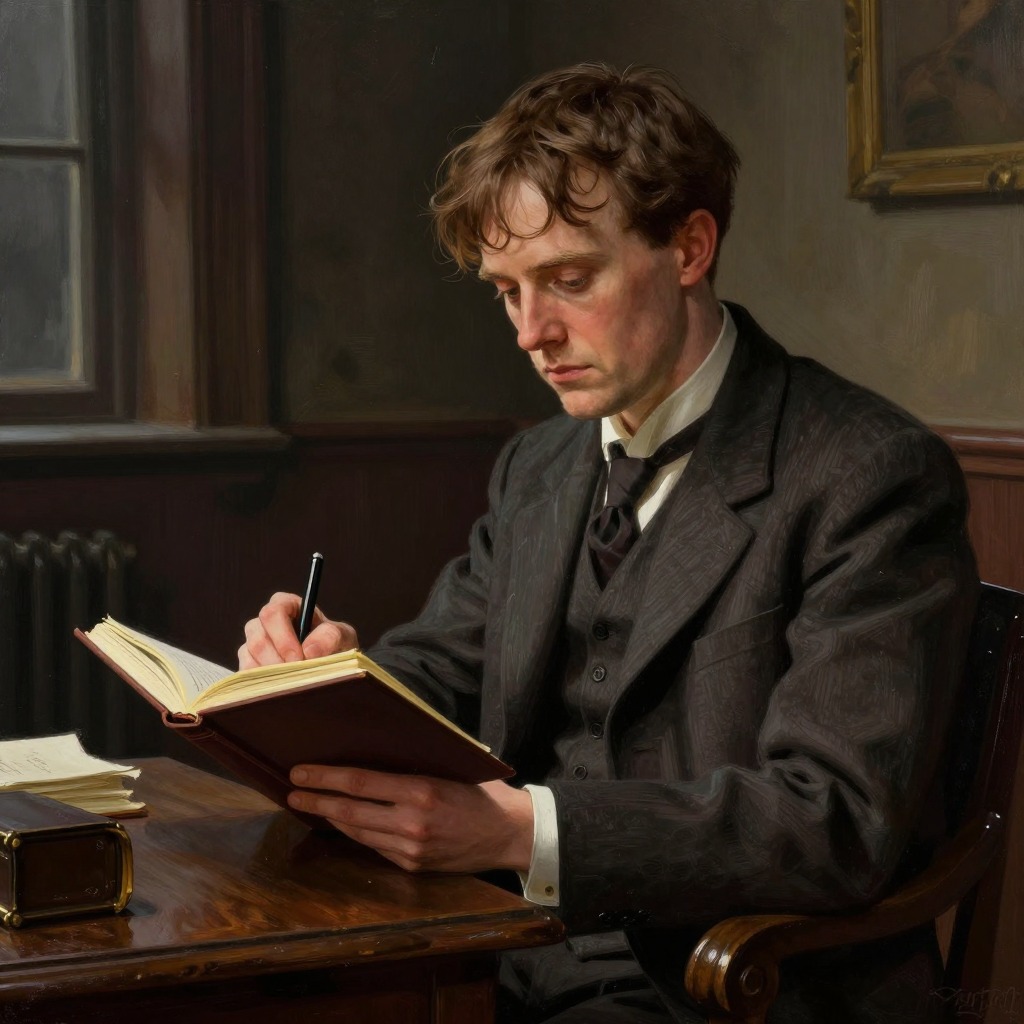
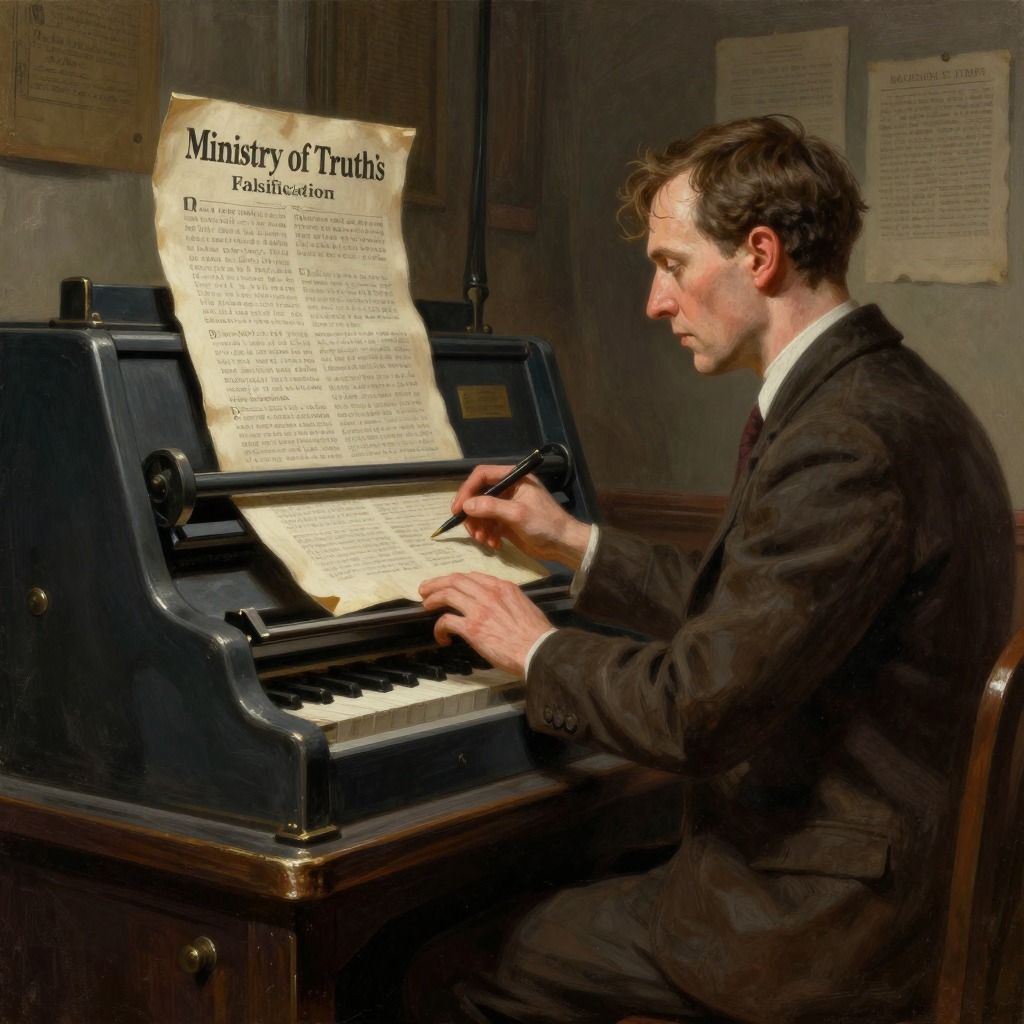
When Winston is released from the Ministry of Love, the Chestnut Tree Café is almost the whole of his life. In the final chapter it is almost empty, a ray of sunlight slanting through a window falling yellow on dusty table-tops, tinny music trickling from the telescreens at the lonely hour of fifteen. He sits in his usual corner beneath a portrait of Big Brother with the caption BIG BROTHER IS WATCHING YOU; the waiter refills his glass with Victory Gin, shaking into it a few drops of saccharine flavoured with cloves, the speciality of the café. The chessboard is always waiting for him, his corner table always reserved, and nobody cares to sit too close to him; the bills, he suspects, are always undercharged, though it would make no difference since he now has a sinecure more highly paid than his old job at the Ministry of Truth. From fifteen to closing time he is a fixture, and the rest of his day is measured by the bottle and teacup left beside his bed.
At the café his mind loops through the wreckage of the past and the present war. He worries over a bulletin from the African front, studies the chess problem in the Times, "White to play and mate in two moves", and reflects that white always mates, as though the game symbolised the eternal triumph of the Party. Once, tracing in the dust on the table, he writes 2 + 2 = 5, remembering Julia's claim that "They can't get inside you" and O'Brien's answer that what happens in the Ministry of Love is for ever. The cracked, jeering yellow note sounds again in the music, and a voice sings the old rhyme "Under the spreading chestnut tree / I sold you and you sold me"; the tears well up in his eyes, and the waiter comes back with the gin bottle. The drink that had once been a scarce, sickly stimulant has become his life, his death and his resurrection.
The Place of Conversion
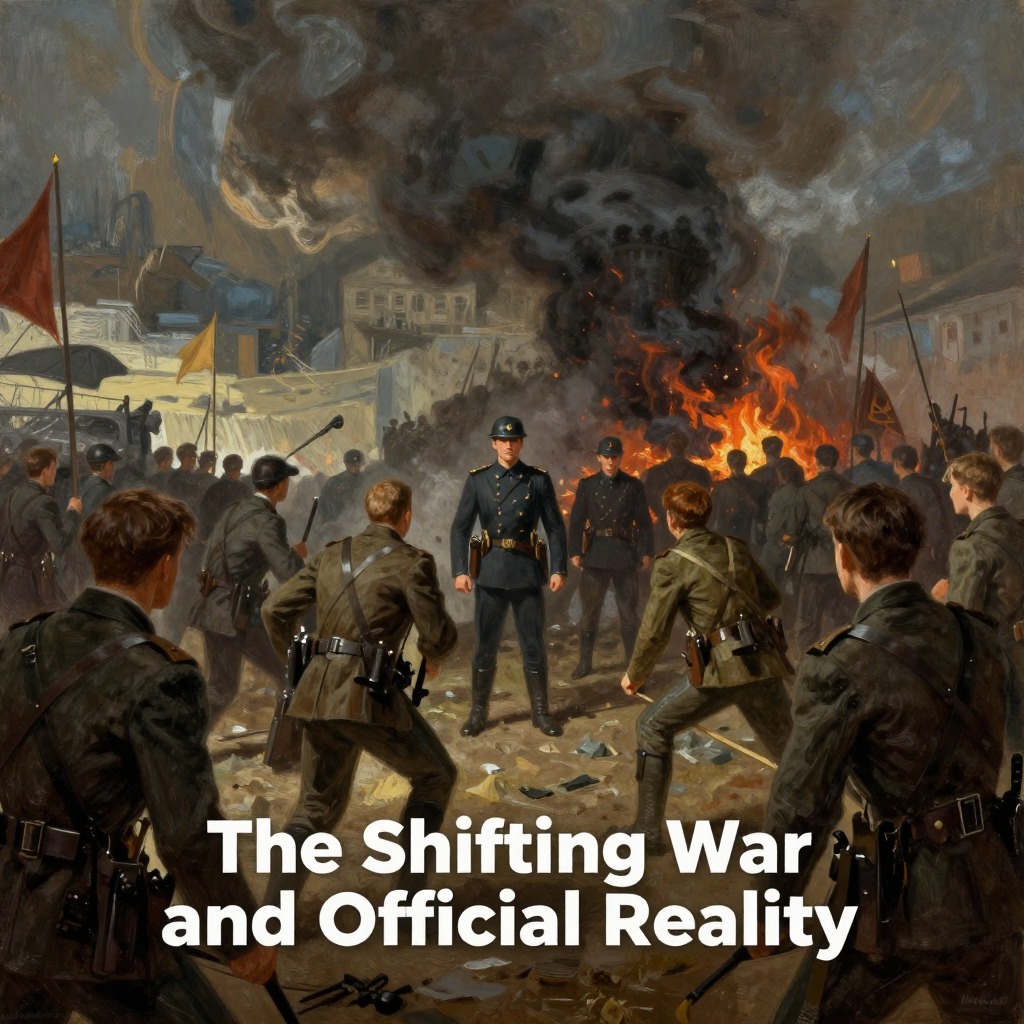
On the afternoon of the bulletin, the café is where Winston's last resistance ends. The shrill trumpet-call that precedes the news means victory, and the telescreen pours out fragments, "vast strategic manoeuvre", "utter rout", "half a million prisoners", "greatest victory in human history", while cheering crowds fill the streets outside. Under the table Winston's feet make convulsive movements; in his mind he is running with the crowds, cheering himself deaf. The victory, he feels, has accomplished what torture could not: the final, indispensable, healing change has happened. He imagines himself back in the Ministry of Love, everything forgiven, walking down the white-tiled corridor while the long-hoped-for bullet enters his brain. Gazing up at the enormous face, he reflects that it has taken him forty years to learn what kind of smile is hidden beneath the dark moustache; two gin-scented tears trickle down his nose. "But it was all right, everything was all right, the struggle was finished. He had won the victory over himself. He loved Big Brother."
Narrative Significance
The Chestnut Tree Café gives the novel its two most concentrated images of the Party's power over memory. In the same room where the relics of the old revolution sat waiting for their second arrest, under the same telescreen music, Winston is reduced to tracing heretical arithmetic in dust and then accepting the arithmetic the Party dictates. The café's speciality, gin made tolerable with saccharine and cloves, and its perpetual chessboard become emblems of a world where every pleasure is a rationed counterfeit. When Winston, after his last meeting with Julia, longs only to get back to his corner table with its newspaper, chessboard and ever-flowing gin, the café has already ceased to be a place of escape and become the antechamber of his conversion. It is fitting that the last words of the novel's final scene are spoken there: "He loved Big Brother."