Eastasia
Nineteen Eighty-FourEastasia is one of the three totalitarian superstates that divide the world in the world of Oceania, alongside Eurasia and Oceania itself. It emerged as a distinct unit after a decade of confused fighting, its frontiers fluctuating but generally comprising China, the countries to the south of it, the Japanese islands, and a large but fluctuating portion of Manchuria, Mongolia, and Tibet. Smaller than the other two superstates, Eastasia nevertheless plays a crucial role in the permanent war that sustains the Party's power, serving as a shifting enemy or ally whose identity changes with the needs of the Party.
Origins and Geography
The superstate Eastasia traces its conceptual origins to the geopolitical theories of James Burnham, whose analysis of the post-war world led Orwell to imagine a tripartite balance of power, with Burnham's victorious Japan becoming Eastasia. The actual division of the world into three zones was foreshadowed by the Teheran Conference of 1943, where the Allies planned the occupation of defeated Germany; Orwell extrapolated this to a global scale. According to the book written by Emmanuel Goldstein, The Theory and Practice of Oligarchical Collectivism, Eastasia only emerged as a distinct unit after another decade of confused fighting. Its western frontier is less definite than those of the other superstates, and its territory includes the densely populated regions of China and Japan, giving it a large and industrious population.
Role in the Perpetual War
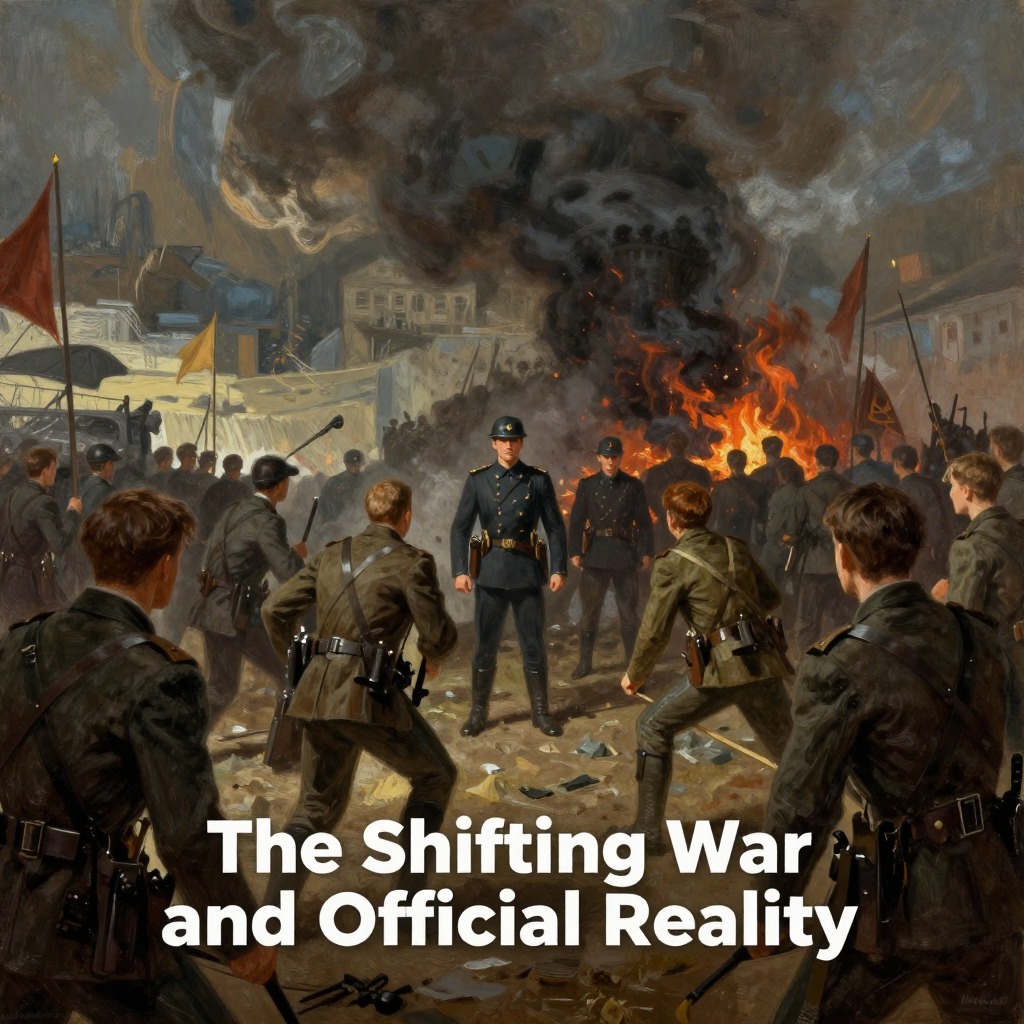
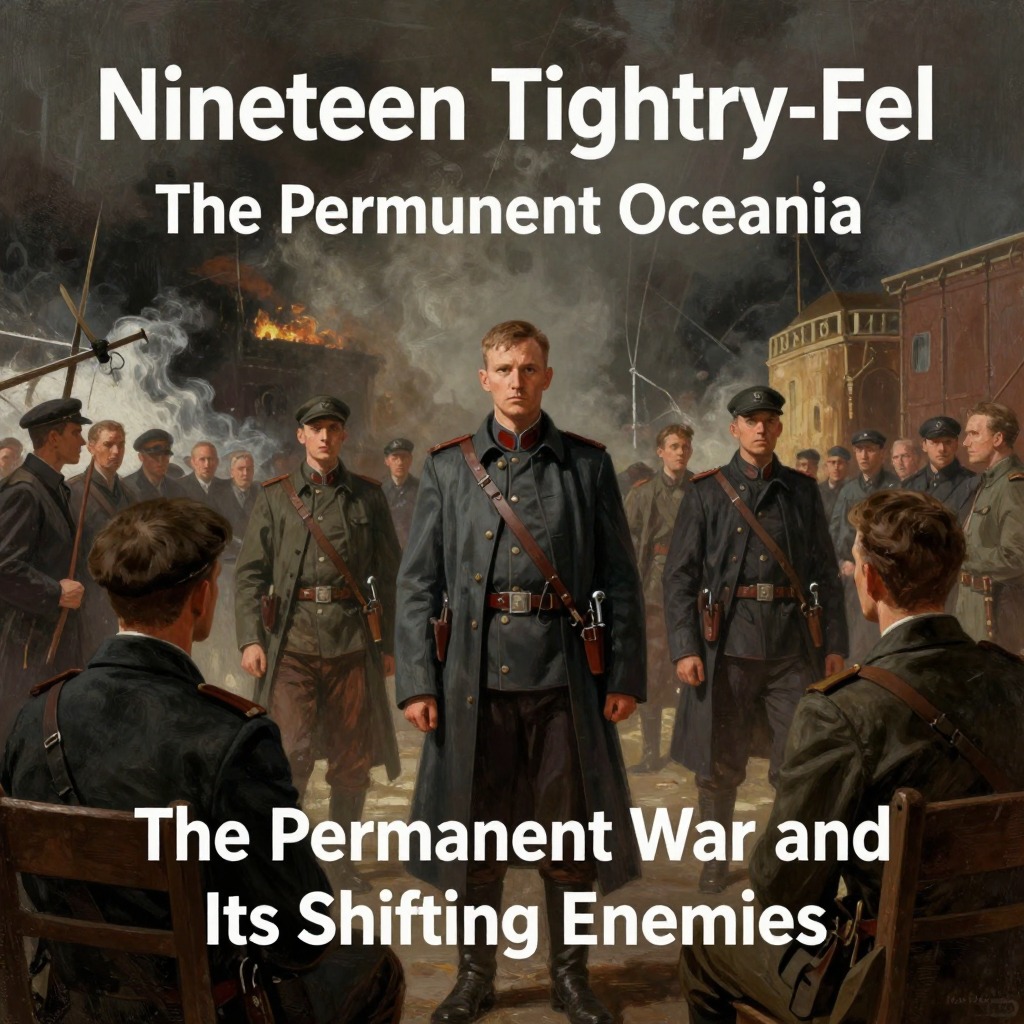
In the world of Oceania, Eastasia is one of the two enemy powers that the Party uses to maintain a state of continuous war. Unlike Eurasia, Eastasia is not a constant object of hatred; as the Two Minutes Hate demonstrates, the figure of Emmanuel Goldstein is a more consistent target, because when Oceania is at war with one of the two powers, it is generally at peace with the other. The Party's ability to switch alliances overnight is a key feature of its control over reality. During Hate Week, for example, the enemy suddenly changes from Eurasia to Eastasia, yet the Party insists that Oceania has always been at war with Eastasia. This manipulation of the past is essential to the Party's power, and Eastasia's role as a flexible enemy makes it an indispensable tool.
Significance in the Party's Ideology
Eastasia's existence is not only a geopolitical fact but also a cornerstone of the Party's ideology. The perpetual war with Eastasia (or Eurasia) serves to consume surplus production, maintain scarcity, and justify the absolute power of the Party. In the book, Eastasia is described as having a philosophy called "Death-Worship" or "Obliteration of the Self," which is actually indistinguishable from Oceania's Ingsoc. The three superstates are essentially identical in structure, and their conflict is a sham that props up the ruling groups. Eastasia, like the others, is a sealed universe, its citizens kept ignorant of the outside world, so that the Party can maintain its control.