Glass Paperweight
Nineteen Eighty-FourIn Oceania, where every written record is re-issued and falsified until the past itself dissolves, the glass paperweight that Winston Smith buys for four dollars in Mr Charrington's junk shop is a small miracle of survival: an old hand-made hemisphere of glass, with a peculiar softness “as of rain-water” in its colour and texture, and a fragment of coral suspended at its heart. Winston calls it “a little chunk of history that they've forgotten to alter. It's a message from a hundred years ago, if one knew how to read it.” Its secret life in the rented room above the shop makes it the objective embodiment of everything the Party cannot control, and its destruction — smashed to pieces on a hearth-stone at the moment of his arrest — is the novel's most compact emblem of how private history is annihilated.
Appearance and Purchase
The paperweight is first described with an almost loving exactness. It is a heavy lump of glass, curved on one side, flat on the other, making almost a hemisphere, with a peculiar softness, as of rain-water, in both the colour and the texture of the glass; at its heart, magnified by the curved surface, there is a strange pink, convoluted object that recalls a rose or a sea anemone. Mr Charrington identifies it as coral, which in all likelihood came from the Indian Ocean, embedded in glass that was not made less than a hundred years ago. Winston pays the asking price of four dollars immediately and slides the coveted thing into his pocket; only afterwards does he realise that the old man would have accepted three, or even two. What appeals to him is not so much its beauty as the air it possesses of belonging to an age quite different from the present one. The thing is doubly attractive because of its apparent uselessness, though he guesses that it must once have been intended as a paperweight. It is heavy in his pocket but does not bulge, and he knows it is a queer, even compromising possession for a Party member: anything old, and for that matter anything beautiful, is always vaguely suspect.
A World Inside the Glass
In the room above the shop the paperweight finds its place: on the gate-leg table it gleams softly out of the half-darkness, and when Julia brings it over to the bed to look at it in a better light, Winston takes it from her hand, fascinated as always. He tells her he does not think it was ever put to any use. “That's what I like about it. It's a little chunk of history that they've forgotten to alter. It's a message from a hundred years ago, if one knew how to read it.”
Late in the afternoon, as the room darkens, Winston lies gazing into the paperweight rather than at the coral inside it. “The inexhaustibly interesting thing was not the fragment of coral but the interior of the glass itself. There was such a depth of it, and yet it was almost as transparent as air.” The surface of the glass seems to be the arch of the sky, enclosing a tiny world with its atmosphere complete; he has the feeling that he could get inside it, and that in fact he is inside it, along with the mahogany bed and the gate-leg table, the clock and the steel engraving. “The paperweight was the room he was in, and the coral was Julia's life and his own, fixed in a sort of eternity at the heart of the crystal.” Some nights later the same object furnishes the scenery of a vast, luminous dream in which his whole life stretches out before him like a landscape on a summer evening after rain: it has all occurred inside the glass paperweight, whose surface has become the dome of the sky, flooded with clear soft light in which one can see into interminable distances.
Against the Rewritten Past
The paperweight's value is defined by everything the Party does to time. Day by day and almost minute by minute the Ministry of Truth reprints and rectifies newspapers, books, films and photographs, until “All history was a palimpsest, scraped clean and re-inscribed exactly as often as was necessary”; in this way every prediction made by the Party can be shown by documentary evidence to have been correct, and no item of news or expression of opinion that conflicts with the needs of the moment is ever allowed to remain on record. The Party slogan completes the logic: “Who controls the past controls the future: who controls the present controls the past.” Past events, on this doctrine, survive only in written records and in human memories — and the Party controls both. The paperweight is a third kind of record, outside that system. Winston tells Julia that if the past survives anywhere, it is “in a few solid objects with no words attached to them, like that lump of glass there.” It needs no language, and no one has yet thought to alter it. Newspeak, by contrast, the official language of Oceania devised to meet the ideological needs of Ingsoc, is designed to make all other modes of thought impossible, so that a heretical thought becomes literally unthinkable and, once Oldspeak is forgotten, the last link with the past is severed.
Shattered
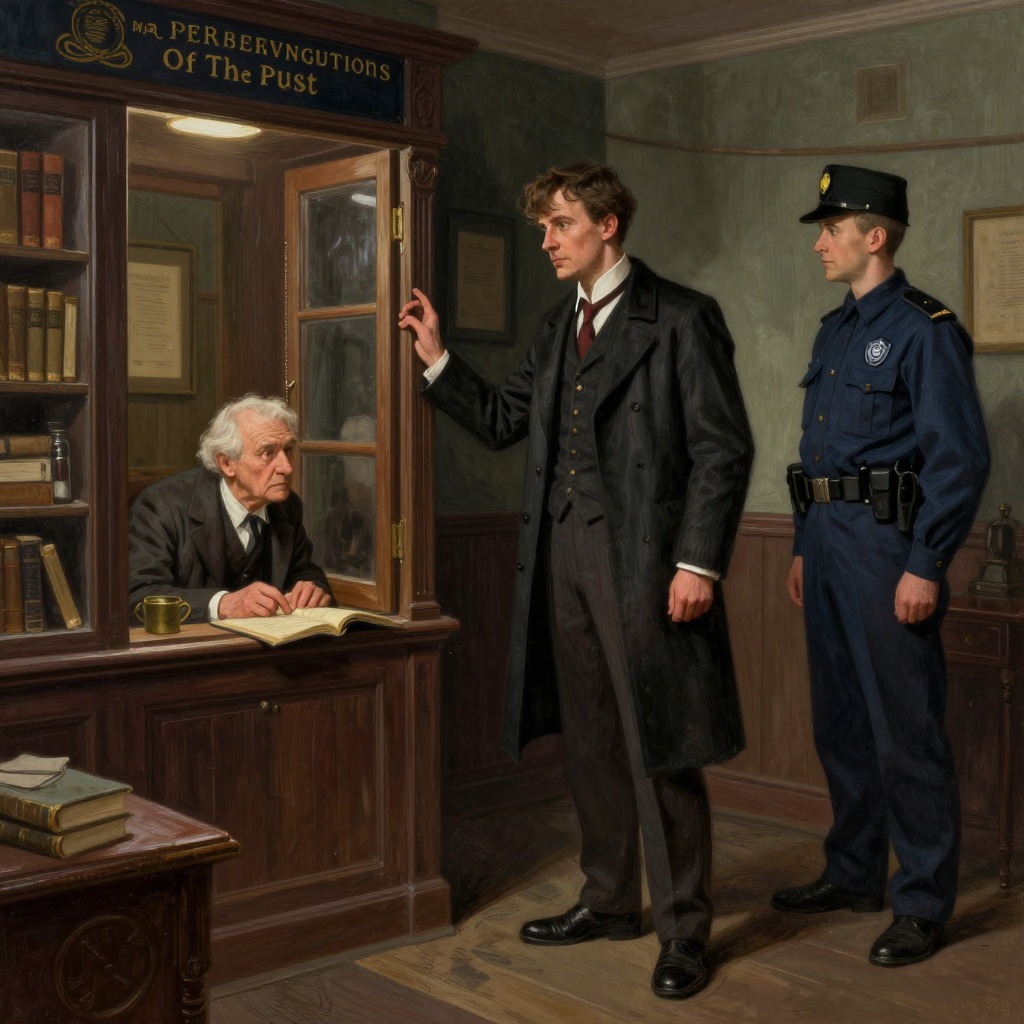
The end comes during the arrest. As the steel engraving of St Clement's Dane falls from the wall, uncovering the telescreen hidden behind it, Julia and Winston stand helpless while the room fills with solid men in black uniforms, iron-shod boots and truncheons. Someone picks up the paperweight from the table and smashes it to pieces on the hearth-stone. The fragment of coral — “a tiny crinkle of pink like a sugar rosebud from a cake” — rolls across the mat. “How small, thought Winston, how small it always was!” The sentence releases the full irony of his imagined eternity: the crystal world he had felt himself inside of, in which Julia's life and his own were fixed forever, was only a heavy lump of old glass, and the marvellous rose at its centre was a crinkle of coral that could be scattered in an instant. The destruction is total and unrecorded; no more trace of the paperweight will survive than of the diary, and the object the Party had forgotten to alter is finally altered out of existence.