Inner Party
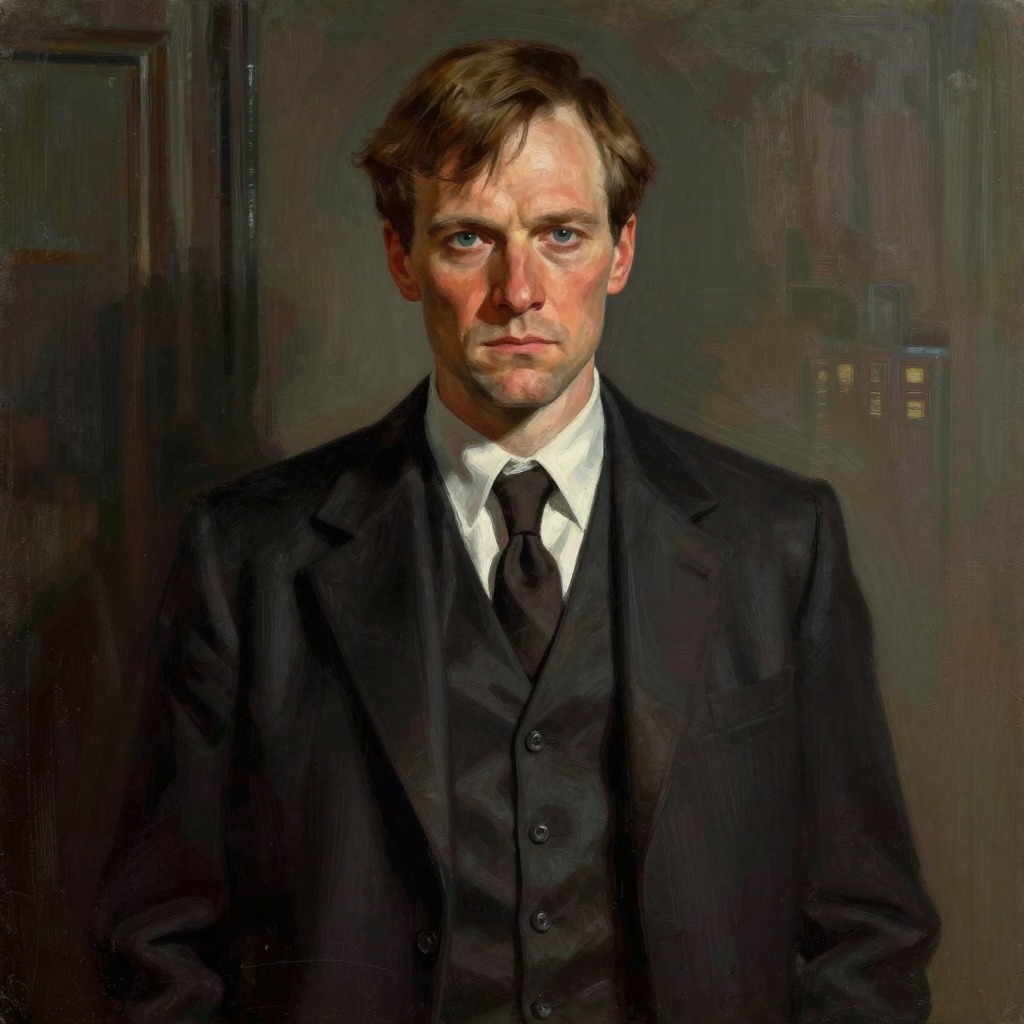
Nineteen Eighty-FourIn Nineteen Eighty-Four the Inner Party is Oceania's ruling caste: the smaller and higher of the Party's two strata, numbering about six million people — less than two per cent of the population — and standing between the quasi-divine figurehead Big Brother and the far larger Outer Party below. Thomas Pynchon's introduction observes that Oceania ought to be a classless society and is instead "divided into Inner Party, Outer Party and the Proles"; the Inner Party is the brain of that society, the stratum that staffs the four Ministries, directs the Thought Police and the two-way television that watches every room, and alone enjoys the luxuries — wine, real coffee, carpets, servants — that the rest of Oceania knows only in rare glimpses. The Inner Party is also the novel's central idea made visible in a single figure: O'Brien, the "consummate embodiment of doublethink", Winston Smith's "seducer and betrayer, protector and destroyer", who recruits Winston into a phantom conspiracy and then breaks him in the Ministry of Love.
The Pyramid and the Brain
Goldstein's forbidden treatise, The Theory and Practice of Oligarchical Collectivism, describes the hierarchy in geometrical terms. At the apex stands Big Brother, never seen — "Nobody has ever seen Big Brother" — yet "infallible and all-powerful", a "guise in which the Party chooses to exhibit itself to the world", "a face on the hoardings" and a voice on the two-way television, whose function is to act as "a focusing point for love, fear and reverence". Beneath him comes the Inner Party, "its numbers limited to six millions, or something less than two per cent of the population of Oceania"; below that the Outer Party, which, if the Inner Party is "the brain of the State", "may be justly likened to the hands"; and below both the proles, the "dumb masses", numbering perhaps eighty-five per cent of the population. In principle this is no hereditary aristocracy: admission to either branch of the Party is by examination at sixteen, there is no racial discrimination, and Goldstein insists that "Jews, Negroes, South Americans of pure Indian blood are to be found in the highest ranks of the Party". In practice the Inner Party is an adoptive oligarchy of the most rigid kind: proletarians never graduate into it, and "The Party is not concerned with perpetuating its blood but with perpetuating itself." The governing machinery is spread across four Ministries — Truth, Peace, Love and Plenty — with the Records Department only one branch of the Ministry of Truth, which supplies every citizen with newspapers, films, textbooks and programmes and repeats the whole operation at a lower level for the proles. Memory, from the totalitarian point of view, is "relatively easy to deal with", and the Inner Party's anonymous "directing brains" decide the fate of every document: in the Records Department the routine is punctual and silent, instructions slide from the pneumatic tube, superseded documents vanish into the memory hole, and between interruptions Winston settles back to his main job with the Newspeak dictionary to hand. Winston himself "rectifies" the Ministry of Plenty's boot-output forecast, marking it down from a hundred and forty-five million pairs to fifty-seven millions so that the quota can be claimed as over-fulfilled; rival drafts of a rewritten speech by Big Brother are submitted, and some Inner Party "master brain" selects the lie that will pass into the permanent records.
Privilege, Seclusion, and Terror
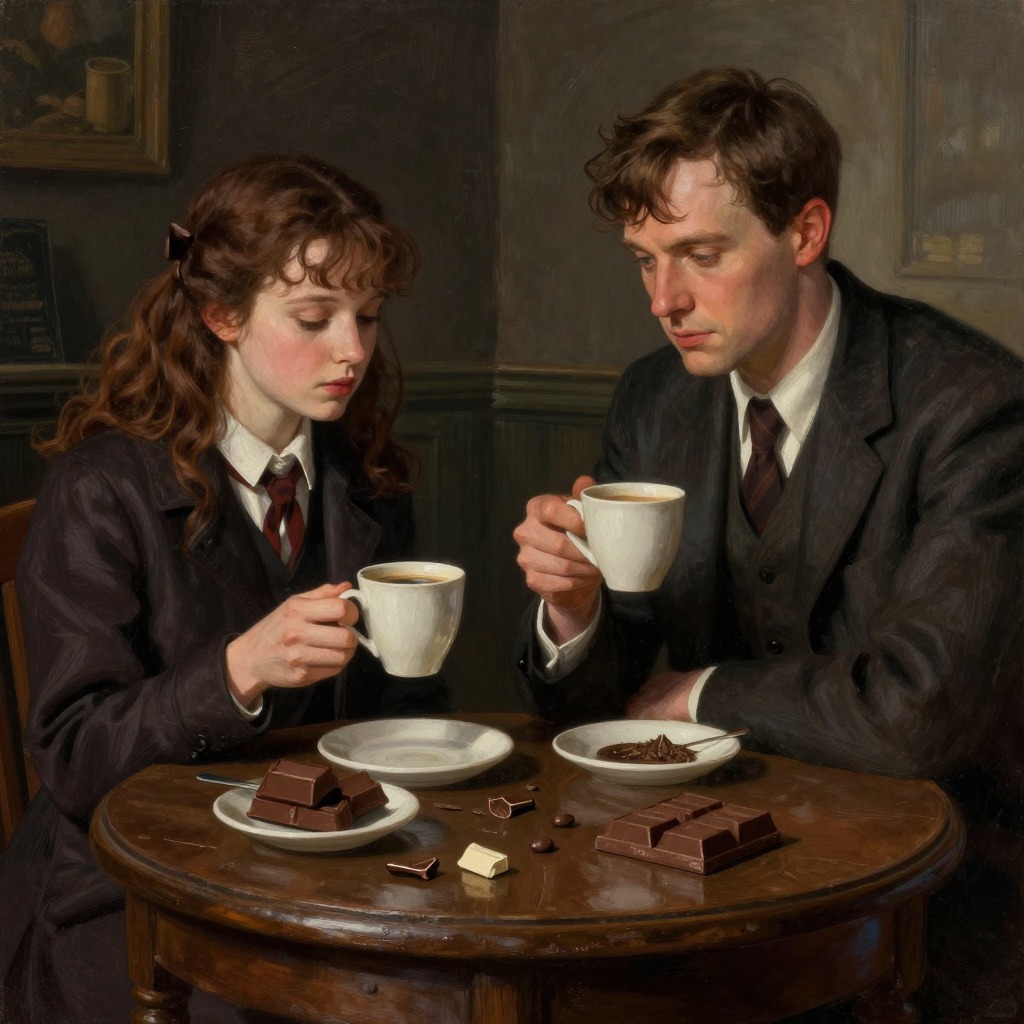
The divide is visible from an Inner Party member's first appearance. When O'Brien enters the Records Department, "a momentary hush" passes over the group at the sight of the black overalls; he holds "some post so important and remote that Winston had only a dim idea of its nature", and his habit of re-settling his spectacles is "curiously disarming", "curiously civilised". Inside an Inner Party flat the gap becomes overwhelming: the room is softly lit, the dark-blue carpet gives one the impression of treading on velvet, the passages are softly carpeted with cream-papered walls and white wainscoting, "all exquisitely clean", and white-jacketed servants hurry to and fro. O'Brien presses a switch and the two-way television falls silent — "We have that privilege" — and he pours a dark-red liquid which he calls "wine", remarking that "Not much of it gets to the Outer Party". Julia, an Outer Party worker, gathers the same treasures on the black market — real coffee from Inner Party stores, real sugar, tea — observing that everything worth having is Inner Party stock and that those swine lack nothing. Goldstein's book lays out the economy of this privilege: even an Inner Party member leads "an austere, laborious kind of life" by the standards of the early twentieth century, yet his large well-appointed flat, his better clothes, food, drink and tobacco, his two or three servants and his private motor-car or helicopter "set him in a different world from a member of the Outer Party"; it is "deliberate policy to keep even the favoured groups somewhere near the brink of hardship", since scarcity magnifies the worth of small privileges. On the other side of the divide, the Outer Party member's life is "slogging through dreary jobs, fighting for a place on the Tube, darning a worn-out sock, cadging a saccharine tablet, saving a cigarette end" — a bareness that matches no lie the telescreens tell. At the heart of the Inner Party's world sits its true instrument, the Ministry of Love — windowless, impossible to enter except on official business, guarded by "barbed-wire entanglements, steel doors and hidden machine-gun nests" and by "gorilla-faced guards in black uniforms, armed with jointed truncheons".
The Doctrine of Pure Power
It is O'Brien, interrogating Winston in the Ministry of Love, who turns the Inner Party's unspoken creed into open doctrine. The Party, he announces, "seeks power entirely for its own sake"; those who rule it are "interested solely in power" — "Not wealth or luxury or long life or happiness: only power, pure power." Unlike the German Nazis and the Russian Communists, who never had the courage to recognise their own motives, the Inner Party knows exactly what it is doing: "The object of persecution is persecution. The object of torture is torture. The object of power is power." The individual, O'Brien explains, "is only a cell"; "The weariness of the cell is the vigour of the organism." The Inner Party are "the priests of power", for whom "God is power." Reality is inside the skull, so that "We control matter because we control the mind" — invisibility and levitation would be possible whenever the Party wished them. The social doctrine is equally absolute: a committee must approve every marriage between Party members and always refuses where the couple appear physically attracted to one another, since "The only recognised purpose of marriage was to beget children for the service of the Party". The future this creed prepares is one in which children are taken from their mothers at birth, the sex instinct is eradicated, and "We shall abolish the orgasm"; its picture of the future is "a boot stamping on a human face". The mental instrument of this rule is doublethink, whose "subtlest practitioners" are, in Goldstein's account, those who invented it; Orwell himself, in a letter written while revising the novel in 1948, diagnosed in real politics the same "sort of schizophrenic manner of thinking" in which "concentration camps and mass deportations can be right and wrong simultaneously". Doublethink governs the Inner Party's own emotional life: war hysteria "increases in intensity as one rises in the social scale", true war enthusiasm is found "in the ranks of the Party, and above all of the Inner Party", and the Party's two stated aims are "to conquer the whole surface of the earth" and "to extinguish once and for all the possibility of independent thought". Orwell's own measure of what was at stake dates from Spain, where he fought in 1937: every line of serious work he wrote thereafter was written, as he put it, "against totalitarianism and for democratic socialism".
The Double Game with Winston
Winston's faith in the Inner Party begins in the Two Minutes Hate, in a flash of eye contact: O'Brien seems to be saying, "I am with you", "I know all about your contempt, your hatred, your disgust." The connection is older than that — for seven years a dream has carried the words "We shall meet in the place where there is no darkness", and Winston has come to identify the voice as O'Brien's. The approach, when it comes, is concealed in plain sight: O'Brien scribbles his address on a page torn from a notebook while standing directly beneath the two-way television, so that any watcher can read it. In the Inner Party flat, with the two-way television silenced, the servant Martin is "one of us", wine is poured, and the toast is "To our Leader: To Emmanuel Goldstein" — an Inner Party official saluting the demonised heretic of the Two Minutes Hate. Then comes the catechism of readiness: to give their lives, to commit murder, to throw sulphuric acid into a child's face, to betray their country, and to separate, never seeing one another again. Winston answers yes to everything until the last, when he and Julia both answer "No" — and O'Brien approves: "You did well to tell me. It is necessary for us to know everything." Members of the Brotherhood, he warns, must get used to "living without results and without hope"; when caught they will confess and die; "We are the dead." The betrayal, when it comes, is total: at the moment of arrest O'Brien is waiting with the guard, saying "They got me a long time ago", and Winston understands that he has always known it. It is O'Brien who directs the interrogation, asking the questions and suggesting the answers, and O'Brien who — as he later reveals — "collaborated in writing" the very book of heresy, Goldstein's treatise, that supplies the Brotherhood's doctrine. The Inner Party, he explains, is not interested in the overt act; "the thought is all we care about", and its purpose is not to punish but to convert: "We make him one of ourselves before we kill him."
The Conquest of the Inner Heart
The inner heart is exactly what the Inner Party claims to capture. Before the Ministry of Love, Julia had insisted that the Party could not get inside a person — that it could make them say anything but could not make them believe it. O'Brien's craft is the systematic refutation of that hope. In Room 101, confronted with "the worst thing in the world" — a cage of starving rats fitted with a mask that will clamp over his face — Winston screams "Do it to Julia!", offering up the one human being he loves. Released at last, he returns to the Chestnut Tree Café to drink gin at a reserved corner table, and meets Julia once more on a "vile, biting day" in March: her body has become "thickened, stiffened", a scar crosses her forehead, and their entire conversation is two exchanged confessions — "I betrayed you"; "I betrayed you" — followed by the hollow promise that they must meet again. The close of the novel measures the Inner Party's victory: it has taken Winston forty years to learn "what kind of smile was hidden beneath the dark moustache", and as "two gin-scented tears" trickle down his nose he thinks that everything is all right, that the struggle is finished, that he has won the victory over himself — "He loved Big Brother." Against this absolute conquest the novel sets only what the Inner Party cannot touch: the proles, who have "stayed human", loyal to one another instead of to a cause, "storing up in their hearts and bellies and muscles the power that would one day overturn the world". Winston's diary had declared that if there was hope, it lay in the proles; Goldstein's book reaches the same conclusion. It is the one hope the Inner Party, for all its science of the mind, can neither share nor kill.