Mr Charrington
Nineteen Eighty-FourMr Charrington, the frail, soft-voiced proprietor of a junk shop in a poor quarter of London, comes to Winston Smith as a living fragment of the abolished past: an old man who remembers nursery rhymes, sells beautiful dead objects, and keeps a room that seems to lie beyond the reach of the two-way television. He is, in the end, a member of the Thought Police, and the room he lets to Winston and Julia is a listening post; the portrait that seems to guard the past is lifted to reveal the screen behind it. The shopkeeper is therefore the novel's most seductive mask, the point where nostalgia is converted into surveillance and where the lovers walk voluntarily into their own arrest.
A Benevolent Antiquarian
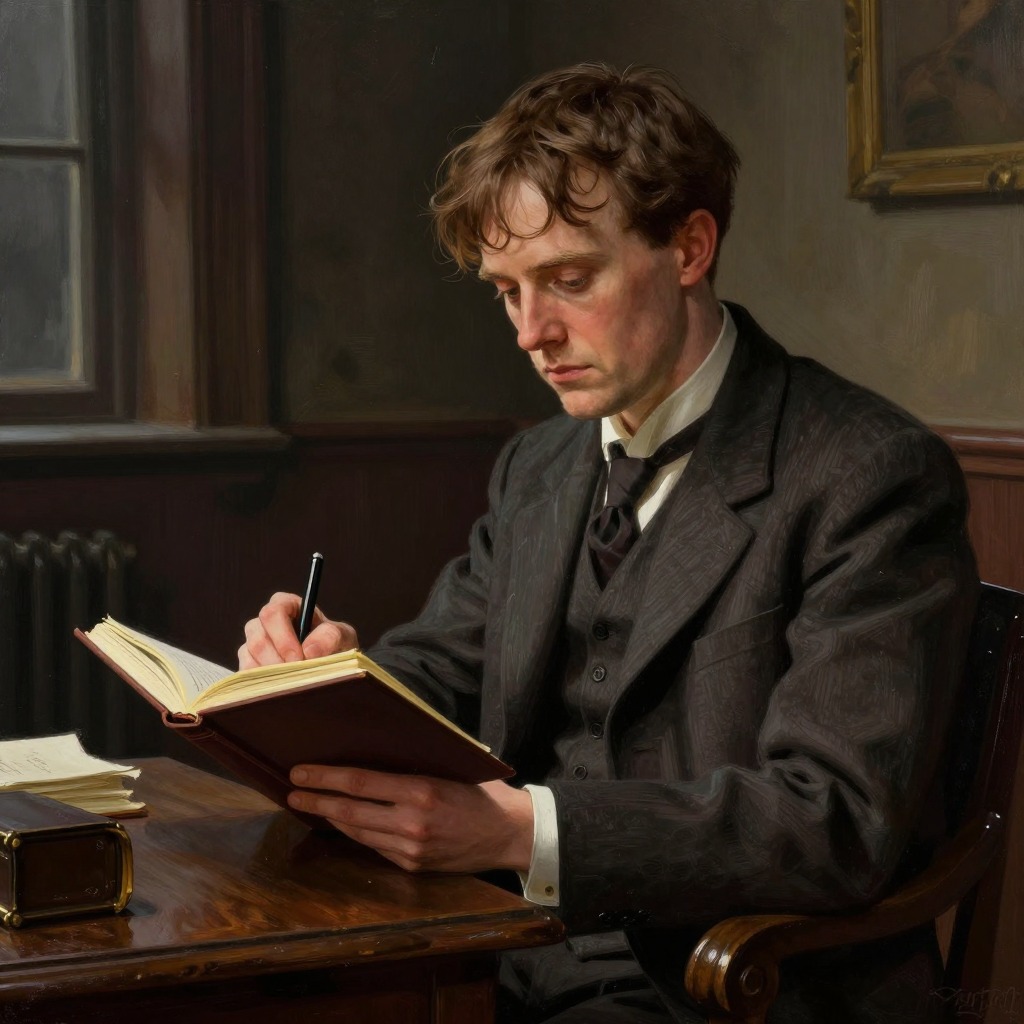
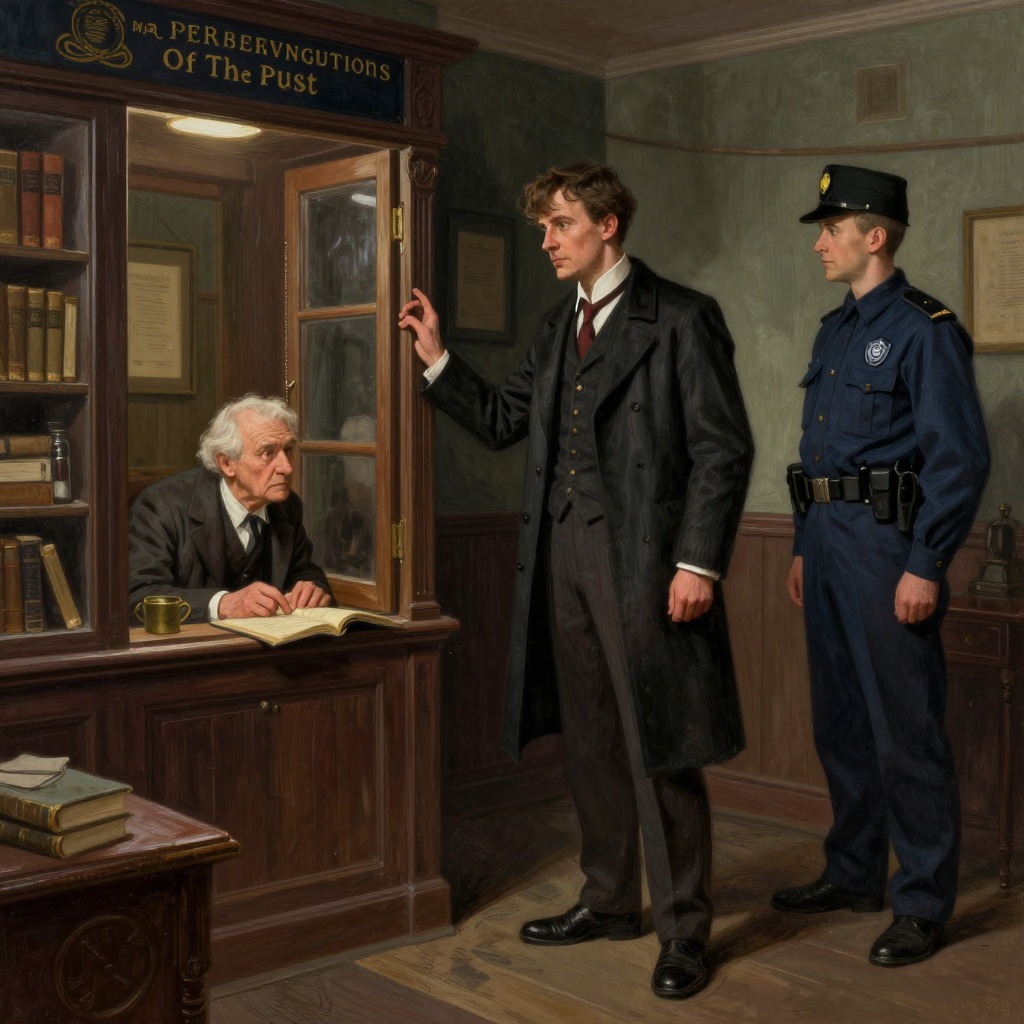
Winston's first return to the shop fixes the old man's image: perhaps sixty, frail and bowed, a long benevolent nose, mild eyes distorted by thick spectacles, hair almost white above bushy black eyebrows, and an aged black velvet jacket that gives him the air of a retired literary man or musician. His voice is soft, and his accent is less debased than that of the majority of proles. He recognises Winston immediately as the gentleman who bought the young lady's keepsake album, praises the 'beautiful bit of paper' of the diary — cream-laid paper, he calls it, a kind not made for fifty years — and asks no compromising questions. The surface is pure benevolence, and the shop's poverty confirms it.
The stock is almost worthless — dusty picture-frames, nuts and bolts, worn-out chisels, tarnished watches — and Charrington volunteers that the antique trade is finished, with everything broken up or melted down. Yet he sells Winston the glass paperweight for four dollars and is visibly cheered by the transaction; Winston realises he would have taken three, even two. Only later does the shop's inscription, Weeks, prove false: the owner is Charrington, a widower of sixty-three who has inhabited the shop for thirty years and has kept meaning to change the sign but never quite done so. Winston comes to regard him as another extinct animal, a ghostly figure with almost no customers, an ancient gramophone with an enormous horn, and a collector's tenderness for scraps of the past.
The Room Above the Shop
Charrington lets the upstairs room without surprise or offence. He speaks only generalities about privacy being valuable, remarks that everyone needs a place to be alone occasionally, and adds that the house has two entrances, one through the back yard into an alley. The room itself — the enormous mahogany bed, the twelve-hour clock, the gate-leg table, the fender with its oil stove — looks like a habitation out of time. Winston can hardly believe his eyes and murmurs, 'There's no telescreen!' The old man answers that he never had one of those things; they were too expensive, and he never felt the need. That exchange is the room's whole promise, and its whole lie.
Through June, as Winston's body improves and his fear relaxes, Charrington remains the room's guardian spirit. He is delighted by company, brings out fragments of old rhymes — four-and-twenty blackbirds, a cow with a crumpled horn, the death of Cock Robin — and knows the bells rhyme up to its last line about the chopper. The steel engraving of St Clement's Dane stays fixed to the wall; he once offers to unscrew it for Winston. At the arrest the same picture crashes to the floor, uncovering the two-way television behind it. Julia's gasp, 'It was behind the picture,' is answered by the iron voice: 'It was behind the picture.' The rhymes he had fed Winston were the very medium of their betrayal.
The Unmasking
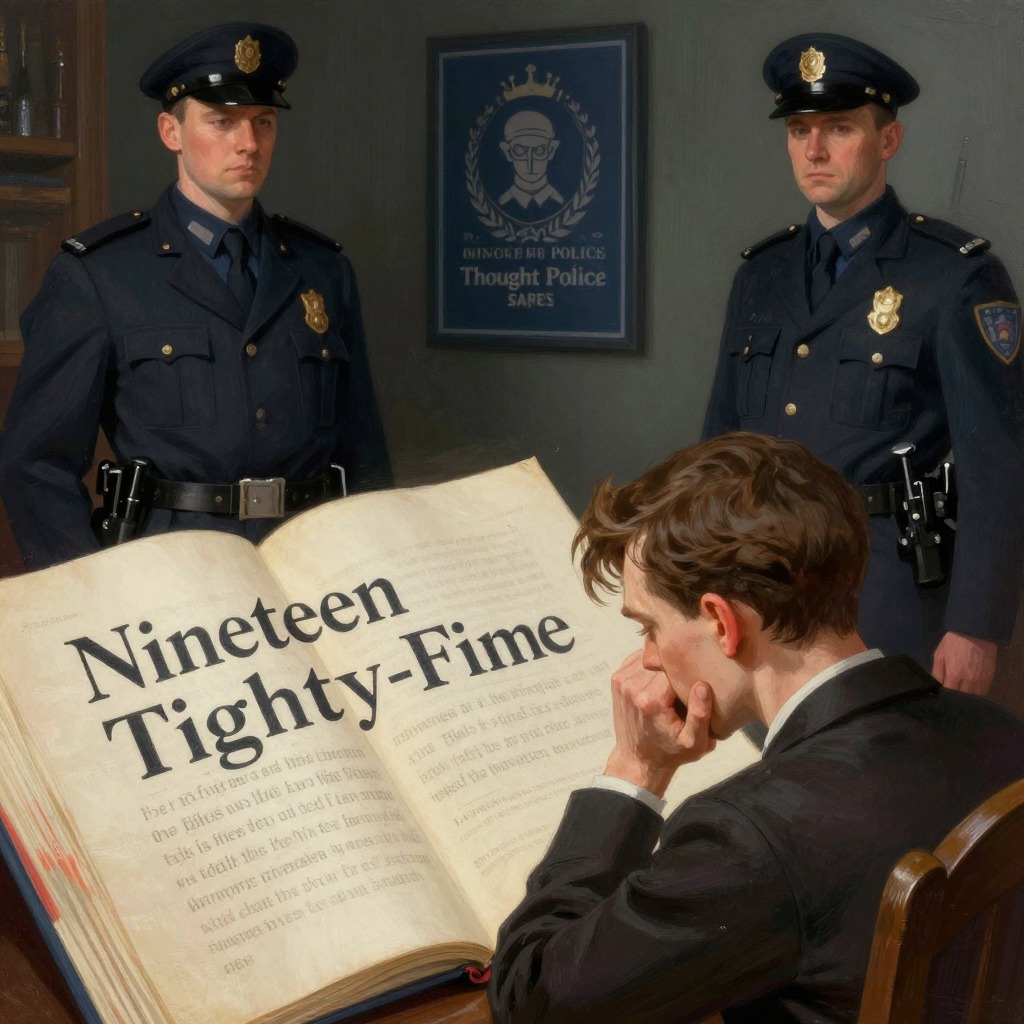
A thin, cultivated voice on the two-way television completes the rhyme — 'Here comes a candle to light you to bed, here comes a chopper to chop off your head!' — and a moment later Mr Charrington walks into the room, now in command of the black-uniformed men. His cockney accent has disappeared; his hair, almost white all summer, is black; the spectacles are gone; he has straightened until he seems larger. Tiny shifts in the face — thinner eyebrows, smoothed wrinkles, shorter nose — produce a complete transformation, and Winston understands that he is looking, for the first time in his life, at a member of the Thought Police. He gives no sign of the old man at all except the velvet jacket, and his first order concerns the shattered glass paperweight: 'Pick up those pieces.'
The unmasking changes the meaning of every object in the shop. The cream-laid diary, the paperweight with its coral, the engraving, the rhymes and the room itself were bait; the 'pocket of the past' Winston and Julia trusted was the most efficient listening post in the novel, and the assurance that no two-way television was needed was the precise lie that made privacy feel possible. Charrington is the agent who actually closes the trap, and his transformation from benevolent old antiquarian into a cold officer of about thirty-five is the book's sharpest demonstration that the Party can counterfeit memory, desire and hope. Even the fragments that seemed to escape history were made from the fabric of the State.