Mr Charrington's shop
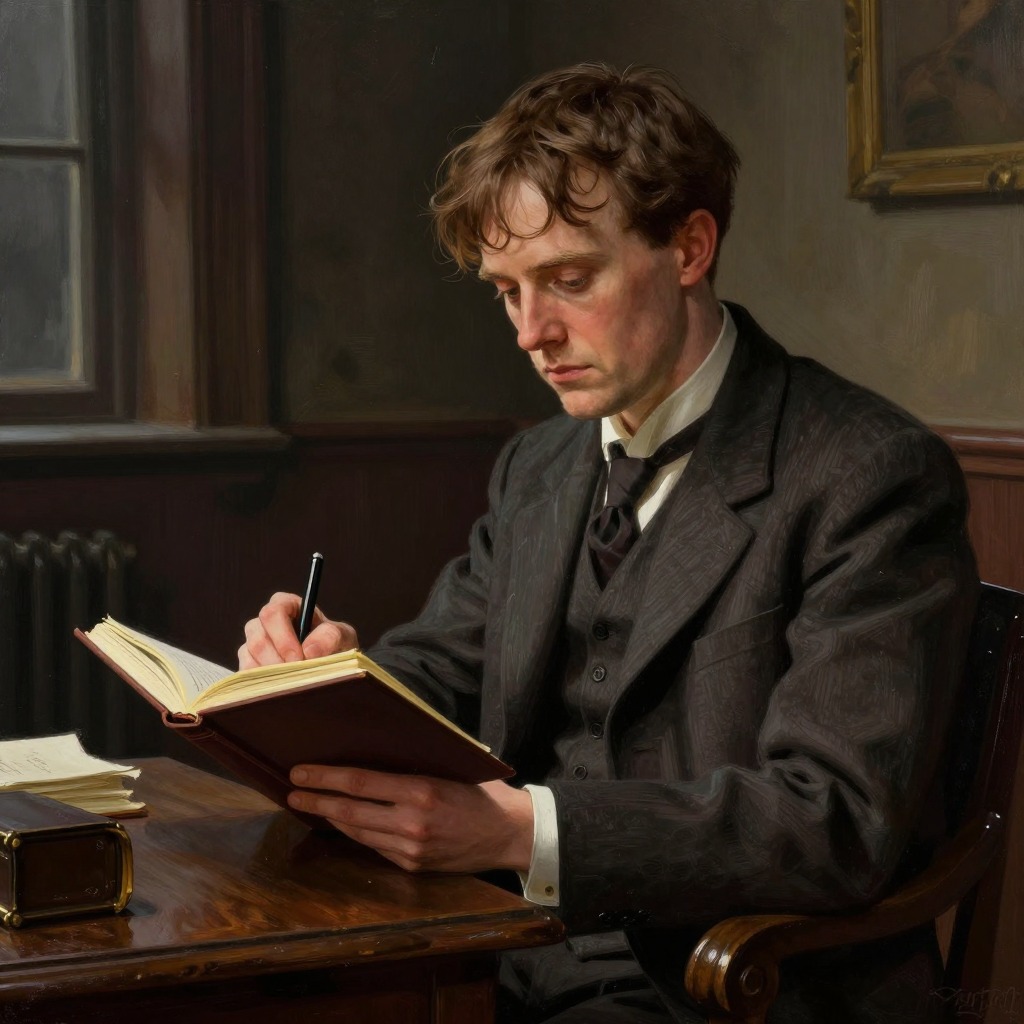
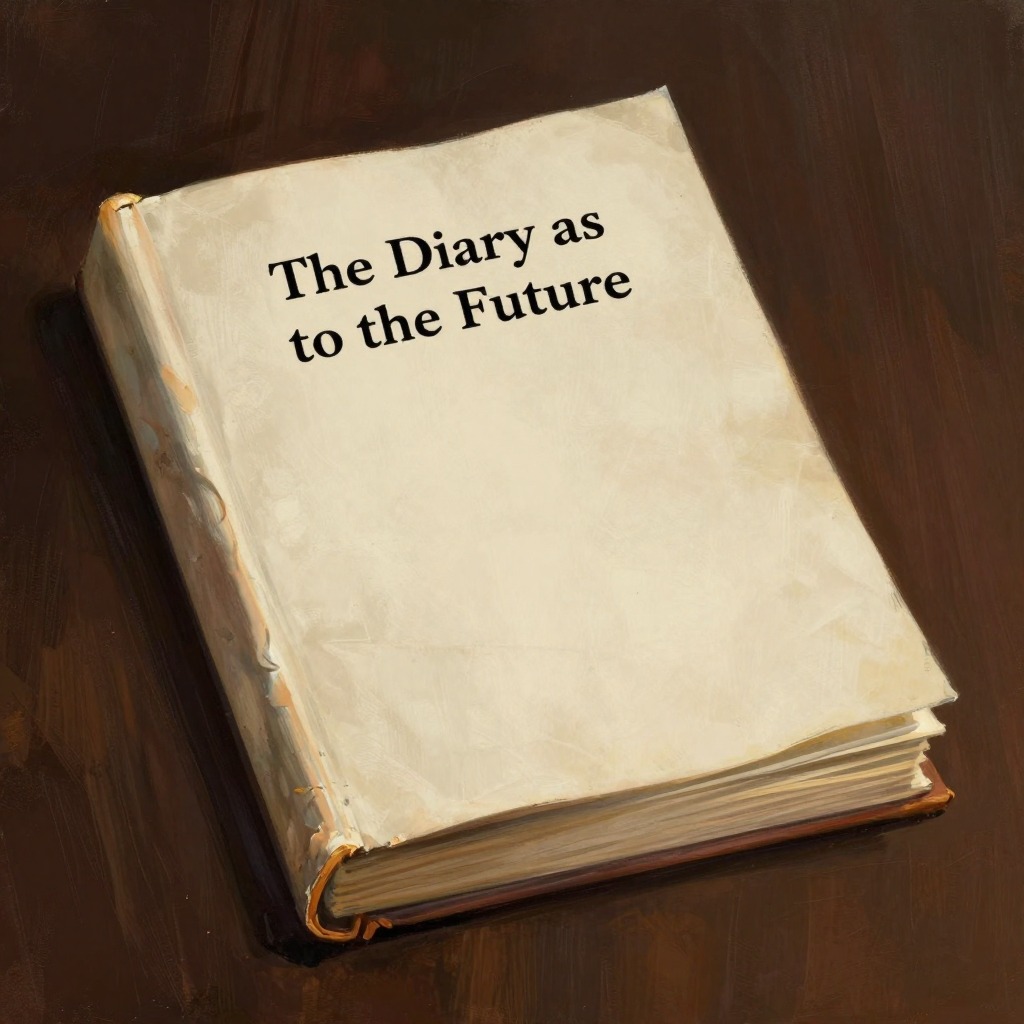
Nineteen Eighty-FourMr Charrington's shop stands in a narrow backstreet of a slummy London quarter, marked by three discoloured metal balls that looked as if they had once been gilded. It is here that Winston Smith, slipping inside after a quick glance up and down the street, buys for two dollars fifty the blank quarto book that becomes his Diary — a purchase from a "frowzy little junk-shop" so compromising that he carries it home guiltily in his briefcase. Weeks later he returns against his own sworn resolve, buys the Glass Paperweight, and rents the room above Mr Charrington's shop for his secret meetings with Julia. On the surface the establishment is a museum of the abolished past, presided over by a gentle old man who claims he has never even owned a two-way television; in fact it is the trap where the love affair ends. On the night of the arrest the steel engraving on the wall crashes down to uncover a two-way television, and the proprietor stands revealed as a member of the Thought Police. The shop is thus the precise hinge between the novel's two movements: the purchase of the Diary that opens Winston's written rebellion, and the hidden screen that closes it.
Setting and Appearance
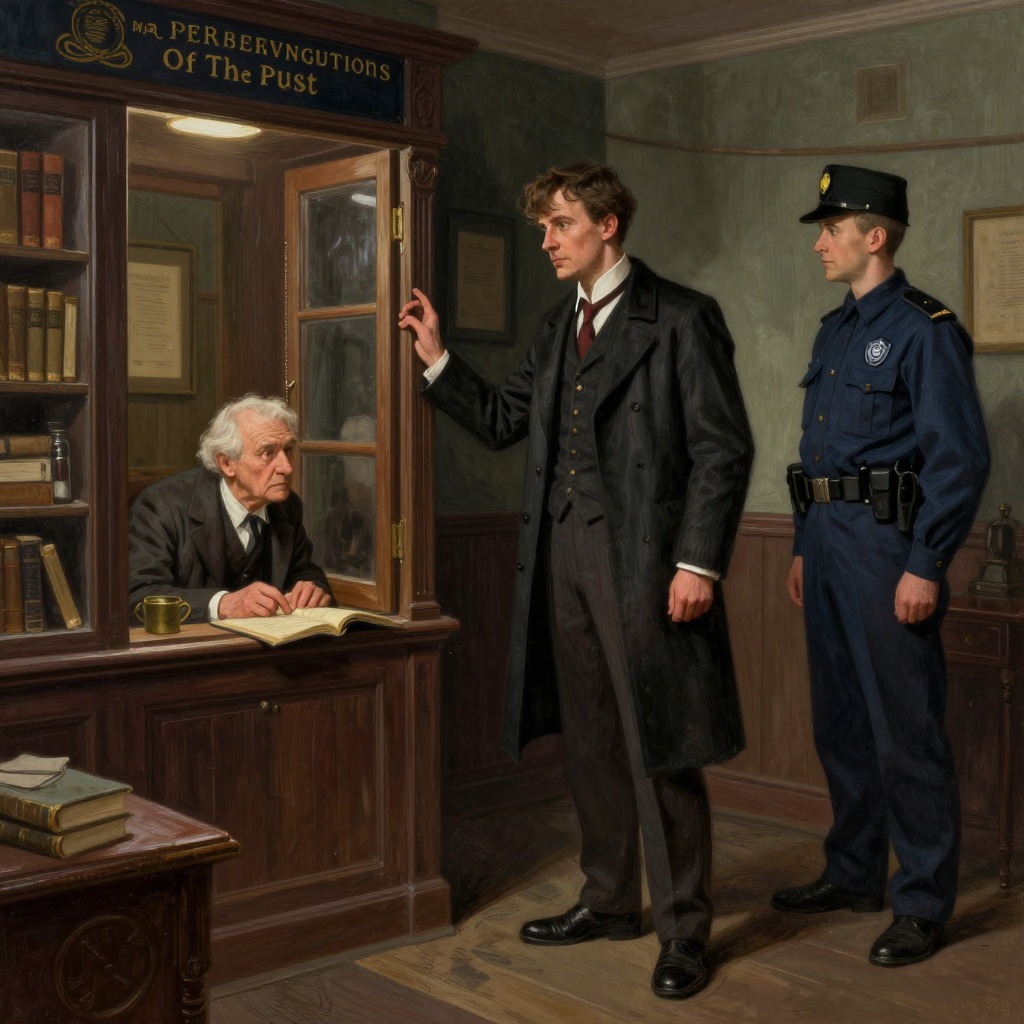
The shop occupies a narrow street in the slummy quarter of town to which Winston's purposeless wanderings repeatedly deliver him; the second time he finds himself outside it, he looks up at the three discoloured metal balls and recognizes the place with a twinge of fear. Inside, a hanging oil lamp gives off an unclean but friendly smell, and the tiny interior is "uncomfortably full" of things worth almost nothing: dusty picture-frames stacked round the walls, trays of nuts and bolts, worn-out chisels, penknives with broken blades, tarnished watches that do not even pretend to go, and a corner table littered with lacquered snuff-boxes and agate brooches. The proprietor explains that the antique trade is just about finished — there is no demand and no stock, furniture and china have been broken up by degrees, the metal has mostly been melted down, and he has not seen a brass candlestick in years. The most important absence Winston notices is the last one: there is no two-way television in the shop, because, the old man says, he never had one of those things — too expensive, and he never seemed to feel the need.
The Proprietor
The man behind the counter is perhaps sixty, frail and bowed, with a long, benevolent nose and mild eyes distorted by thick spectacles; his hair is almost white, his eyebrows bushy and still black, and his aged jacket of black velvet gives him a vague air of intellectuality, "as though he had been some kind of literary man, or perhaps a musician." His voice is soft, as though faded, and his accent is less debased than that of the majority of proles. He recognizes Winston on the pavement as "the gentleman that bought the young lady's keepsake album," praising the cream-laid paper of the book that will become the Diary. His name, Winston discovers, is not Weeks, as the inscription over the shopfront declares, but Charrington: a widower of sixty-three who has inhabited the shop for thirty years and has always meant to alter the sign but never quite got to the point of doing it. He leads a ghostlike existence between the dark shop and an even tinier back kitchen that contains, among other things, an unbelievably ancient gramophone with an enormous horn; he has almost no customers and seldom goes out of doors. Wandering among his worthless stock, he has always the air of a collector rather than a tradesman, and from the corners of his memory he drags out fragments of forgotten rhymes — four-and-twenty blackbirds, a cow with a crumpled horn, the death of poor Cock Robin — offering them with a deprecating little laugh, never asking Winston to buy, merely to admire.
The Shop's Treasures
The purchase that most defines the shop is the Glass Paperweight: a heavy lump of glass, curved on one side and flat on the other, making almost a hemisphere, with a peculiar softness "as of rain-water" in both colour and texture, and at its heart a strange, pink, convoluted object that recalls a rose or a sea anemone — coral from the Indian Ocean, embedded in the glass a hundred years or more ago. Winston pays four dollars for it, though the old man, visibly cheered, would have accepted three or even two. What appeals to him is not so much its beauty as its air of belonging to an age quite different from the present, and its apparent uselessness; he guesses it was once intended as a paperweight. "It's a little chunk of history that they've forgotten to alter," he tells Julia — "a message from a hundred years ago, if one knew how to read it." As he comes out of the shop that evening, the dark-haired girl from the Fiction Department — Julia, though he does not yet know her name — walks straight past him on the pavement, and he is certain, wrongly, that she has been following him and is an agent of the Thought Police.
The Room Above
Upstairs is a room which the old man and his dead wife once lived in: the furniture is still arranged as though the room were meant to be lived in — a strip of carpet, a picture or two on the walls, a deep, slatternly armchair drawn up to the fireplace, an old-fashioned glass clock with a twelve-hour face ticking on the mantelpiece, and, under the window, occupying nearly a quarter of the room, an enormous mahogany bed with the mattress still on it, which the old man calls a beautiful bed "if you could get the bugs out of it." The place awakens in Winston a sort of nostalgia, a sort of ancestral memory; he knows exactly what it would feel like to sit in an armchair beside an open fire, utterly alone, utterly secure, with nobody watching him and no voice pursuing him. "There's no telescreen!" he cannot help murmuring. The idea of renting the room first floats into his head as a vision of the Glass Paperweight mirrored on the surface of the gate-leg table, and Mr Charrington makes no difficulty about it: he is obviously glad of the few dollars, and he speaks, with a delicate air, of privacy as a very valuable thing, adding that there are two entries to the house, one of them through the back yard, which gives on an alley.
A Pocket of the Past
Once they have the room, the lovers inhabit it as a world of their own. Down in the sun-filled yard below the window a monstrous prole woman stumps between her washtub and her clothes line, pegging out babies' diapers and singing in a powerful contralto, turning the Music Department's "dreadful rubbish" into an almost pleasant sound. Julia brings the room the luxuries of the Inner Party — real sugar, a loaf of proper white bread, a little pot of jam, a tin of milk, and a whole kilo of real coffee — and Winston's body transforms itself: he drops his habit of drinking Victory Gin at all hours, grows fatter, the varicose ulcer subsides, the early-morning coughing stops. Four, five, six, seven times they meet during the month of June. Dirty or clean, the room was paradise, and the room was a world, a pocket of the past where extinct animals could walk; Mr Charrington, with his rhymes and his velvet jacket, is another extinct animal. But the room also harbours a rat, which Julia drives off with a shoe, and Winston's panic at the sight connects to a recurring nightmare of a wall of darkness behind which something unendurable waits — the very thing that O'Brien will later name as the rats, in Room 101.
The Trap
On the last afternoon, as Winston and Julia stand at the window, an iron voice speaks behind them: "You are the dead." Julia breathes, "It was behind the picture." The steel engraving of St Clement's Dane crashes to the floor, uncovering a two-way television; the room fills with black-uniformed men with truncheons. A thin, cultivated voice strikes in from the telescreen, quoting the last line of the nursery rhyme the old man taught Winston: "Here comes a candle to light you to bed, here comes a chopper to chop off your head!" Someone picks up the Glass Paperweight and smashes it to pieces on the hearth-stone; the fragment of coral rolls across the mat, "a tiny crinkle of pink like a sugar rosebud from a cake." Julia is punched in the solar plexus, doubled up, and carried out like a sack; the last Winston sees of her is her livid, gasping face with a smear of rouge on either cheek. Then Mr Charrington comes into the room. His eye falls on the fragments of the Glass Paperweight, and he says sharply, "Pick up those pieces." The cockney accent has disappeared; his hair, which had been almost white, is black; he is not wearing his spectacles. His body has straightened and seems to have grown bigger, the wrinkles are gone, the whole line of the face has altered — it is the alert, cold face of a man of about five-and-thirty. It occurs to Winston that for the first time in his life he is looking, with knowledge, at a member of the Thought Police.
Narrative Significance
The shop is the novel's most sustained irony. Its keeper appears to be the guardian of everything the Party has destroyed — collector of rhymes, preserver of an engraving of a bombed church, dealer in a worthless stock of relics from a lost century — and this is precisely what makes him so seductive to Winston. But the mask is the Party's own: the antiquary is an agent of the Ministry of Love, and the past he peddles is the bait in a trap, the gentleness that delivers Winston to Room 101. The pattern of misreading runs through the whole story: the girl he mistakes on the pavement outside the shop for a spy of the Thought Police becomes his lover, while the old man inside the shop, whom he trusts, is the one who has been watching all along. The shop also concentrates the novel's central symbols. Standing at the window with Julia, Winston felt the room to be a pocket of the past where extinct animals could walk; gazing into the Glass Paperweight, he felt that the paperweight was the room he was in, and the coral was Julia's life and his own, "fixed in a sort of eternity at the heart of the crystal." That eternity ends when the paperweight is smashed on the hearth. And the nursery rhyme the old man recovers — "Oranges and lemons," which ends "Here comes a candle to light you to bed, / Here comes a chopper to chop off your head" — is the novel's own figure for the shop: the candle that lights the lovers to their bed is also the headsman's instrument, and the rhyme that seems to belong to the vanished past is the weapon of the present.