Room 101
Nineteen Eighty-FourRoom 101 is the torture chamber buried at the deepest level of the Ministry of Love, the place in Nineteen Eighty-Four where the Party administers what O’Brien calls "the worst thing in the world" to each prisoner. For Winston Smith the worst thing is rats, and in Room 101 he is broken not by pain but by the prospect of a cage of starving rats being clamped to his face, until he screams "Do it to Julia!" and betrays the only person he loves. The room is the novel’s final answer to Julia’s claim that "They can’t get inside you": it is where the Party gets inside, and it sends Winston out of the Ministry of Love ready to love Big Brother.
Location and Legend
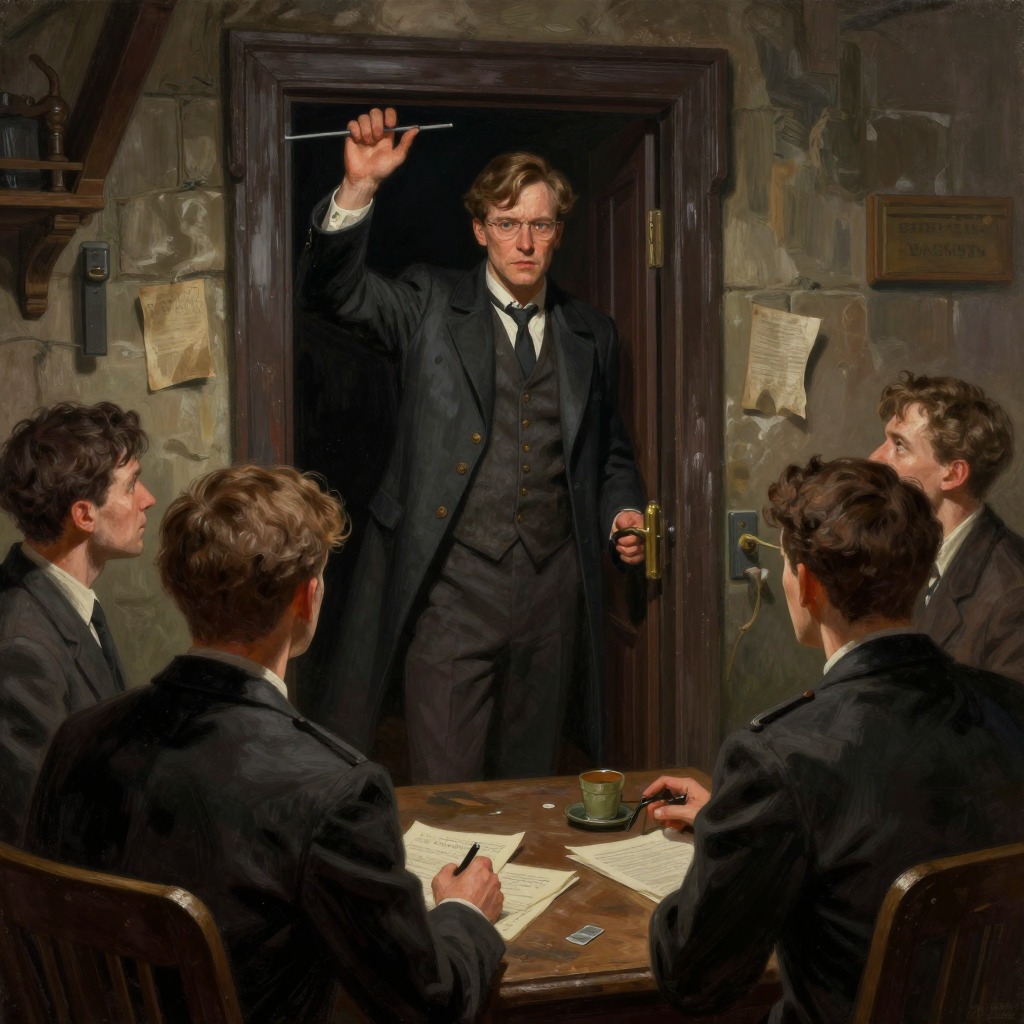
The Ministry of Love is the most frightening of the four Ministries: a windowless building that Winston has never approached within half a kilometre, ringed by barbed-wire entanglements, steel doors, hidden machine-gun nests and black-uniformed guards carrying jointed truncheons. Within that building, Room 101 lies many metres underground — as deep down as it is possible to go — while the cells where the guards beat prisoners are below ground level and the room where O’Brien later interrogates Winston is high up near the roof. The lights in this part of the building never go out, and Winston, shut in a white porcelain cell, recognises it as "the place with no darkness" of which a voice spoke in a dream seven years earlier.
Prisoners first learn of Room 101 as a rumour. In the crowded lock-up where Winston is held before his transfer, two Party women whisper the words "room one-oh-one", and he does not understand them. The phrase alone is enough to reduce a starving man to his knees: he offers to confess anything, to give up his wife and children, to name anyone, pleading "Not room 101!" — and is led away all the same. The poet Ampleforth is taken there in a state of vague incomprehension, and another prisoner seems to shrivel when the words are spoken. O’Brien later tells Winston that everyone knows what is in Room 101, and that the answer is already inside him.
The Worst Thing in the World
What Room 101 contains is not a fixed horror but a personal one. "The worst thing in the world," O’Brien says, "varies from individual to individual. It may be burial alive, or death by fire, or by drowning, or by impalement, or fifty other deaths." In Winston’s case it happens to be rats. The apparatus is an oblong wire cage with a handle, a fencing mask fixed to the front with the concave side outwards, and two compartments, each holding a rat. The rats are enormous, at the age when a rat’s muzzle grows blunt and fierce and its fur turns brown instead of grey.
O’Brien describes exactly how the machine will be used: the mask fits over the head leaving no exit, and when the second lever is pressed the door slides up so that the starving rats "shoot out of it like bullets", sometimes attacking the eyes first, sometimes burrowing through the cheeks and devouring the tongue. The method, he notes, was a common punishment in Imperial China. He supplies the natural history of the horror as well: rats are carnivorous, they strip babies to the bone in the poor quarters of London, and they show astonishing intelligence in knowing when a human being is helpless.
Winston’s Ordeal and Betrayal
Winston’s fear of rats is older than the room. All his life he has dreamed of a wall of darkness behind which something unendurable waits; in Room 101 he understands that the rats were always on the other side of that wall. As the cage closes on his face, his only thought is to interpose another human body between himself and the rats. He screams "Do it to Julia! Do it to Julia! Not me! Julia!" — and only with the betrayal uttered does the cage door click shut instead of open.
The betrayal is not a trick. When Winston and Julia meet again after their release, in a cold park in March, Julia describes the mechanism with terrible exactness: they threaten you with something you cannot stand up to, and you say "Don’t do it to me, do it to somebody else," and at the time you mean it; afterwards you do not feel the same towards the other person. Winston echoes her words: "All you care about is yourself." Earlier Julia had insisted "They can’t get inside you"; Room 101 proves her wrong, and Winston later recalls the phrase and knows that they could get inside him.
Aftermath and Significance
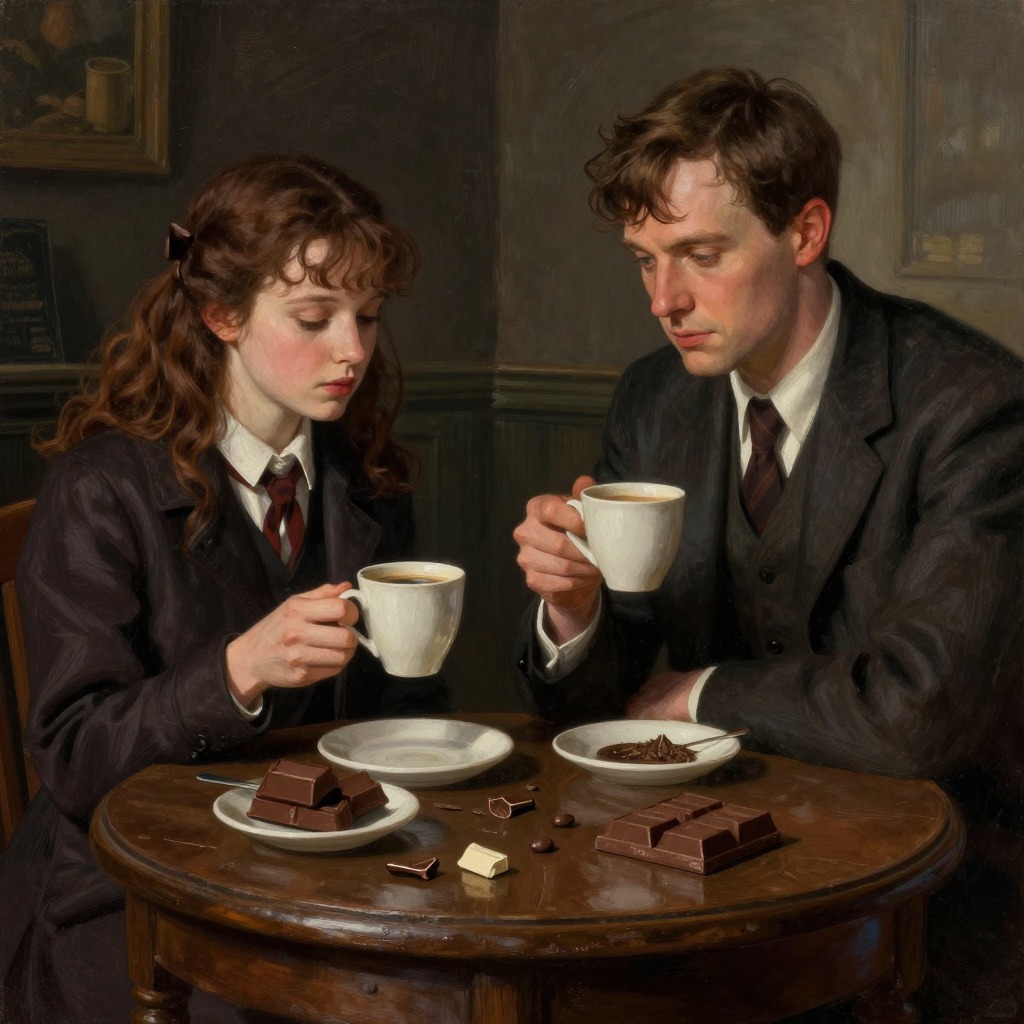
After Room 101, Winston is released, given a sinecure in the Ministry of Truth, and allowed to drift through the Chestnut Tree Café, drinking gin and studying chess problems until the day he finally loves Big Brother. O’Brien had sent him there as "the last step": the Party, he explains, does not destroy the heretic who resists — it converts him, captures his inner mind, and makes him one of themselves before killing him. Room 101 is thus the architectural culmination of the system Orwell anatomised in the novel, the point where the Party’s war on the inner self becomes literal. Pynchon’s introduction notes how easily a totalitarian power can handle memory through an agency like the Ministry of Truth, and how the "schizophrenic manner of thinking" Orwell identified in 1948 allows contradictory truths to be held at once; Room 101 is where that mental splitting is enforced on a living body. As Orwell himself put it in a passage Pynchon quotes, every line of serious work he had written since 1936 had been written against totalitarianism and for democratic socialism — and the room is the clearest image of what totalitarianism does to a single human being before it kills him.