The Party does not permit divorce
Nineteen Eighty-FourThe Party does not permit divorce. This is not a law—there are no laws in Oceania—but a fixed rule of social discipline, enforced by the same apparatus of surveillance and punishment that governs every other aspect of a Party member's life. The prohibition applies to all Party members, regardless of the conditions of the marriage. Winston Smith, married to Katharine for about fifteen months, has been separated from her for nearly eleven years, yet he remains legally married because the Party refuses to dissolve the union. The rule is not absolute in its consequences: the Party rather encourages separation in cases where there are no children, allowing couples to live apart without formal divorce. But separation is a grey area, not a right; it is tolerated because it does not threaten the Party's deeper aim—to prevent any private loyalty from competing with devotion to the Party.
Origin and Purpose
The Party's ban on divorce does not stand alone. It is part of a comprehensive system designed to strip sexual and emotional life of any autonomous meaning. All marriages between Party members must be approved by a committee, which routinely refuses permission if the couple appears physically attracted to one another. The only recognised purpose of marriage is to beget children for the service of the Party. Sexual intercourse is treated as a slightly disgusting minor operation, and the Party actively works to kill the sex instinct or, failing that, to distort it into a sterile duty. Divorce is forbidden because it would allow individuals to escape a failed relationship and seek another, potentially one based on genuine affection—affection that might rival the Party's claim on their hearts. The prohibition thus reinforces the Party's broader assault on private life: it seals the marriage as a cage, not a refuge.
Practical Operation: Winston and Katharine
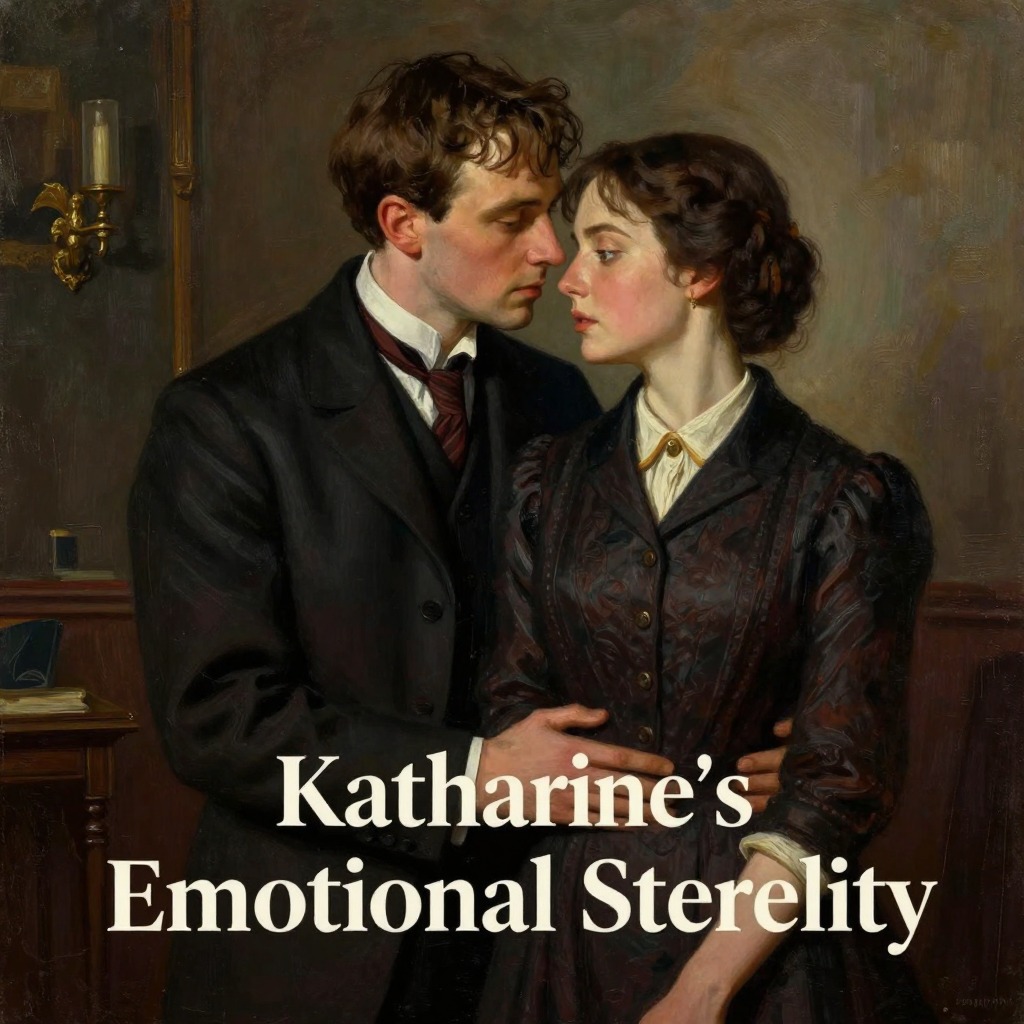
Winston's marriage to Katharine illustrates the rule in practice. They were together only fifteen months, and the marriage was a misery from the start. Katharine was a zealot of the Party, a "human sound-track" whose every thought was a slogan. She performed the sexual act as a duty, lying rigid and unresponsive, calling it "our duty to the Party." They produced no child, and eventually agreed to stop trying, after which they separated. But the Party does not permit divorce, so Winston remains legally married despite the years of separation. He can never remarry, cannot form a legitimate family with anyone else. The rule, combined with the ban on divorce, ensures that even a failed marriage is a permanent trap, preventing the individual from forming new bonds that might become a focus of loyalty outside the Party.
Connections to Other Party Controls
The divorce prohibition is one strand in a web of controls over personal life. The Party also forbids promiscuity between Party members, encourages prostitution among the proles as a safety valve, and maintains organisations like the Junior Anti-Sex League that advocate total celibacy. The aim is to remove all pleasure from the sexual act and to keep every individual isolated, with no private sphere where resistance could grow. The rule against divorce is thus not an isolated moral edict but a strategic tool: by locking people into unhappy marriages, the Party prevents them from finding comfort in another person, and by making marriage a sterile duty, it drains the relationship of any emotional power that could rival the Party's authority. This fits the Party's larger philosophy, as O'Brien later explains: the Party seeks power entirely for its own sake, and its ultimate goal is to abolish the orgasm, to eliminate all competing pleasures, and to make every human being a hollow vessel filled only with the will of the Party. The prohibition of divorce is a small but essential part of that project.
Significance
Theocratic regimes of the past also forbade divorce, but their purpose was to preserve the sanctity of marriage. The Party's purpose is the opposite: to destroy the very possibility of a meaningful marriage. By forbidding divorce while simultaneously making marriage a joyless, compulsory transaction, the Party ensures that the institution ceases to be a source of private happiness and becomes instead another instrument of control. The rule is a concrete example of how the Party manipulates the most intimate human relationships to serve its own ends. It also shows the Party's characteristic doublethink: divorce is forbidden, yet separation is encouraged; marriage is compulsory, yet its emotional content is outlawed. The rule thus embodies the Party's deeper logic—that all human bonds must be subordinated to the collective, and that any private allegiance, even the minimal one of a husband and wife, is a potential threat that must be neutralised.