Vaporized
Nineteen Eighty-FourVaporized is the Party's everyday word in Oceania for the total erasure of a human being: not simply death, but the abolition of a person from every register, record and memory, so that the victim had, in the official sense, never existed. The term reduces murder to an administrative process, and it hangs over Winston Smith as the fixed destination of thoughtcrime.
The Process of Erasure
In the world of Nineteen Eighty-Four the arrests invariably happen at night. The victim is jerked out of sleep by a rough hand shaking the shoulder, with lights glaring in the eyes and a ring of hard faces round the bed. In the vast majority of cases there is no trial and no report of the arrest; people simply disappear, always during the night.
Once a person has been taken, the erasure is carried out on paper as well as in life. The name is removed from the registers, every record of everything the person had ever done is wiped out, the one-time existence is denied and then forgotten. The person is abolished, annihilated — vaporized was the usual word.
The Survival Calculus
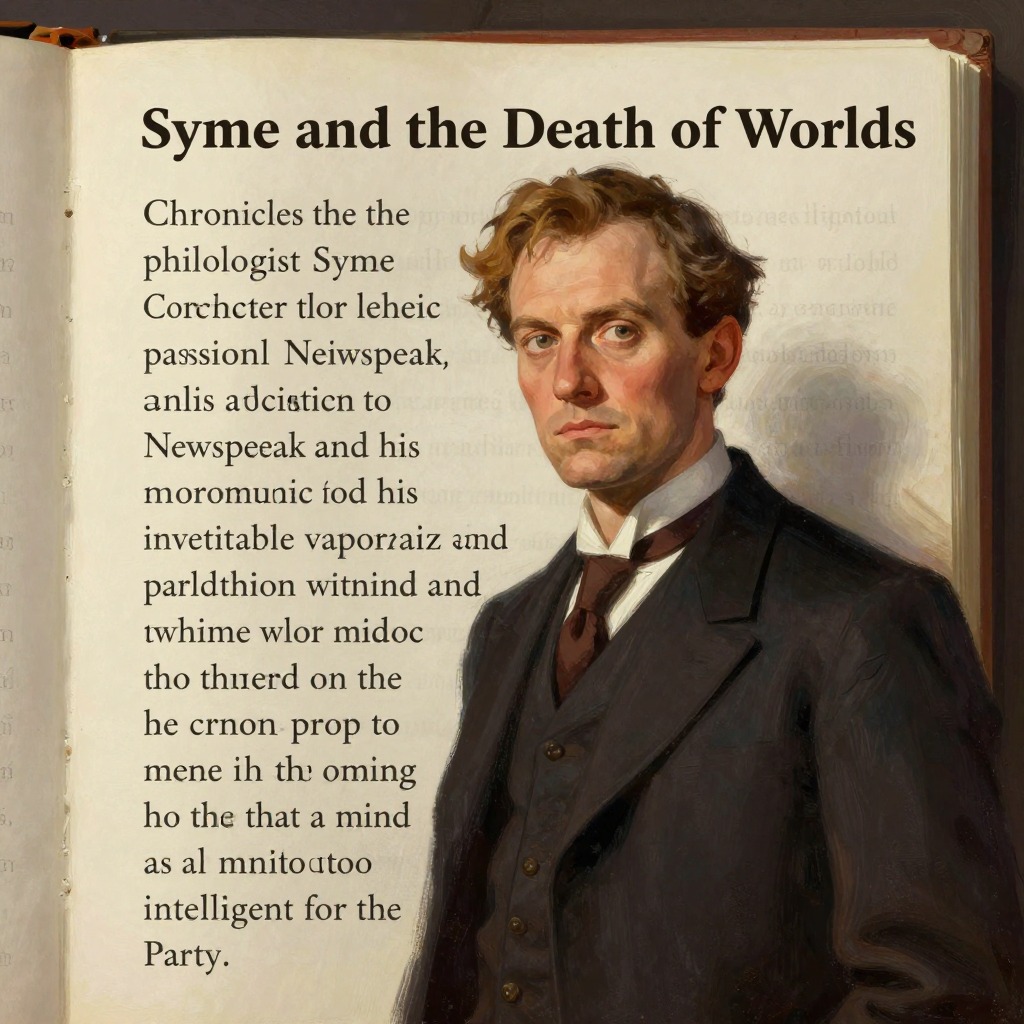
Winston's private sense of who will be vaporized and who will not is one of the novel's quiet horror-machines. In the canteen, his mind moves from Mrs Parsons, with her wispy hair and the dust in the creases of her face, to the certainty that her children will denounce her to the Thought Police within two years; then to Syme, then to himself, then to O'Brien. All of them, in his instinctive reckoning, will be vaporized.
The same intuition tells him who will survive. Parsons will never be vaporized; the eyeless creature with the quacking voice will never be vaporized; the little beetle-like men who scuttle through the labyrinthine ministry corridors will never be vaporized; and the dark-haired girl from the Fiction Department will never be vaporized either. He seems to know instinctively who will survive and who will perish, though just what makes the difference is not easy to say.
Narrative Significance
Vaporization is the culminating instrument of the Party's power over time and truth. Because there is no trial and no surviving record, the past itself can be rearranged around the missing person: an inconvenient biography is not punished but unmade. To be vaporized is to die twice, once in the body and once in history, and the Party's triumph is that the second death is made to seem the only real one, since every trace of the first is scrubbed away.
The word itself is part of the mechanism. 'Vaporized' sounds weightless and technical, as though a person had simply evaporated rather than been seized in the night and removed from the human record. Winston's roll-call of the doomed shows how completely the system has taught its subjects to think in its own categories: he can predict who will be vaporized with a kind of instinct, while the one thing the system never supplies is a reason why some are taken and others spared.