Youth League
Nineteen Eighty-FourIn the Oceania of Nineteen Eighty-Four, young people are run through a sequence of Party organizations — the Spies, the Youth League, the Junior Anti-Sex League — and the Youth League is the hinge of that sequence, the stage at which propaganda, collective recreation, and conditioning harden into permanent character. Its importance to the regime is measured by the kind of adult it produces: the "completely unquestioning, devoted drudges" on whom, more even than on the Thought Police, the stability of the Party depends. Yet the League also supplies some of the most striking ironies of the book, because membership is neither chosen nor escapable: even its most willing servant is "unwillingly evicted" at the statutory age.
Place in the Party's Youth Apparatus
The Youth League occupies the middle rung of an ascending ladder of organizations whose graduates are expected to carry Party discipline into adult life. The trajectory of Parsons, Winston Smith's neighbour and colleague, shows how tightly the ladder is regulated: before graduating into the Youth League he had managed to remain in the Spies for a year beyond the statutory age, and at thirty-five he had just been "unwillingly evicted" from the League itself. No moment in the sequence is left to choice; even an enthusiast overstays only by a bureaucratic slip, and leaves only when the Party removes him.
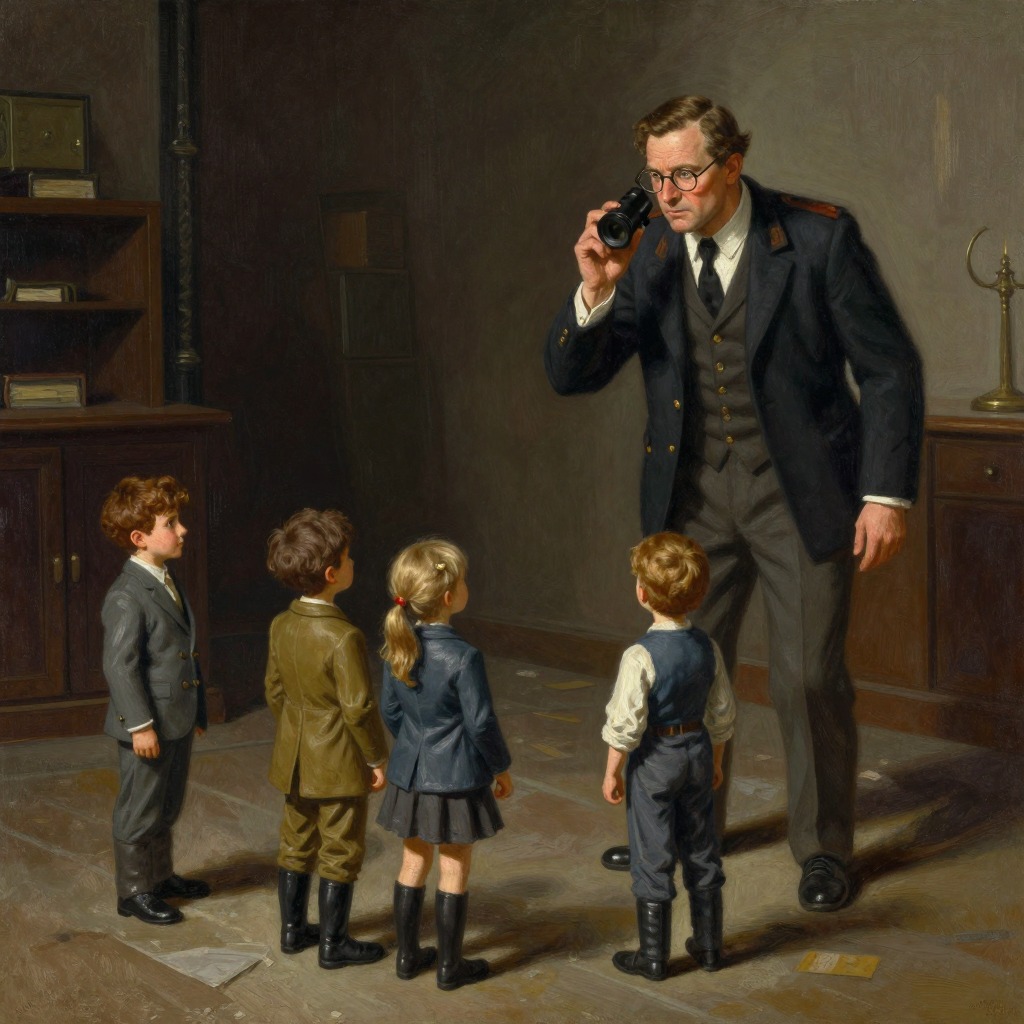
Julia, who becomes Winston's lover, was, by her own account, a model product of the same system: a troop-leader in the Spies, a branch secretary in the Youth League, and then a member of the Junior Anti-Sex League. Her school career — captain of the hockey team, gymnastics trophy two years running — and the "excellent character" she always bore were exactly the credentials the Party rewarded. The League, in her case, formed the visible orthodox biography that made her later rebellion possible.
The Making of Loyalty
The methods of the Youth League are inseparable from the broader conditioning apparatus of school, the Spies, lectures, parades, songs, slogans and martial music. Winston, remembering the women of the Party, reflects that chastity is "as deeply ingrained in them as Party loyalty," an effect produced "by careful early conditioning, by games and cold water, by the rubbish that was dinned into them at school and in the Spies and the Youth League." The League thus did not merely teach doctrine; it reshaped instinct, driving "the natural feeling" out of its members before desire could become a political problem.
The League's graduates continue to act as its agents long after they have aged out. Parsons, after his eviction, was a leading figure on the Sports Committee and on the committees "engaged in organising community hikes, spontaneous demonstrations, savings campaigns and voluntary activities generally," and he would announce with quiet pride that he had put in an appearance at the Community Centre every evening for the past four years. The phrase "organising spontaneous demonstrations" is one of the novel's compressed oxymorons: what the Party calls spontaneous enthusiasm is, at every level, the work of organizations like the Youth League and the adults they trained.
The Devotee and the System
The finished type is Parsons himself: "a fattish but active man of paralysing stupidity, a mass of imbecile enthusiasms," employed at the Ministry of Truth in a subordinate post for which intelligence was not required. It is on such people, the novel says explicitly, that "the stability of the Party depended" — more even than on the Thought Police. The Youth League's real function, in this light, is to mass-produce the mental posture that makes overt policing unnecessary: an enthusiasm so automatic that orthodoxy feels like happiness, and dissent literally does not occur.
Julia's later history shows the same system from the opposite side. The Youth League credentials that made her look like a "good Party member" were her camouflage; she would confess to Winston that she always looked cheerful and never shirked anything because "It's the only way to be safe." The organization that produced the regime's most reliable servants also produced, in her, a rebel who understood exactly how to perform their rituals without believing them.