the Two Minutes Hate
Nineteen Eighty-FourThe Two Minutes Hate is the daily televised ritual of collective rage through which the Party of Oceania conditions its members to automatic hatred and adoration. Held at eleven hundred in workplaces across Airstrip One, it turns every Party employee into a screaming participant in a two-minute frenzy directed at Emmanuel Goldstein, the Enemy of the People, and then resolves that frenzy into worship of Big Brother. It is the novel's first sustained demonstration of the psychological machinery — conditioning, doublethink, facecrime and self-surveillance — that sustains Ingsoc, and it provides the occasion for the silent exchange between Winston Smith and O'Brien that shadows the rest of the book.
Form and Setting
At nearly eleven hundred, in the Records Department where Winston Smith works, the chairs are dragged out of the cubicles and grouped in the centre of the hall opposite the big telescreen. The Hate begins with a hideous, grinding screech, as of some monstrous machine running without oil, a noise that sets one's teeth on edge and bristles the hair at the back of one's neck. Emmanuel Goldstein's face flashes onto the screen to hisses and to a squeak of mingled fear and disgust from a small sandy-haired woman. Although the programme varies from day to day, there is none in which Goldstein is not the principal figure: the renegade who once stood almost on a level with Big Brother, was condemned to death and mysteriously escaped and disappeared, and who now serves as the primal traitor from whose teaching all treacheries, acts of sabotage, heresies and deviations are said to spring. Always there are fresh dupes waiting to be seduced by him, and behind him move the whispered rumours of the Brotherhood and of a terrible book, a compendium of all heresies, known simply as the book.
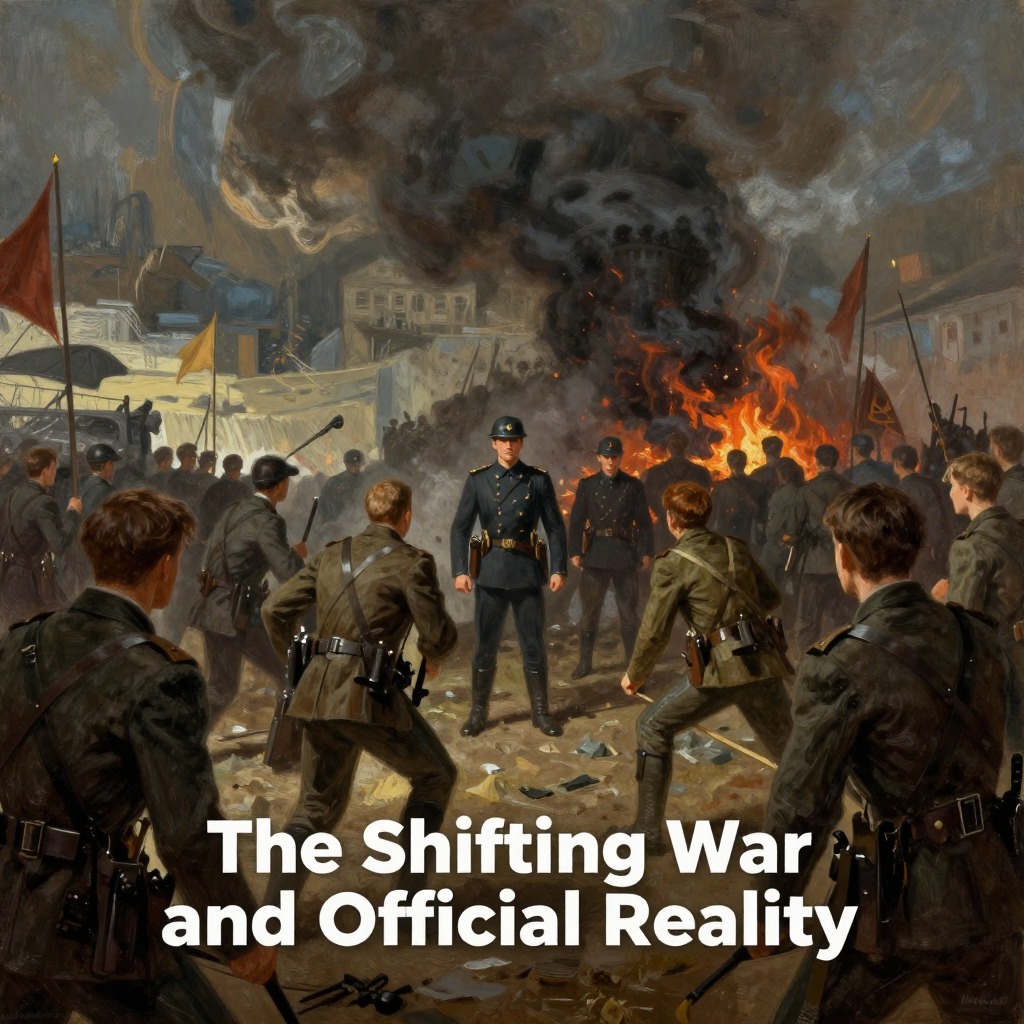
Within the two minutes the frenzy peaks. Before the Hate has proceeded for thirty seconds, uncontrollable exclamations of rage are breaking out from half the people in the room. The self-satisfied sheep-like face on the screen changes for an instant into that of a sheep, then melts into a Eurasian soldier advancing through the screen with a sub-machine-gun, so that people in the front row flinch backwards; then the hostile figure dissolves into the vast face of Big Brother, black-haired and black-moustachio'd, full of power and mysterious calm, speaking a few indistinguishable words of encouragement. The crowd breaks into a deep, slow, rhythmical chant of 'B-B!… B-B!…' — a heavy, murmurous sound, somehow curiously savage, in the background of which one seemed to hear the stamp of naked feet and the throbbing of tom-toms. For perhaps thirty seconds they keep it up: partly a hymn to the wisdom and majesty of Big Brother, but still more an act of self-hypnosis, a deliberate drowning of consciousness by means of rhythmic noise. Winston's entrails grow cold; he chants with the rest because it is impossible to do otherwise, but the subhuman sound fills him with horror, and in a space of a couple of seconds his eyes might conceivably have betrayed him.
The Machinery of Manufactured Rage
The terrible thing about the Two Minutes Hate is not that one is obliged to act a part but that it is impossible to avoid joining in. Within thirty seconds any pretence is unnecessary: a hideous ecstasy of fear and vindictiveness, a desire to kill, to torture, to smash faces in with a sledge-hammer, flows through the whole group like an electric current, turning one against one's will into a grimacing, screaming lunatic. Yet the rage is abstract and undirected, an emotion that can be switched from one object to another like the flame of a blowlamp. At one moment Winston's hatred is not turned against Goldstein at all but against Big Brother, the Party and the Thought Police, and his heart goes out to the lonely, derided heretic on the screen, sole guardian of truth and sanity in a world of lies; the very next instant he is at one with the people about him, Goldstein becomes a sinister enchanter and Big Brother towers up as an invincible, fearless protector standing like a rock against the hordes of Asia.
This engineered emotion is a form of conditioning. Orwell's introduction to the novel explicitly connects the story's thought control to the brainwashing techniques attributed to Communist practice, said to be based on the work of Pavlov, in which human subjects are conditioned into political reflexes useful to the State; the Two Minutes Hate is the novel's most concentrated instance of such reflex-training. Its relentless daily repetition attaches hatred and adoration to figures the participant has never met, and welds the individual's inner life to the Party's emotional schedule.
Doublethink and the Ration Contradiction
The Hate also rehearses the doublethink it is designed to produce. As Winston reflects during the Physical Jerks, doublethink is the power to hold simultaneously two opinions which cancel out, knowing them to be contradictory and believing in both; to use logic against logic, repudiate morality while laying claim to it, and forget whatever is necessary and then draw it back into memory at the moment when it is needed. The ritual is a machine for generating this condition: one must genuinely feel rage at Goldstein while knowing the display is staged, and must receive as truth whatever the telescreen supplies.
The pattern is tested immediately in the canteen. The telescreen announces a glorious victory for production, with the standard of living risen by no less than twenty per cent and workers parading through the streets in gratitude to Big Brother for the new, happy life; only the day before, the chocolate ration had been cut from thirty grammes to twenty. Parsons swallows the announcement with the stupidity of an animal, the eyeless quacking orator swallows it fanatically and with a furious desire to track down and vaporize anyone who remembers the old ration, and Syme swallows it through the more complex route of doublethink. Winston asks himself whether he is the only person left in possession of a memory.
Audience, Facecrime and Performance
Participation is policed by the telescreen and by the audience itself. A Party member lives from birth to death under the eye of the Thought Police, and even alone can never be sure that he is alone; every friendship, relaxation, facial expression and muttered word is scrutinised. Winston sets his features into the expression of quiet optimism which it is advisable to wear when facing the telescreen, for any improper expression — to look incredulous when a victory is announced, for instance — is itself a punishable offence, known in Newspeak as facecrime. A nervous tic, an unconscious look of anxiety, or a habit of muttering to oneself could give one away, and the amateur spy is judged the greatest danger of all. Julia, introduced at this same Hate, has made participation her camouflage: she is always cheerful, never shirks anything, and always yells with the crowd, because, as she later says, it is the only way to be safe; at the climax she picks up a heavy Newspeak dictionary and flings it at the screen, shouting 'Swine!'
Within the general frenzy Winston's own responses betray the strain of the ritual. He finds his hatred switching to the dark-haired girl behind him and flashes through hallucinations of flogging her to death with a rubber truncheon, tying her naked to a stake and shooting her full of arrows like Saint Sebastian, and ravishing her and cutting her throat at the moment of climax — hatred mixed with sexual desire and fury at the scarlet sash, aggressive symbol of chastity. Later, in the dream he calls the Golden Country, the same girl will tear off her clothes with a single splendid movement of the arm that seems to annihilate a whole culture, a whole system of thought; the reader can see that the ritual of the Hate first brought the two lovers into the same room.
O'Brien and the Diary
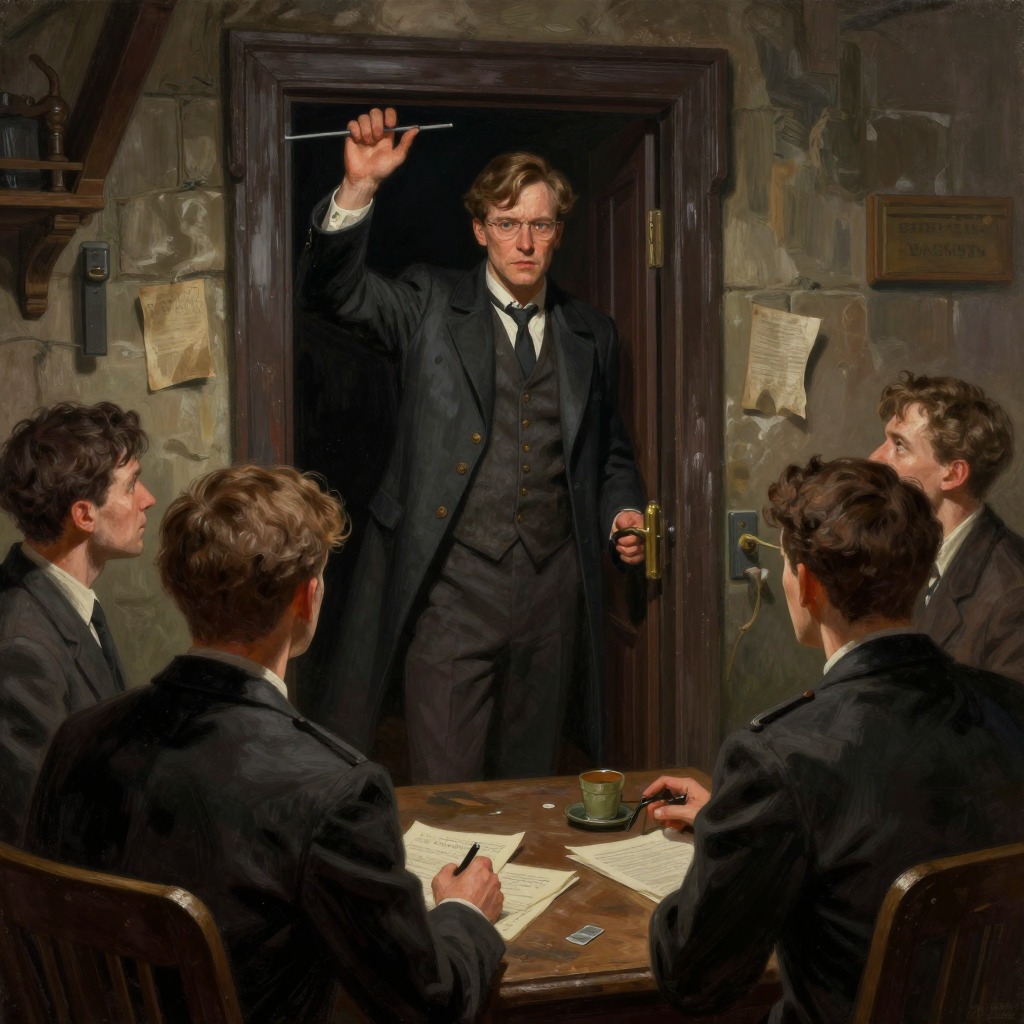
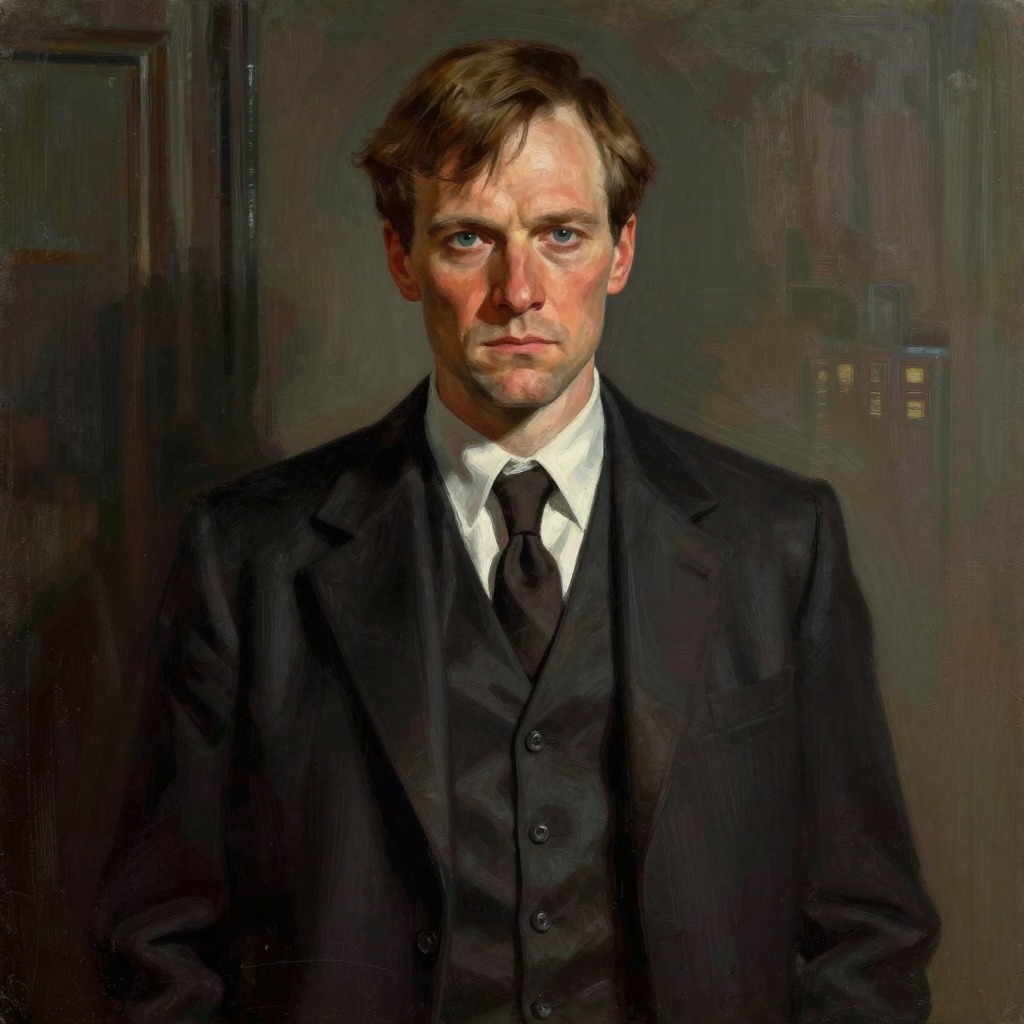
The ritual also produces the novel's pivotal wordless exchange. In the second minute of the Hate, as the chant rises, Winston momentarily catches O'Brien's eye. O'Brien has stood up, taken off his spectacles and is in the act of re-settling them on his nose with his characteristic gesture; for a fraction of a second their eyes meet, and Winston knows that O'Brien is thinking the same thing. An unmistakable message passes, as though O'Brien were saying that he is with Winston, that he knows all about the contempt, hatred and disgust, and that Winston need not worry. Then the flash of intelligence is gone, and O'Brien's face is as inscrutable as everybody else's. Winston is already uncertain whether it has happened, but the incident keeps alive his belief that others besides himself are enemies of the Party; such fleeting glimpses, snatches of overheard conversation and faint scribbles on lavatory walls are all the evidence he has that the Brotherhood may exist, and even a two-second exchange becomes a memorable event in the locked loneliness in which he has to live.
It is this same morning's Hate that finally drives Winston to begin the diary. Writing afterwards in his flat, he realizes that a totally different memory has clarified itself in his mind — the incident in the Records Department — and that it is because of this incident that he has suddenly decided to come home and begin the diary today. The diary is not illegal, since nothing is illegal and there are no longer any laws, but if detected it would be punished by death or at least twenty-five years in a forced-labour camp. In the same sitting he covers half a page with 'DOWN WITH BIG BROTHER', written over and over, and reflects that whether he writes it or not makes no difference: the Thought Police will get him just the same. The Hate, designed to purge dangerous thoughts, has supplied the dissenter with his motive and his first act of rebellion.
Narrative Role and Significance
As Thomas Pynchon observes in his introduction, the Two Minutes Hate is presented quite early, almost as a plot device for introducing Julia and O'Brien, the other two major characters; it is also the novel's closest approach to an anti-Semitic moment, yet the exhibition of anti-Goldsteinism is never generalized into anything racial. More broadly, the Hate is the model for the periodic frenzies — Hate Week, the public hangings, the spontaneous demonstrations — through which the Party manages the emotional climate of Oceania. Goldstein's book will later explain that the discontents produced by a bare, unsatisfying life are deliberately turned outwards and dissipated by such devices as the Two Minutes Hate, and that the Party member is expected to live in a continuous frenzy of hatred, triumph and self-abasement.
The ritual ends by confirming the power it exercises. As the face of Big Brother fades, the little sandy-haired woman flings herself forward over the back of the chair in front of her and, with a tremulous murmur that sounds like 'My Saviour!', extends her arms towards the screen before burying her face in her hands to pray. The performance has converted fear into worship, individual memory into collective amnesia, and private hatred into loyalty — the same conversion that O'Brien will later attempt to make permanent in Winston himself, replacing his love of Julia with love of Big Brother.