Clowning
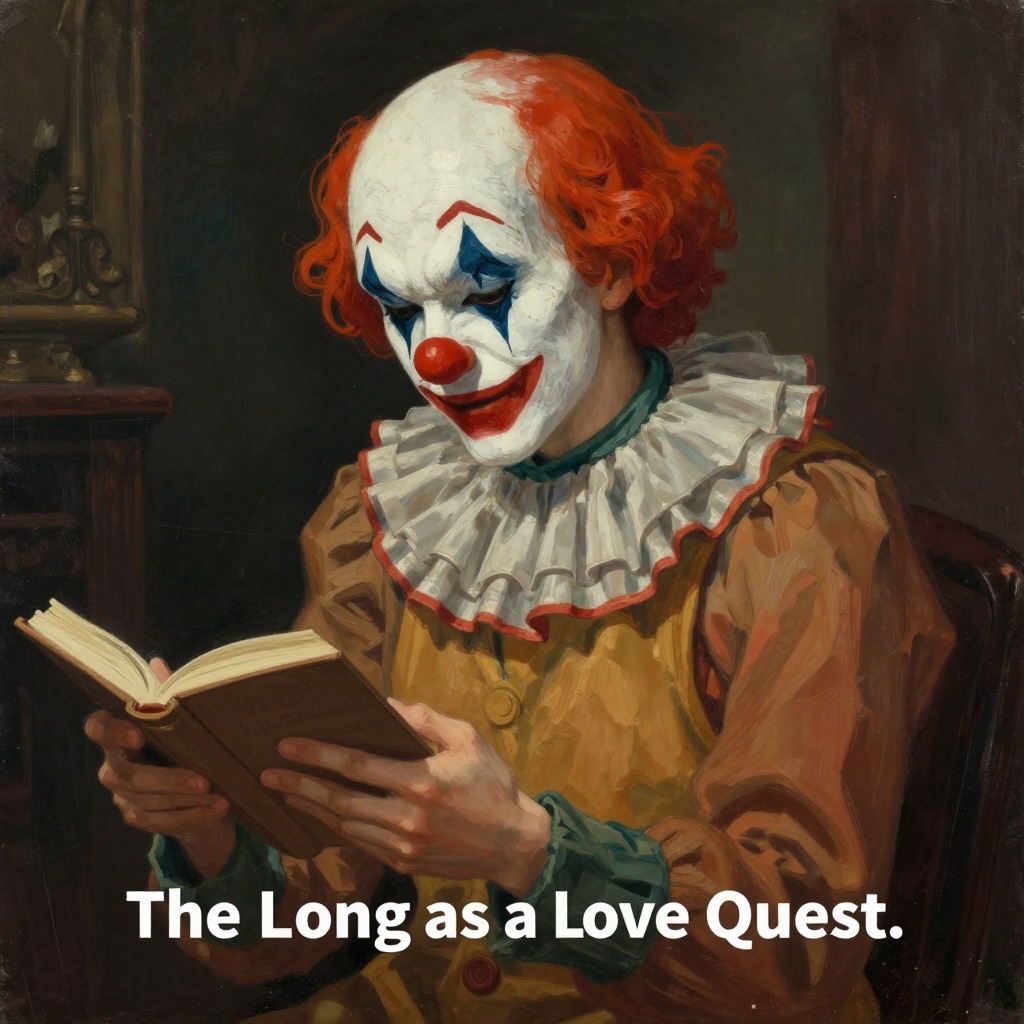
No Longer HumanClowning is the central survival strategy and defining performance of Yozo's life, a desperate, lifelong act of buffoonery he invents as a child to bridge the unbridgeable gap between his terrified inner self and the incomprehensible world of human beings. It is the mechanism by which he seeks love while concealing his true nature, a role that ultimately becomes a prison, alienating him from genuine connection and accelerating his descent into addiction, madness, and self-annihilation.
Origins and Invention
Yozo's clowning was born from a profound and early dread of human beings. From childhood, he was tormented by the feeling that he alone was entirely unlike the rest, unable to understand the simplest human motivations—why people ate three meals a day, why they worked to earn bread, or what it meant to be hungry. This fundamental incomprehension, coupled with a mortal fear of being criticized or shouted at, drove him to the brink of lunacy. It was in this state of desperate isolation that he invented his clowning, which he later described as "the last quest for love I was to direct at human beings." Unable to renounce human society yet terrified of it, he managed to maintain a perpetual smile on the surface, a precarious accommodation performed only at the cost of excruciating inner effort. Before anyone realized it, he had become an accomplished clown, a child who never spoke a single truthful word. His antics were a role born of desperation, extended even to the servants he feared more than his family, because he found them incomprehensible.
Performance and Concealment
The clowning was a calculated performance designed to make others laugh at any cost, thereby ensuring his acceptance while keeping his true self hidden. Yozo believed that as long as he could make them laugh, it did not matter how; he would be all right, and human beings would not mind if he remained outside their lives. His one rule was to avoid becoming offensive in their eyes, to be nothing, "the wind, the sky." This strategy was remarkably effective in his youth. At school, he acquired a reputation not only as the son of a rich family but as a mischievous imp with "brains," earning all A's except for deportment, where he never scored better than a C or a D. He wrote funny stories for his teachers, drew cartoons during recitation, and made the other children laugh with his explanations. He even deliberately failed at the horizontal bar during physical training, landing on his seat in the sand to provoke laughter, a premeditated failure that was only detected by the simpleton Takeichi, who whispered, "You did it on purpose." This moment of exposure was a catastrophe, making Yozo feel as if the world had burst into the raging flames of hell. The clowning was thus a fragile shield, and the fear of its discovery was a constant, paralyzing terror.
The Cost of the Mask
The relentless performance of clowning exacted a devastating toll on Yozo's psyche and his capacity for genuine human connection. He became a man who could not say no, who felt compelled to add embellishments to every situation out of a desperate mania to please, even when it later turned to his disadvantage. This habit was taken full advantage of by the so-called honest citizens of the world. The clowning also created a profound loneliness, a quality that many women instinctively detected, leading them to take advantage of him. Even as he played the jester, he was being corrupted by the maids and menservants, enduring a loathsome crime in silence because he felt he had no choice but to go on playing the clown. The mask of the clown became so ingrained that it prevented him from ever developing real friendships. He noted that he had not once actually experienced friendship; his only painful recollections were of acquaintances, and even the front door of another person's house terrified him more than the gate of Inferno. The clowning was a performance that isolated him from the very human warmth he craved.
Collapse and Transformation
As Yozo's life spiraled into alcoholism, morphine addiction, and institutionalization, the clowning lost its power as a survival tool and became a hollow, pathetic reflex. After his wife Yoshiko was violated, he lost all confidence and abandoned all hope, yet he still could not stop his immoderate clowning, even as he inflicted abominable caresses on her before dropping into a dead sleep. The performance continued, but it no longer served to conceal his true self; it only deepened his shame. In the end, the clowning was replaced by a state of complete withdrawal. In the mental hospital, he ceased to be a human being, becoming a "reject." The final notebooks record a man who has neither happiness nor unhappiness, for whom everything passes. The desperate, life-sustaining act of the clown had finally exhausted itself, leaving behind only the empty shell of a man who had been disqualified from humanity.