Ghost Pictures
No Longer HumanThe Ghost Pictures are a series of self-portraits painted by Yozo during his high school years, representing the only honest artistic expression of his inner self that he ever produced. They are the visual counterpart to his clowning—the hidden truth beneath the performance—and they become a lost masterpiece that haunts him for the rest of his life, a symbol of his failed artistic ambition and his irrecoverable authentic identity.
Origin and Inspiration
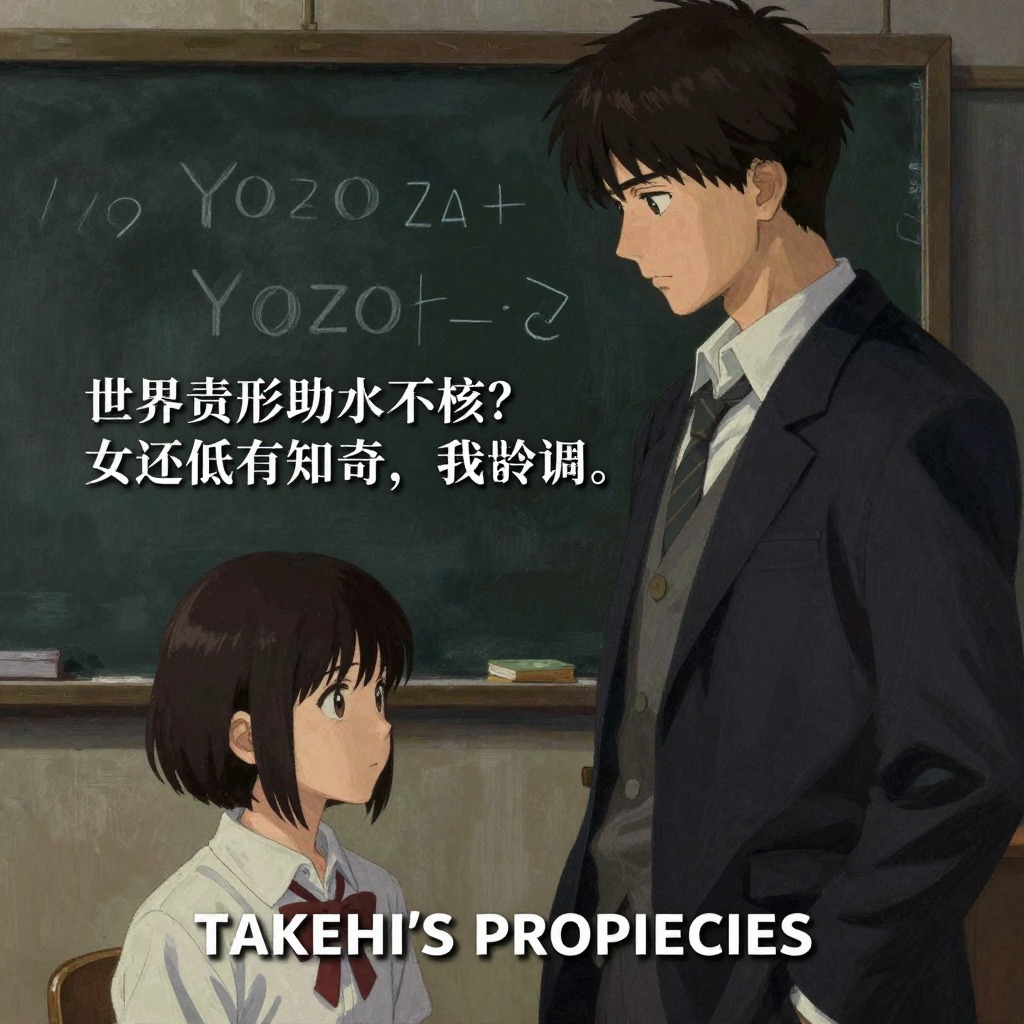
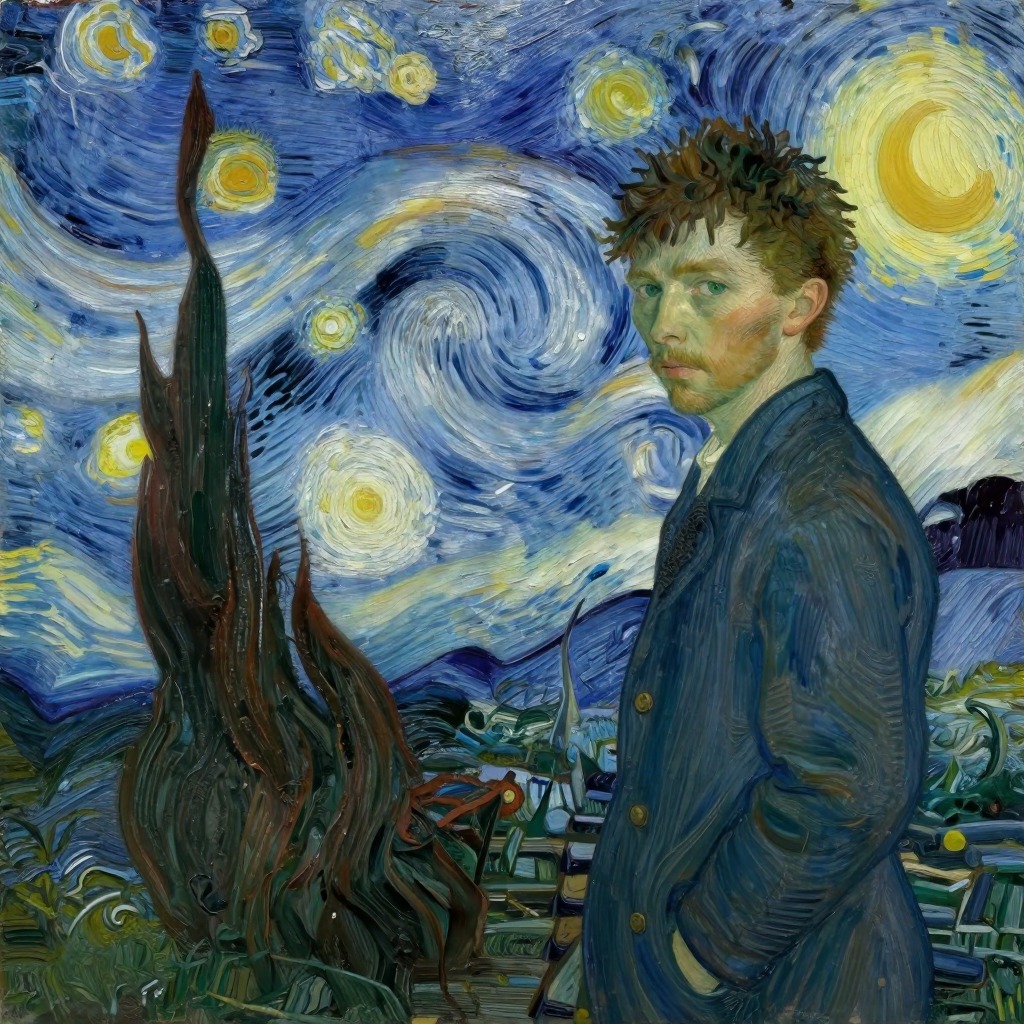
The Ghost Pictures were born from a revelation. Yozo's classmate Takeichi, the puny, scrofulous boy who had already seen through Yozo's deliberate failure on the horizontal bar, showed him a colored picture he proudly called "a picture of a ghost." It was a reproduction of a van Gogh self-portrait. Takeichi's naive description—that van Gogh, Gauguin, Cézanne, and Renoir painted "ghosts" and "horses out of hell"—struck Yozo with the force of a revelation. He realized that the masters did not paint pretty things prettily; they painted monsters, the terrifying apparitions that haunt those whose dread of human beings is so morbid that they yearn to see ever more horrible shapes. Yozo understood that these painters, after repeated wounds and intimidations at the hands of human beings, had dared to depict the monsters they saw in broad daylight. He thought, "These, I thought, would be my friends in the future." He was so excited he could have wept. He whispered to Takeichi that he too would paint pictures of ghosts and devils and horses out of hell.
The Self-Portraits
The pictures Yozo drew were so heart-rending as to stupefy even himself. They revealed the true self he had so desperately hidden behind his cheerful smile and his clowning. He secretly affirmed this self, sure that there was no escape from it, but he hid the pictures in the back of his cupboard, terrified that if anyone saw them they would either detect the nightmarish reality under the clowning or, worse, mistake the self-portraits for a new twist in his clowning and laugh at them. In school drawing classes he continued to paint in the conventional idiom of pretty things, keeping his "ghost-style" techniques secret. Only to Takeichi did he show his self-portraits, and Takeichi was enthusiastic, predicting that Yozo would become a great painter someday. The self-portraits were the only works Yozo ever considered his true masterpieces, and they were lost during one of his frequent changes of address.
The Lost Masterpiece and Its Aftermath
The loss of the Ghost Pictures became a permanent wound. Years later, when Yozo was living as a kept man with Shizuko and drawing cartoons for a children's magazine, he would speak of his artistic ambitions. He would claim he was a better artist than Horiki, and the self-portraits would naturally come to mind. He was plagued by a heavy sense of loss, as if his heart had become empty. An "undrunk glass of absinthe" flickered before his eyes—the frustrating thought that if only he could show those paintings, people would believe in his talent. But when he spoke of this, Shizuko only laughed, taking it as a joke. The Ghost Pictures became a symbol of everything Yozo had lost: his authentic self, his artistic potential, and any hope of being understood. They were the one true thing he had ever made, and they were gone forever.
Thematic Significance
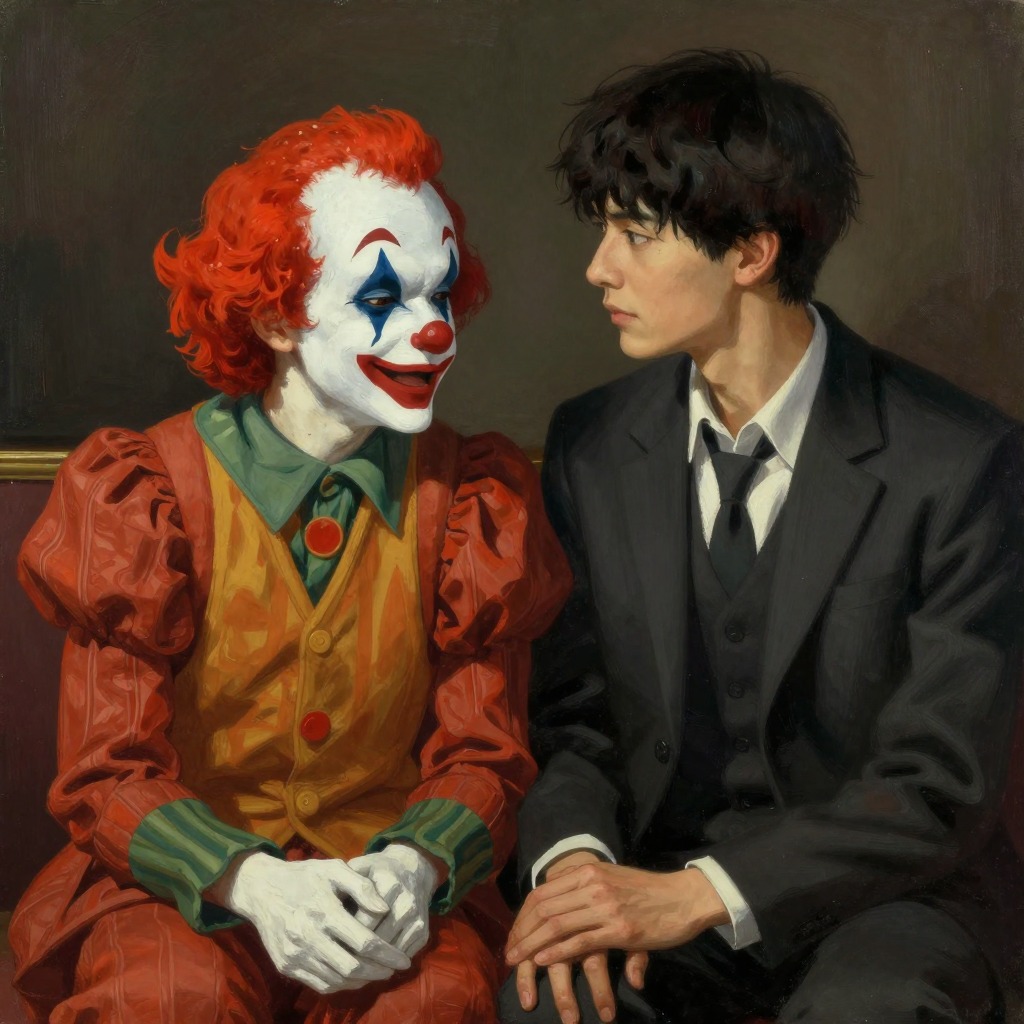
The Ghost Pictures are the visual embodiment of Yozo's central conflict: the irreconcilable gap between his performed self and his true self. The clowning was a desperate accommodation to human beings, a lie that allowed him to survive; the Ghost Pictures were the truth he could not show. They represent the only moment in his life when he stopped trying to please others and instead depicted the world as he actually saw it—a place of monsters, ghosts, and horses out of hell. The loss of the pictures mirrors the loss of his own identity: by the end of the novel, he has become a "reject," a man whose face in the third photograph has no individuality, no memory, no expression. The Ghost Pictures, had they survived, would have been the one document that proved he had once been a human being with a real self. Their disappearance is the final erasure of that self.