Ginza
No Longer HumanGinza, the glittering entertainment heart of Tokyo, functions in Yozo's life as the magnetic center of his most destructive pleasures and his most fateful encounters. It is here that he first learns to navigate the city's nightlife under the tutelage of Masao Horiki, and here that he meets the women who will lead him to suicide attempts, morphine addiction, and the final collapse of his already fragile existence. The district's bars, cafés, and back alleys become the geography of his shame, the place where his clowning fails and his true nature as a "reject" is repeatedly exposed.
Encounters with Tsuneko and the First Suicide Attempt
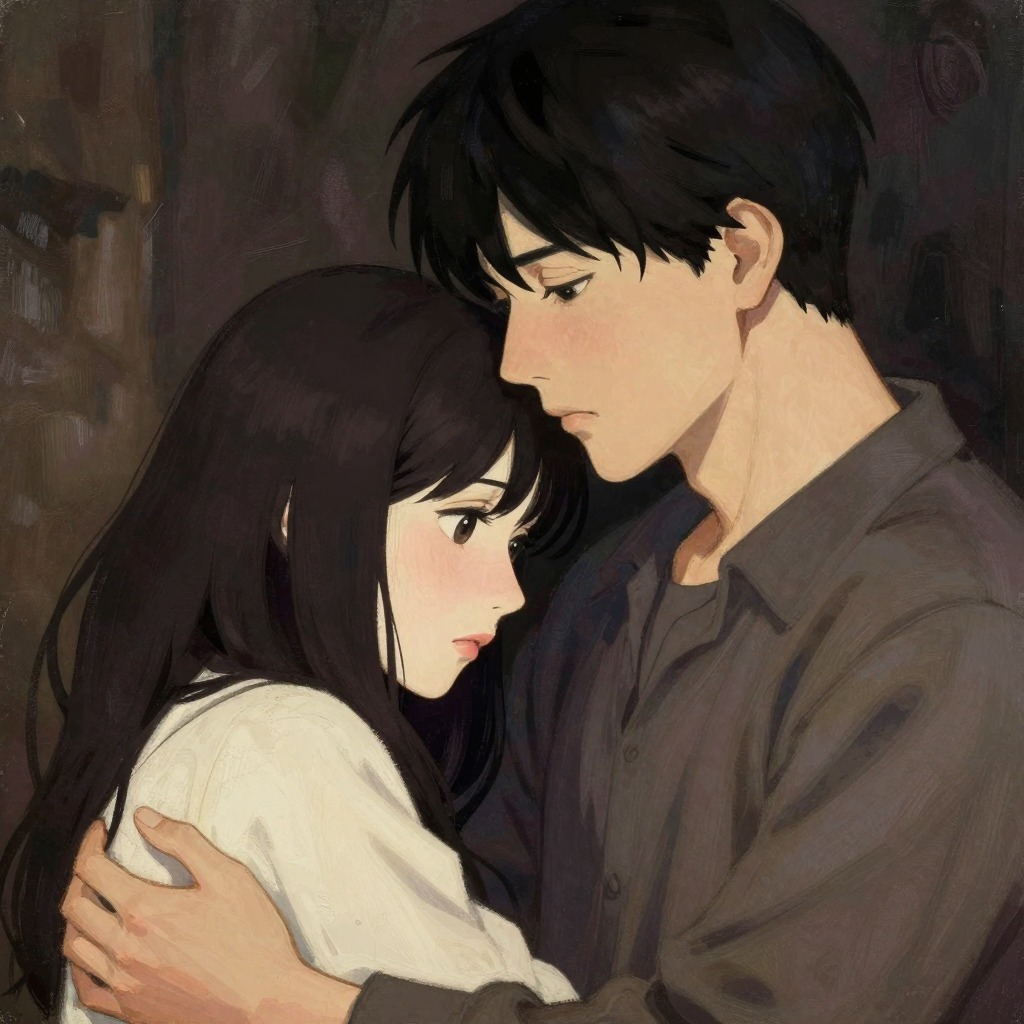
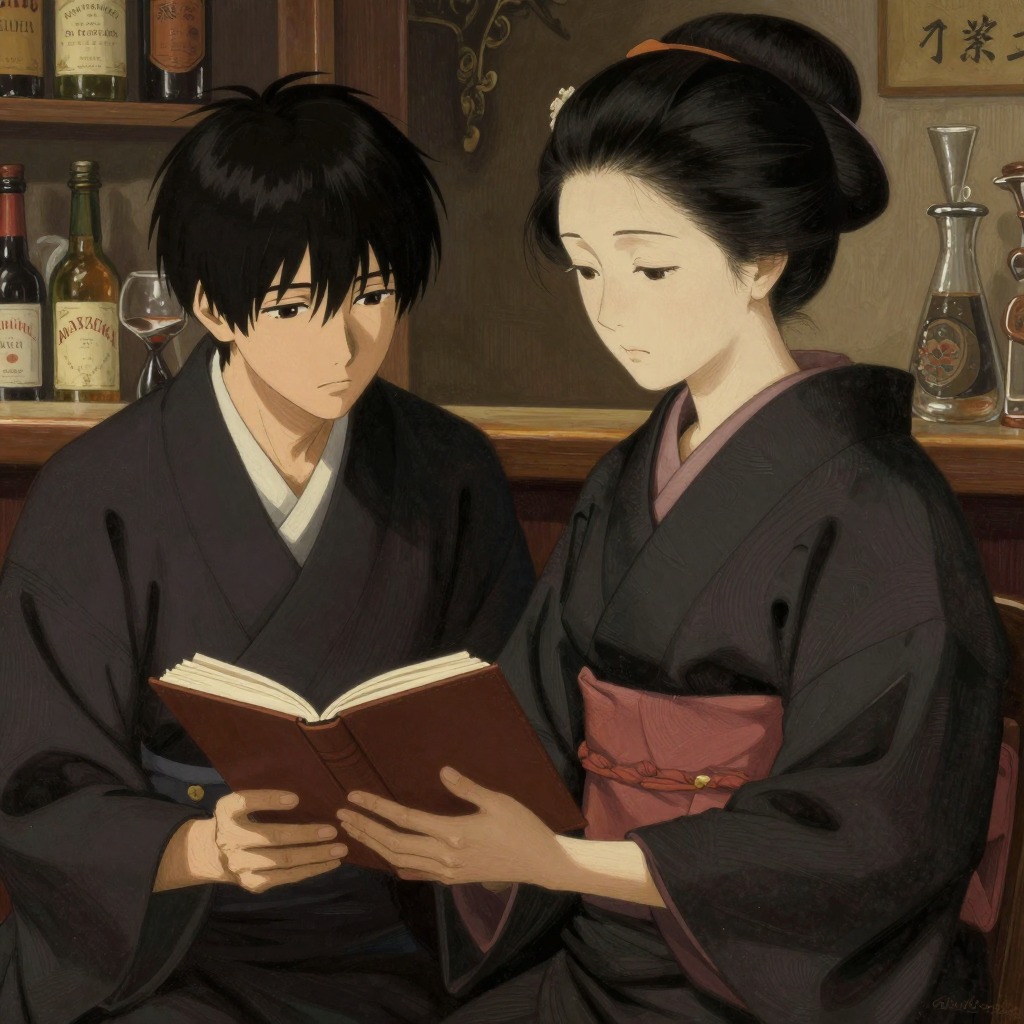
It is in a large café on the Ginza that Yozo first meets Tsuneko, the married waitress who will become his partner in a love suicide. He goes there alone, carrying only ten yen, and tells the hostess who sits beside him, "All I've got is ten yen. Consider yourself warned." Her calm Kansai-accented reply — "You needn't worry" — immediately disarms him, and for the first time he feels no need to perform his clownish antics. He drinks in silence, revealing his true taciturn gloom. That night, after she finishes work, they meet at a sushi stall behind the Ginza, where the bad sushi and the snake-faced old man who makes it become indelibly etched in his memory. The two of them later throw themselves into the sea at Kamakura; Tsuneko dies, Yozo survives. The incident is reported prominently in the press, and it leads to his expulsion from college and his estrangement from his family.
The Return to Drinking and the Morphine Addiction
Years later, after his marriage to Yoshiko has been shattered by her violation, Yozo returns to the Ginza as a nightly drunkard. He wanders the rows of saloons behind the district, singing softly to himself, "From here it's hundreds of miles to home." One snowy night, he vomits blood for the first time, forming a rising-sun flag in the snow. He squats, washes his face with clean snow, and weeps. This physical collapse drives him to a nearby pharmacy, where the proprietress — a woman on crutches, herself a figure of profound unhappiness — gives him morphine as a substitute for alcohol. The drug quickly becomes an addiction that surpasses even his alcoholism. He returns to the pharmacy again and again, eventually beginning a sordid affair with the crippled woman, obtaining the drug by kissing her and pretending to weep. His debt at the pharmacy reaches a frightening figure, and both of them weep when they meet. The Ginza, which once offered the promise of liberation through drink and women, has become the site of his most abject dependency.
The District as a Stage for Performance and Exposure
Throughout his life, Ginza is where Yozo's carefully constructed clowning is both perfected and most dangerously tested. It is where Horiki first introduces him to the city's pleasures, teaching him how to spend minimal money with maximum effect, how to bargain, and how to navigate the streetcars, buses, and steam launches that connect the district's bars and brothels. But it is also where his performance fails most catastrophically. After the suicide attempt, when he is taken to the police station, the old policeman on night duty interrogates him with prurient curiosity, and Yozo responds by fabricating a confession absurd enough to satisfy him. The district attorney in Yokohama sees through his feigned coughing of blood with a quiet smile, asking, "Was that real?" — a moment Yozo later considers one of the two great disasters in his lifetime of acting, worse than being sentenced to ten years in prison. The Ginza, with its crowds of drunken guests, waitresses, and porters, is the environment where he seeks to lose himself, but it is also where the mechanisms of society — the police, the courts, the judgment of others — close in on him most relentlessly.
The Pharmacy and the Final Descent
The pharmacy behind the Ginza becomes the last station of Yozo's degradation. The woman who runs it, a widow with an only son dying of tuberculosis, her father-in-law bedridden with palsy, and her own body half-paralyzed since childhood, recognizes in Yozo a fellow sufferer. She gives him morphine, telling him it is no more harmful than liquor, and he believes her. The injections sweep away his insecurity and fretfulness, turning him into an expansively optimistic talker, but within weeks he is taking four shots a day and can no longer work without them. When he knocks on her door late at night, she hands him a box without a word. The district that once represented the height of urban sophistication has become a hell of addiction, debt, and mutual weeping. It is from this pharmacy that Yozo staggers back to his apartment, and it is the memory of the Ginza's snowy streets that lingers as the backdrop to his final, failed suicide attempt with Dial sleeping pills.
Narrative Significance
Ginza is not merely a setting in Yozo's story; it is the spatial embodiment of his tragedy. It is the place where he first tastes the freedom of urban anonymity, where he meets the woman he truly loves, where he attempts to die, where he returns to drink himself into oblivion, and where he finally surrenders to a drug that destroys what little remained of his will. The district's bright lights and crowded bars offer the illusion of escape from his dread of human beings, but they ultimately deliver him into the hands of the very forces — police, addiction, shame — that confirm his status as a "reject." The madam of the Kyobashi bar, who later preserves his notebooks, remembers him not as a criminal or a lunatic but as "a good boy, an angel," a judgment that stands in stark contrast to the squalor of the Ginza back alleys where he coughed blood in the snow.