Kamakura
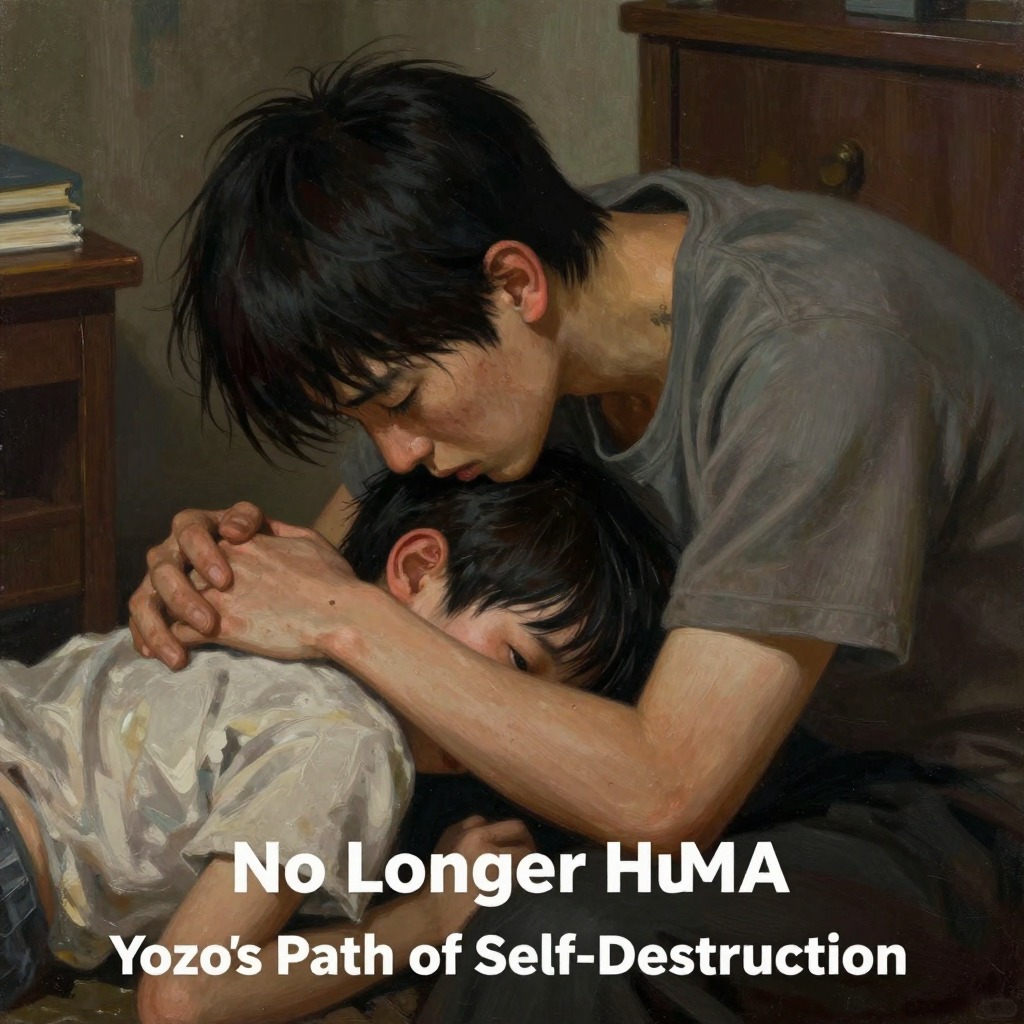
No Longer HumanKamakura, a coastal town south of Tokyo, is the site of the first decisive rupture in Yozo's life. It is here that he and Tsuneko, a waitress he had met at a Ginza café, throw themselves into the sea on a night in late November of his second year in college. Tsuneko dies; Yozo is saved. The incident, prominently reported in the press because Yozo was a college student and his father a Diet member, transforms his existence. He is expelled from college, his family severs most ties with him, and he is placed under the supervision of Flatfish, a family retainer. Kamakura thus becomes the geographical anchor of Yozo's first suicide attempt, the event that shatters his already fragile connection to the world of ordinary human life and sets him on a path of increasing isolation and self-destruction.
The Suicide Pact
Yozo and Tsuneko had spent the morning wandering around Asakusa, drinking a glass of milk at a lunch stand. When Yozo opened his wallet to pay, he found only three copper coins—a humiliation so acute that it crystallized his despair. That night at Kamakura, Tsuneko untied her sash, explaining she had borrowed it from a friend at the café, and left it folded neatly on a rock. Yozo removed his coat and placed it beside hers. They entered the water together. Tsuneko died; Yozo was rescued. The asymmetry of the outcome—her death, his survival—becomes a permanent wound. In the aftermath, Yozo is confined to a hospital on the coast, where he learns that his father and family are so enraged he might be disowned. Yet his dominant feeling is not fear of their judgment but grief: "Of all the people I had ever known, that miserable Tsuneko really was the only one I loved."
Legal and Medical Aftermath
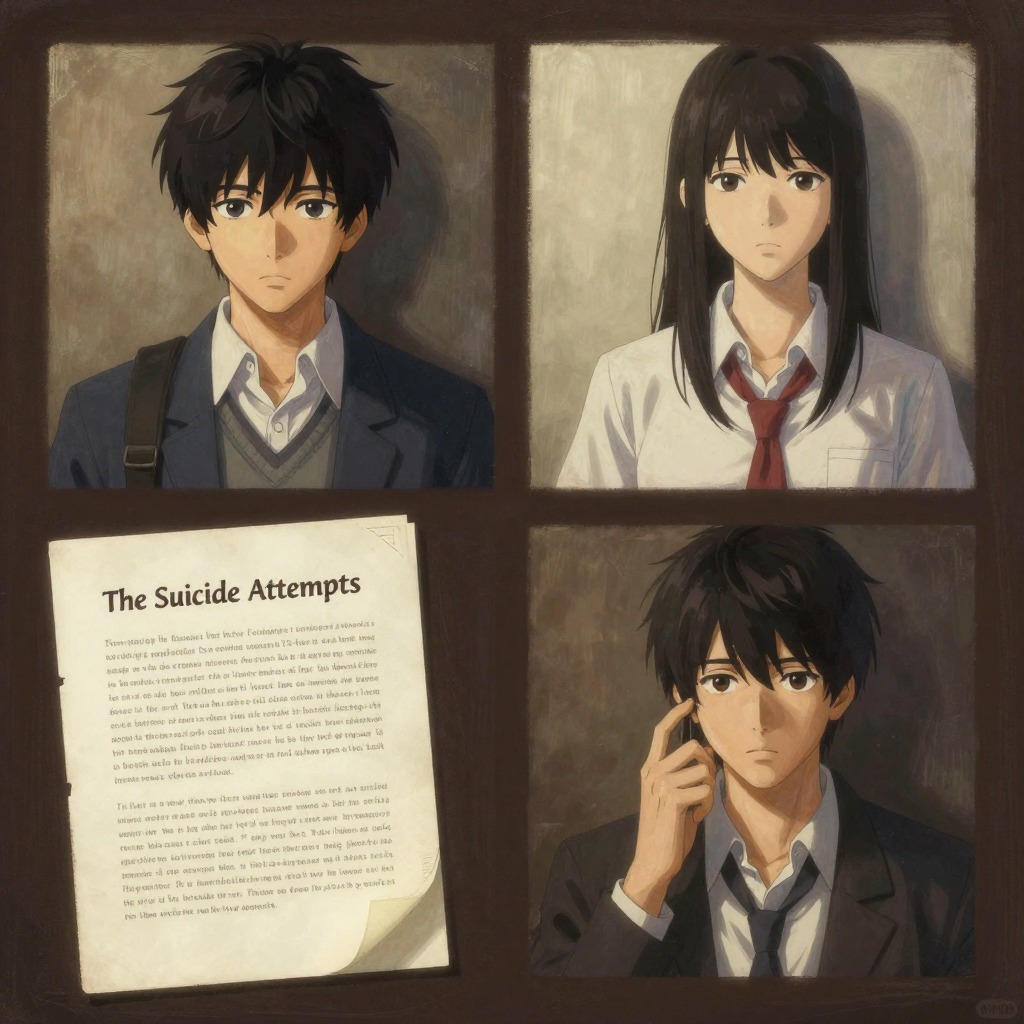
The suicide attempt triggers a legal process that further alienates Yozo from society. He is taken from the hospital to a police station, charged as an accomplice to suicide. Because a hospital examination had revealed that his left lung was affected, he is treated as a sick man and quartered not with criminals but in a special custody room. The police chief, after a brief examination, fills out a form for the district attorney's office. Yozo is then tied with a thin hemp rope and taken by streetcar to Yokohama for questioning by the district attorney. There, his attempt to feign a coughing fit with blood-stained handkerchief is met with the quiet question, "Was that real?"—a moment of exposure Yozo later ranks alongside Takeichi's childhood accusation as one of the two great disasters in his life of acting. The charge is eventually suspended, but the experience leaves him feeling "utterly wretched."
Symbolic and Narrative Significance
Kamakura functions in the novel as the place where Yozo's latent death drive becomes manifest action. The sea, which had earlier appeared in his childhood as a backdrop for cherry blossoms and school life, here becomes the medium of annihilation. The suicide attempt is not an isolated event but the first in a series of self-destructive acts—the Dial overdose, the morphine addiction—that define his trajectory. It also marks the point at which Yozo's family, particularly his father, begins to withdraw their support, accelerating his fall into poverty and dependency. The town's name recurs in the notebooks as a shorthand for the moment when Yozo crossed a line from which there was no return: "I had now lost all confidence in myself, doubted all men immeasurably, and abandoned all hopes for the things of this world, all joy, all sympathy, eternally." Kamakura is thus not merely a location but the site of a transformation that makes the rest of the novel's descent inevitable.