Lion Mask
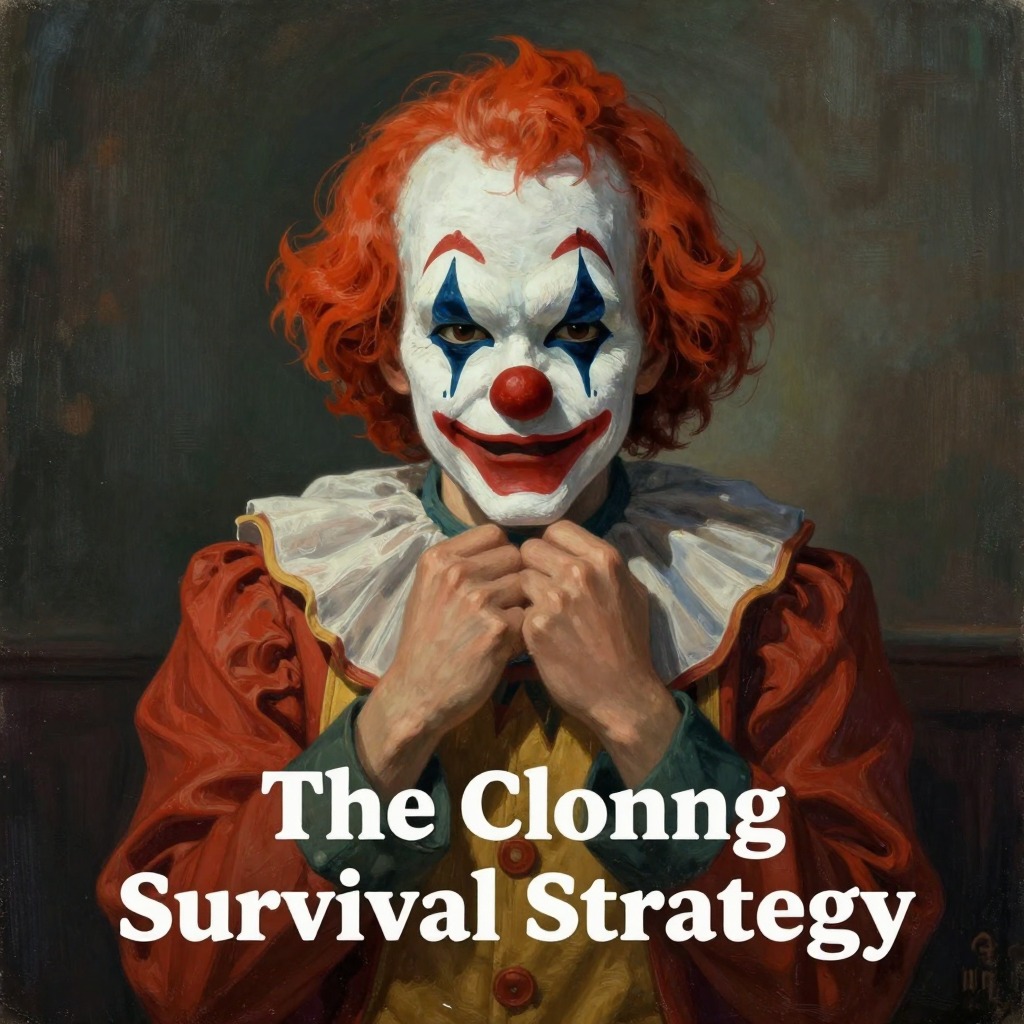
No Longer HumanThe Lion Mask is the first object in Yozo's life that crystallizes his defining strategy of survival: the silent, covert performance of a desire he does not feel, undertaken solely to restore another person's good humor. It appears during a single, decisive night in his childhood and never recurs as a physical object, yet its logic — the substitution of a feigned wish for a real one, the nocturnal sneak, the licked pencil — becomes the template for nearly every relationship he will later enter.
Identity and Origin
The Lion Mask enters the story as a suggestion from Yozo's father, a wealthy politician who frequently traveled to Tokyo and made a hobby of bringing back presents for the family. On the night before one such trip, he summoned all the children to the parlor and, smiling, asked each what present they would like, carefully noting their replies in a little book. When he came to Yozo, the boy could only stammer uncertainly. His father, losing a little of his good humor, offered two alternatives: a book or a mask for the New Year lion dance, which was now sold in children's sizes. The fatal phrase "wouldn't you like one?" made it impossible for Yozo to answer; even his usual clowning failed him. His brother suggested a book, and his father, the pleasure drained from his face, snapped the notebook shut without writing anything.
The Nighttime Act
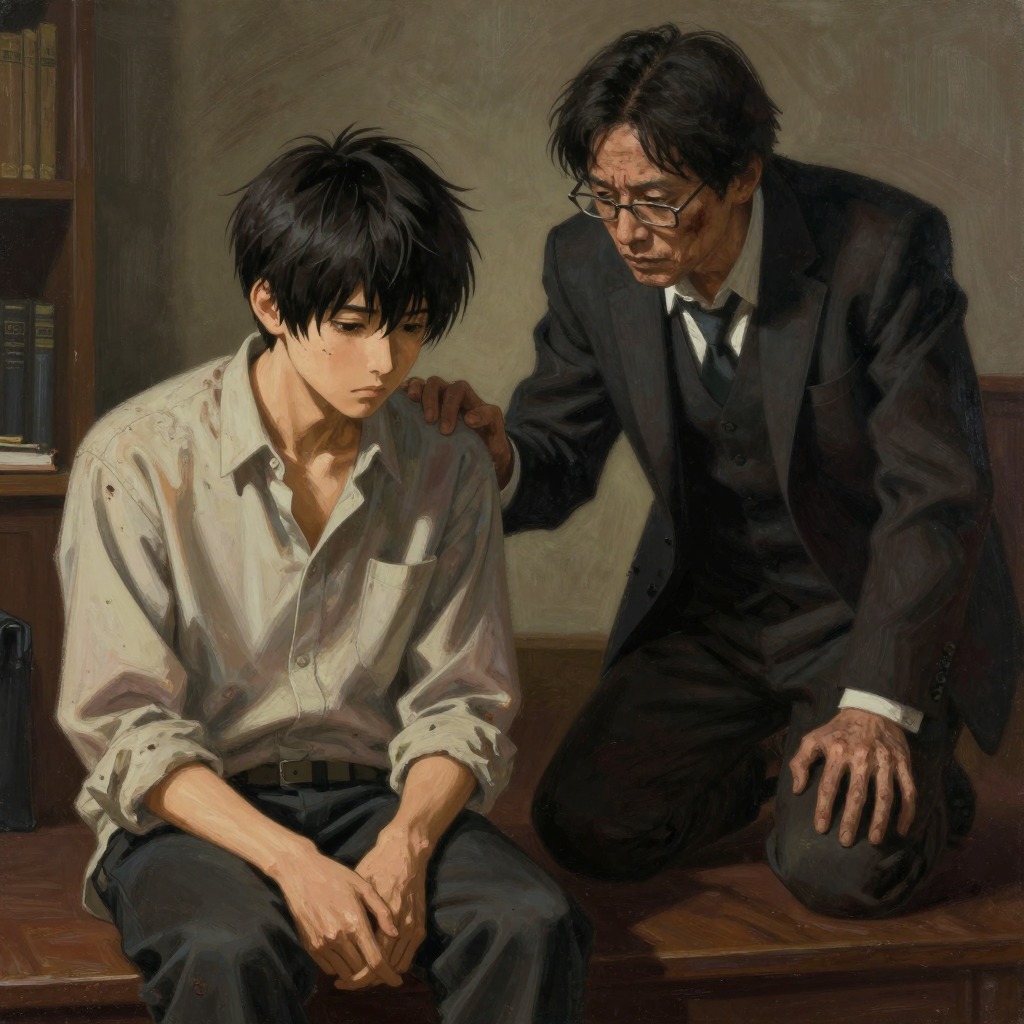
That night, lying shivering in bed, Yozo was consumed by the thought that he had angered his father and that revenge would be something fearful. He crept out of bed, tiptoed down to the parlor, and opened the drawer of the desk where his father had most likely put the notebook. Finding it, he riffled through the pages to the place where the requests were jotted down, licked the notebook pencil, and wrote in big letters "Lion Mask." He had not the faintest wish for a lion mask — he would actually have preferred a book — but it was obvious that his father wanted to buy him a mask, and his frantic desire to cater to that wish and restore his father's good humor had emboldened him to this desperate expedient.
Consequences and Significance
The gamble succeeded beyond expectation. Days later, Yozo overheard his father telling his mother in a loud voice what he had found when he opened the notebook in the toy shop: somebody had written "lion mask" there, and after a moment of confusion he realized it was "some of Yozo's mischief." His father interpreted the act as a sign that Yozo had wanted the mask so badly he could not stand it, and he burst out laughing in front of everybody in the toy shop. The incident established for Yozo that a lie, if it conformed to what the other person wanted to hear, could produce affection and laughter — and that the truth, if it disappointed, would produce coldness and the snapping shut of a notebook. The Lion Mask thus becomes the first concrete instance of what Yozo later calls his "compulsion to add some sort of embellishment to every situation," a habit born not of malice but of a strangulating fear of the cataclysmic change in atmosphere the instant a conversation flagged. It also prefigures the pattern by which women and men alike would later project onto Yozo the emotions they wanted to find in him, while his actual self remained hidden and unexpressed.
Thematic Resonance
The Lion Mask resonates beyond its single appearance. Years afterward, when Yozo paints his "ghost pictures" — the self-portraits that reveal his true, terrified self — he hides them in the back of a cupboard, afraid that others might either detect the nightmare under the clowning or, worse, mistake it for another joke. The mask and the hidden paintings are opposite sides of the same coin: one is a face worn to please, the other a face hidden to protect. Later still, when Yozo dreams of a life with Yoshiko — of going together on bicycles to see a waterfall framed in green leaves — he is reaching for a happiness that the Lion Mask logic has already taught him is unattainable through honesty. The mask, never seen again after that childhood night, nevertheless governs the whole architecture of his life: a performance so successful that it erases the performer, leaving only the object of another's desire.