Madam of the Kyobashi bar
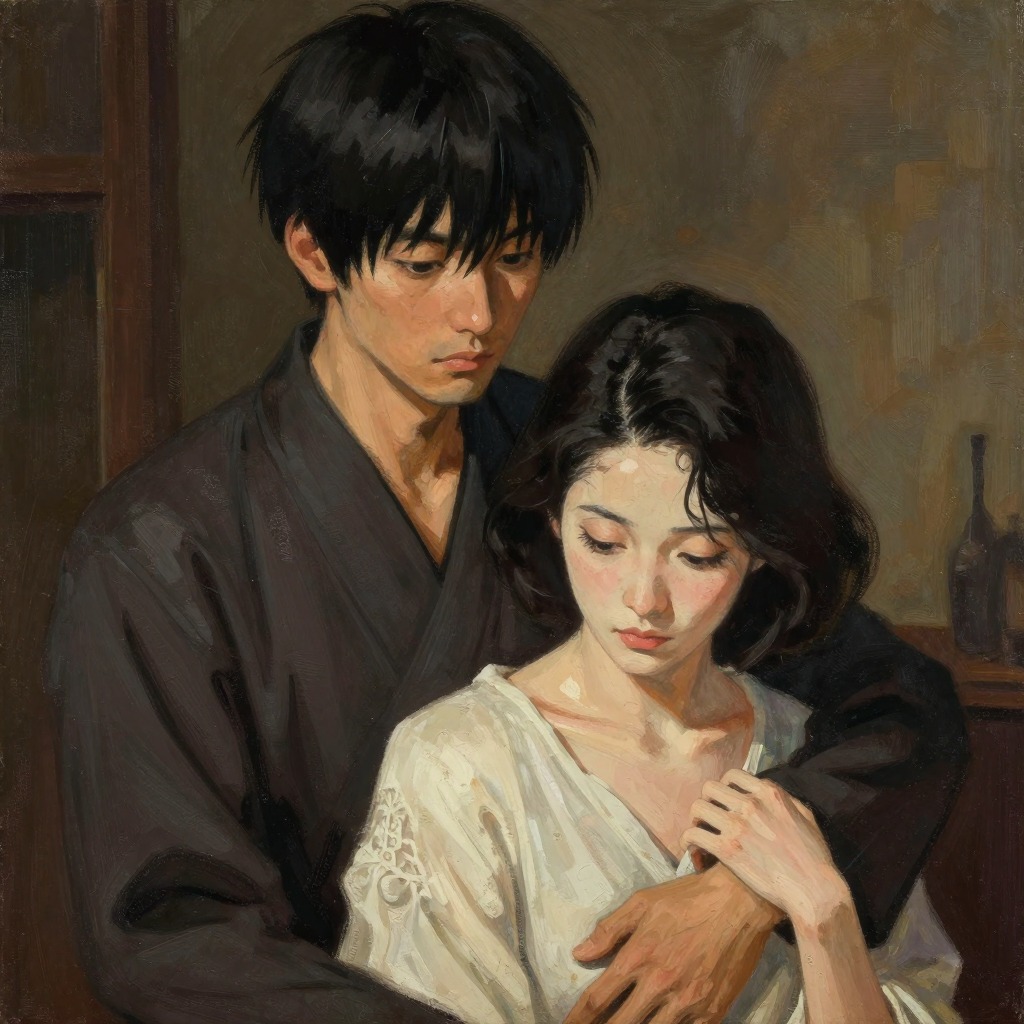
No Longer HumanThe Madam of the Kyobashi bar is one of the few figures in Yozo's life who offers him unconditional, practical support without demanding performance or repayment. She runs a bar near Kyobashi Station, and her establishment becomes a refuge for Yozo after he flees his life with Shizuko in Koenji. Unlike the other women who are drawn to Yozo by his vulnerability or their own needs, the Madam acts with a kind of chivalry—a quality Yozo notes is more common among city women than men, who are preoccupied with appearances and stingy with their resources. She accepts him without ceremony when he arrives and says simply, "I've left her and come to you," and from that night he lodges himself on the second floor of her bar. Society, which Yozo had always feared as an implacable force, inflicts no harm on him as long as the Madam is willing to have him there.
Role as Protector and Enabler
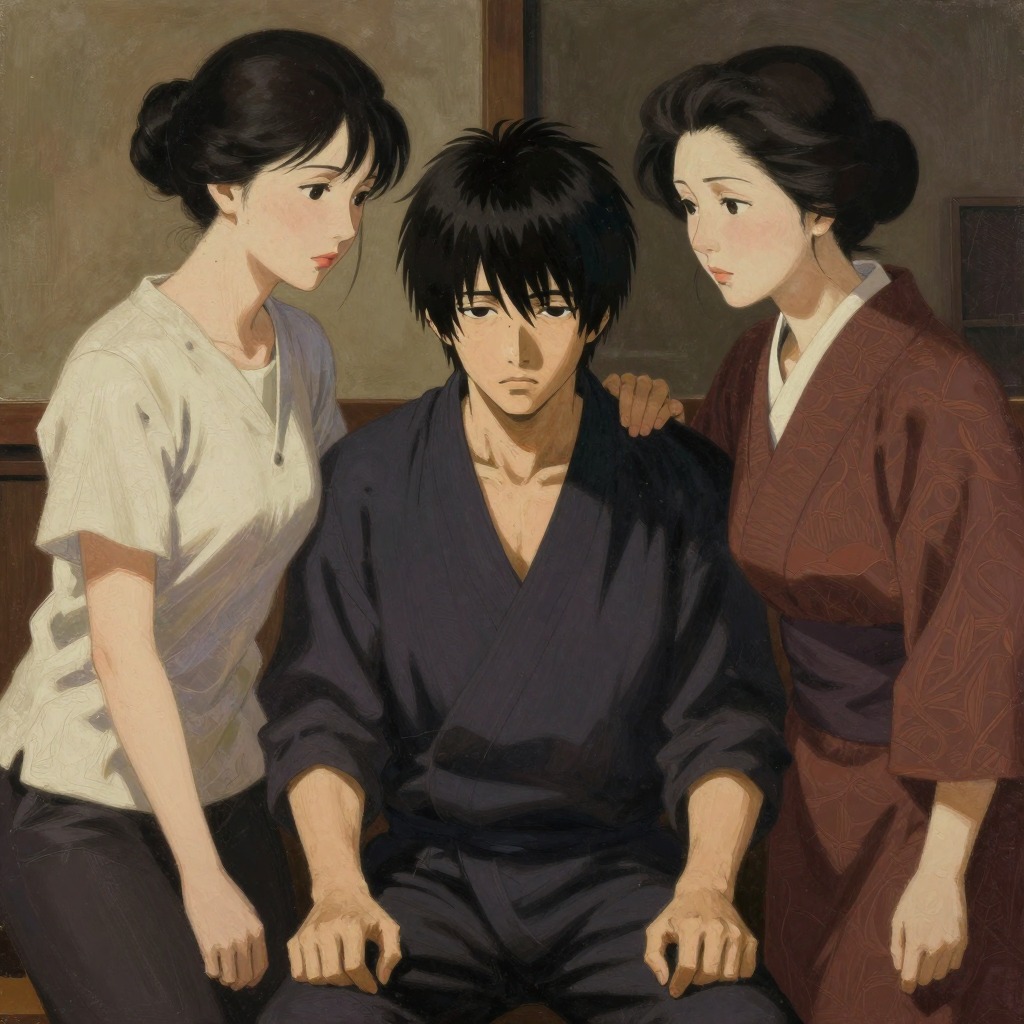
The Madam treats Yozo variously as a customer, an owner, an errand boy, and a relative of the management. The regular customers of the bar, following her lead, treat him with almost painful kindness, calling him by his first name and buying him drinks. This environment allows Yozo to relax his vigilance toward the world for the first time, though he still needs to fortify himself with a glass of liquor before facing even the bar's patrons. The Madam's protection is not passive: when Yozo later marries Yoshiko, it is the Madam's chivalry that enables the marriage, helping him rent a room near the Sumida River and giving him the stability to give up drinking temporarily and devote himself to drawing cartoons. She is the one who, after Yozo's second suicide attempt with Dial sleeping pills, sits at his bedside in the hospital and receives Flatfish's complaints about Yozo's timing—"He always chooses the end of the year, just when everybody is frantically busy." When Yozo regains consciousness and bursts into tears, saying "Take me away from Yoshiko," the Madam rises and breathes a barely audible sigh, understanding the depth of his despair without needing words.
Custodian of the Notebooks
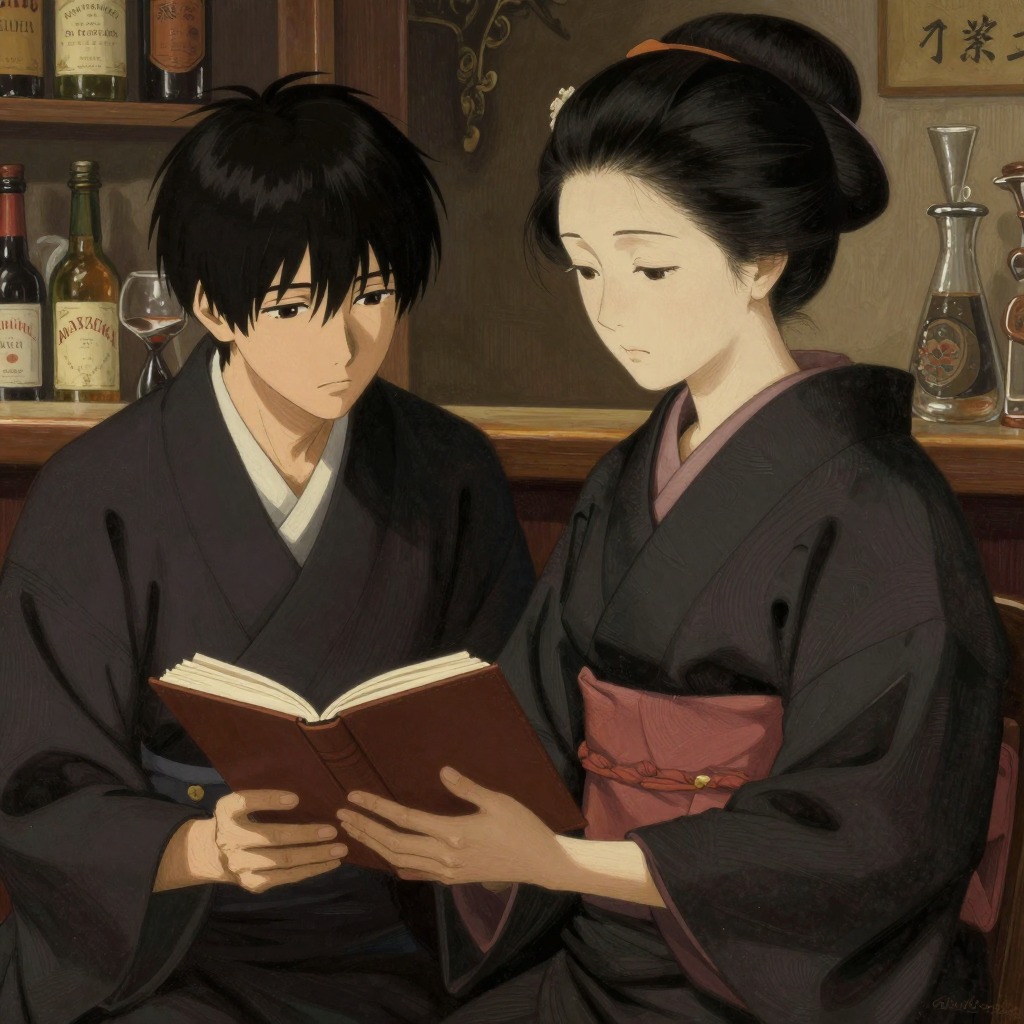
The Madam's most significant act occurs years after Yozo's disappearance from Tokyo. Around ten years after the events of the notebooks, someone—almost certainly Yozo himself—sends her a parcel containing the three notebooks and the three photographs that form the text of No Longer Human. The parcel bears no return address or name. During the air raids of the war, the notebooks get mixed up with other things but miraculously survive. The Madam keeps them for years without reading them; only shortly before the epilogue's events does she finally read through them for the first time. When the narrator—a friend from university days who visits her relocated coffee shop in Funabashi—asks if she cried, she answers flatly, "No. I didn't cry... I just kept thinking that when human beings get that way, they're no good for anything." Yet her final judgment, delivered without emotion, contradicts the notebooks' self-condemnation: "The Yozo we knew was so easy-going and amusing, and if only he hadn't drunk—no, even though he did drink—he was a good boy, an angel." This testimony, coming from the only objective witness in the epilogue, transforms the reader's understanding of Yozo, revealing the incompleteness of his own portrait of himself.
Narrative Significance
The Madam of the Kyobashi bar serves as the bridge between Yozo's private hell and the public record of his life. She is the one who preserves the material evidence of his existence and who, by handing the notebooks to the narrator, ensures that Yozo's story reaches the world. Her physical description—slightly built, rather sickly-looking, with narrow, tilted eyes and a prominent nose, giving an impression less of a beautiful woman than of a handsome young man—matches the hard, practical quality she displays throughout. She never sentimentalizes Yozo or excuses his behavior, but she also never condemns him. Her final words, "He was an angel," echo the epilogue's revelation that Yozo's gentleness and capacity for love went unnoticed by himself, and they provide the only counterweight to the narrative of shame and self-destruction that Yozo himself constructed.