Madness
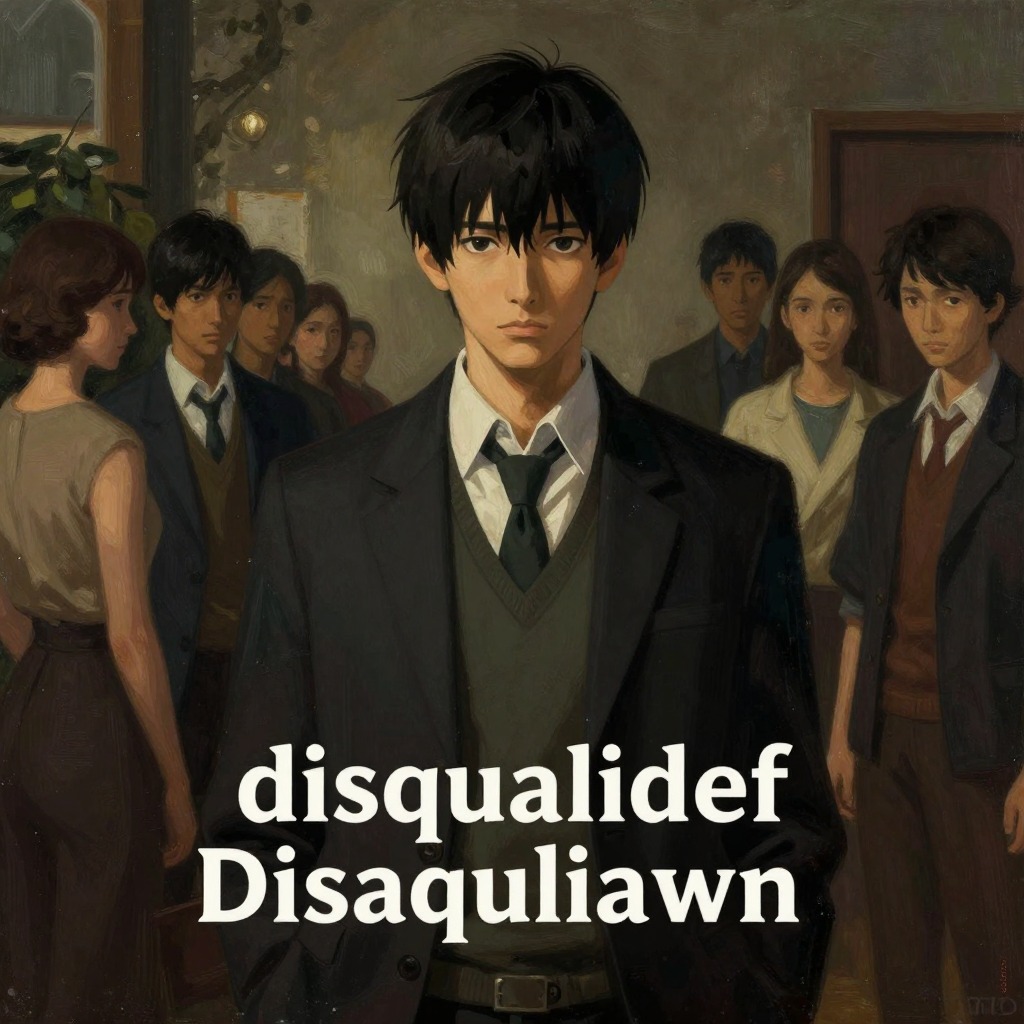
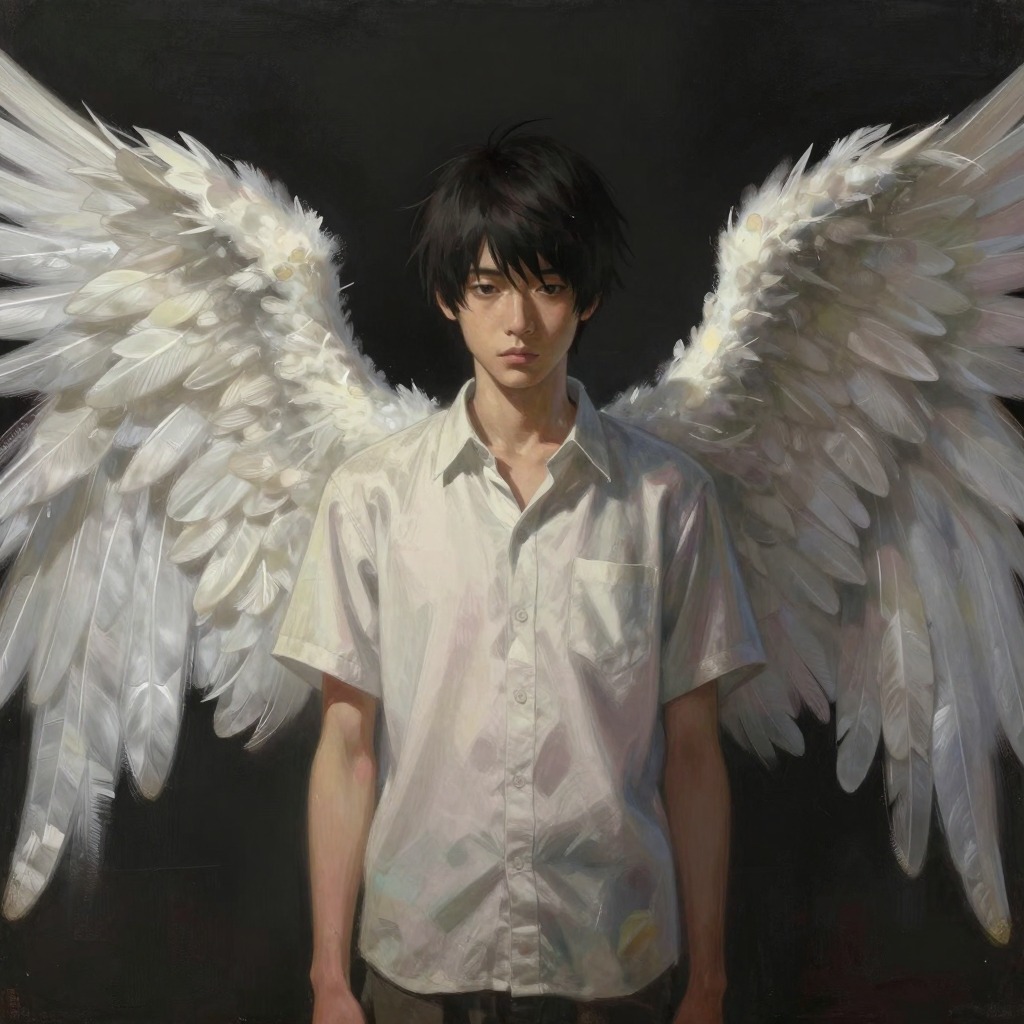
No Longer HumanMadness in No Longer Human is not a clinical diagnosis but a social verdict imposed on Yozo after his family and friends commit him to a mental hospital, where he is locked in a ward for male lunatics and branded a "reject." The novel uses this institutional confinement to dramatize how a person who cannot perform the expected roles of human society—who cannot resist, who cannot trust, who cannot lie convincingly—is expelled from the category of the human itself. Yozo's own reflections on his sanity, his ironic acceptance of the label, and the epilogue's revelation that others saw him as an "angel" together transform madness into a structural judgment of the social order rather than a property of the individual mind.
Institutional Confinement and the Loss of Freedom
The decisive moment of Yozo's transformation into a madman occurs when Flatfish and Masao Horiki arrive at his apartment, bundle him into an automobile, and take him to a large hospital in the woods. Yozo, weeping helplessly, obeys "like a man bereft of all will, decision and everything else." The young doctor with a bashful smile ushers him to a ward, and the key grates in the lock behind him. Yozo realizes he is in a mental hospital. His delirious cry after swallowing the Dial sleeping pills—that he would go where there were no women—has now materialized in a truly uncanny way: his ward holds only male lunatics, and the nurses are also men. There is not a single woman. The confinement is presented not as a medical necessity but as a social expulsion, a removal from the world of human relations.
The Paradox of Self-Knowledge: "I Am Not Mad"
Once inside, Yozo immediately confronts the epistemological trap of madness. He insists, "I was no longer a criminal—I was a lunatic. But no, I was definitely not mad. I have never been mad for even an instant." Yet he immediately acknowledges the standard objection: "They say, I know, that most lunatics claim the same thing." The novel thus stages the classic paradox of madness—the impossibility of self-certification. Yozo's own certainty of his sanity is precisely what, from the outside, confirms his madness. He concludes bitterly, "What it amounts to is that people who get put into this asylum are crazy, and those who don't are normal." This is not a confession of insanity but a recognition that madness is a label applied by those with the power to confine, not a truth about the self.
Non-Resistance as the Path to Madness
Yozo's entry into the asylum is directly linked to his characteristic inability to resist. He had wept at Horiki's "incredibly beautiful smile" and, forgetting both prudence and resistance, got into the car. Now he asks God, "Is non-resistance a sin?" The question is rhetorical but devastating: his lifelong strategy of passive accommodation, of never saying no, of smiling and clowning to avoid conflict, has led him to a place where he is declared mad. The very gentleness that others later call angelic is what makes him vulnerable to being labeled insane. His refusal to fight, to assert himself, to claim a place in the world of human beings becomes the evidence of his unfitness for that world.
The Brand of the Reject
Even after his release, the stigma of madness is permanent. Yozo's eldest brother and Flatfish come to take him out of the hospital three months later, after his father's death. His brother tells him he must leave Tokyo and begin his convalescence afresh in the country. Yozo feels as though he can see the mountains and rivers of home before his eyes, and he nods faintly. But his internal verdict is absolute: "A reject, exactly." The word "reject" (also translated as "disqualified") is the final identity he accepts. He has now ceased utterly to be a human being. The novel's title, No Longer Human, is thus realized not as a metaphor but as a social fact: madness is the institutional mechanism by which a person is stripped of membership in the human community.
The Thematic Significance: Madness as Social Judgment
Throughout the novel, Yozo has felt himself to be a "social outcast" from birth, tortured by a "criminal consciousness" that is his faithful companion. His involvement with the Marxist Reading Society, his suicide attempt with Tsuneko, his alcoholism, his morphine addiction—all are interpreted by others as signs of degeneracy or madness. But the novel consistently presents these behaviors as responses to an unbearable fear of human beings, not as symptoms of mental illness. The epilogue deepens this irony: the Madam of the Kyobashi bar, who knew Yozo personally, says unemotionally, "The Yozo we knew was so easy-going and amusing, and if only he hadn't drunk—no, even though he did drink—he was a good boy, an angel." The man whom society locked away as a lunatic is remembered by the one person who knew him best as an angel. Madness, in the end, is not in Yozo's mind but in the eyes of a society that cannot tolerate his kind of gentleness.