Pharmacist woman
No Longer HumanThe Pharmacist woman is a crippled widow who runs a small pharmacy in Koenji, and she becomes the central figure in Yozo's final, most degrading addiction. She is the one who introduces him to morphine, supplies him with the drug as his dependency spirals out of control, and becomes his lover in a relationship built on mutual desperation and need. Her role marks the point at which Yozo's self-destruction shifts from alcohol to narcotics, and she embodies the tragic paradox of care that enables destruction.
Identity and Circumstances
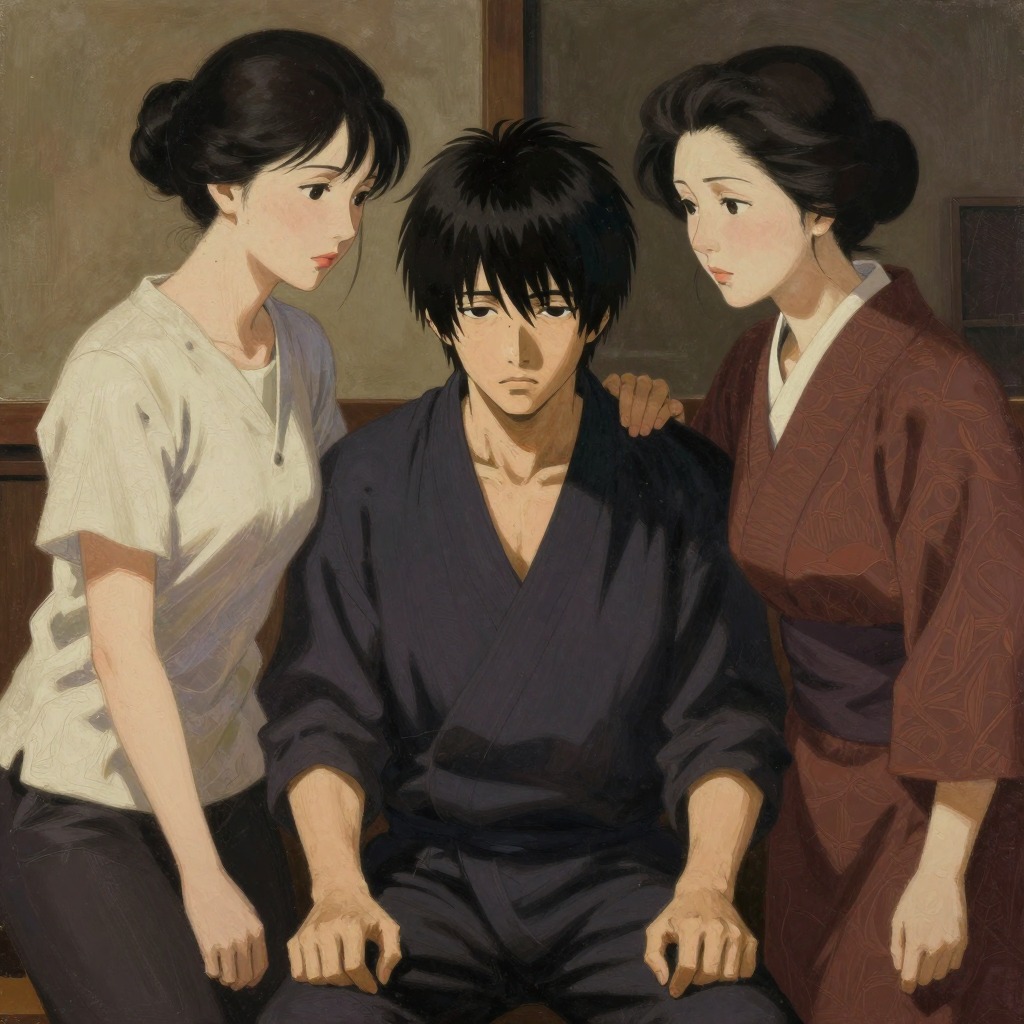
The Pharmacist woman is a widow who lives with her only son, a medical student who has been forced to take leave from school because he has contracted the same tuberculosis that killed his father. Her father-in-law lies bedridden with palsy in the same house. She herself has been unable to move one side of her body since the age of five, when she contracted infantile paralysis, and she moves around the shop on crutches. When Yozo first enters her pharmacy, he notices her immediately: she stands with difficulty, supporting herself on crutches, and when their eyes meet, her look is not one of alarm or dislike but of longing, almost of seeking salvation. Yozo recognizes her as a fellow sufferer, thinking, "She must be unhappy too. Unhappy people are sensitive to the unhappiness of others." Tears brim from her large eyes as she looks at him, and without a word, Yozo leaves.
Introduction to Morphine
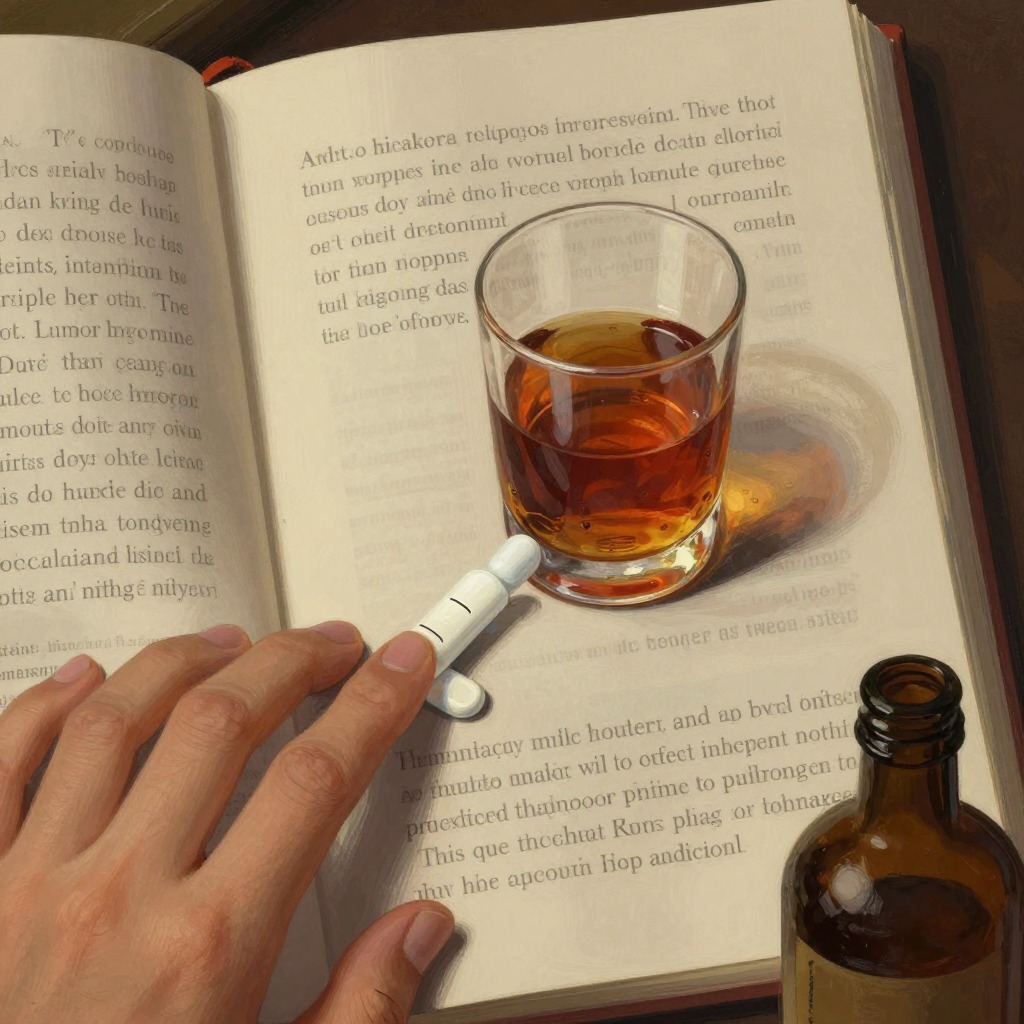
Yozo returns the following night, confessing his physical condition—he has coughed blood—and asking for her advice. She tells him he must give up drinking, and explains that her husband used to soak himself in liquor despite his tuberculosis, claiming he killed the germs with alcohol, and that this shortened his life. Yozo admits he feels so on edge he cannot stand it, that he is afraid and no good for anything. She selects various medicines for him—a blood-building medicine, a serum for vitamin injections, calcium pills, diastase to prevent an upset stomach—and her voice is full of tenderness as she explains each one. Then, as a final offering, she quickly wraps a little box and says, "This is a medicine to be used when you need a drink so badly you can't stand it." It is morphine. She tells him it is no more harmful than liquor, and Yozo, desperate to escape his bondage to alcohol, believes her.
Addiction and Dependence
Yozo begins injecting morphine once a day, but the dose quickly escalates to two, then three, then four injections daily. He can no longer work unless he has had his shots. The Pharmacist woman admonishes him, saying how dreadful it would be if he became an addict, but her warning only makes him more anxious and drives him to seek more of the drug. He begs her for more, promising to pay at the end of the month. She tells him the police are troublesome, but he persists, even offering to kiss her. She blushes. He tells her he cannot work without the medicine, that it is an energy-builder, and that he has stopped drinking and is in fine physical shape thanks to her. He promises to become a great painter. She laughs and says, "What a nuisance you are. You may already have become an addict, for all I know." She gives him half a box instead of a whole one. Late one night, Yozo knocks on the pharmacy door, and when she appears in her nightgown, hobbling on her crutches, he throws his arms around her and kisses her, pretending to weep. She hands him a box without a word.
The Ugly Affair and Mutual Desperation
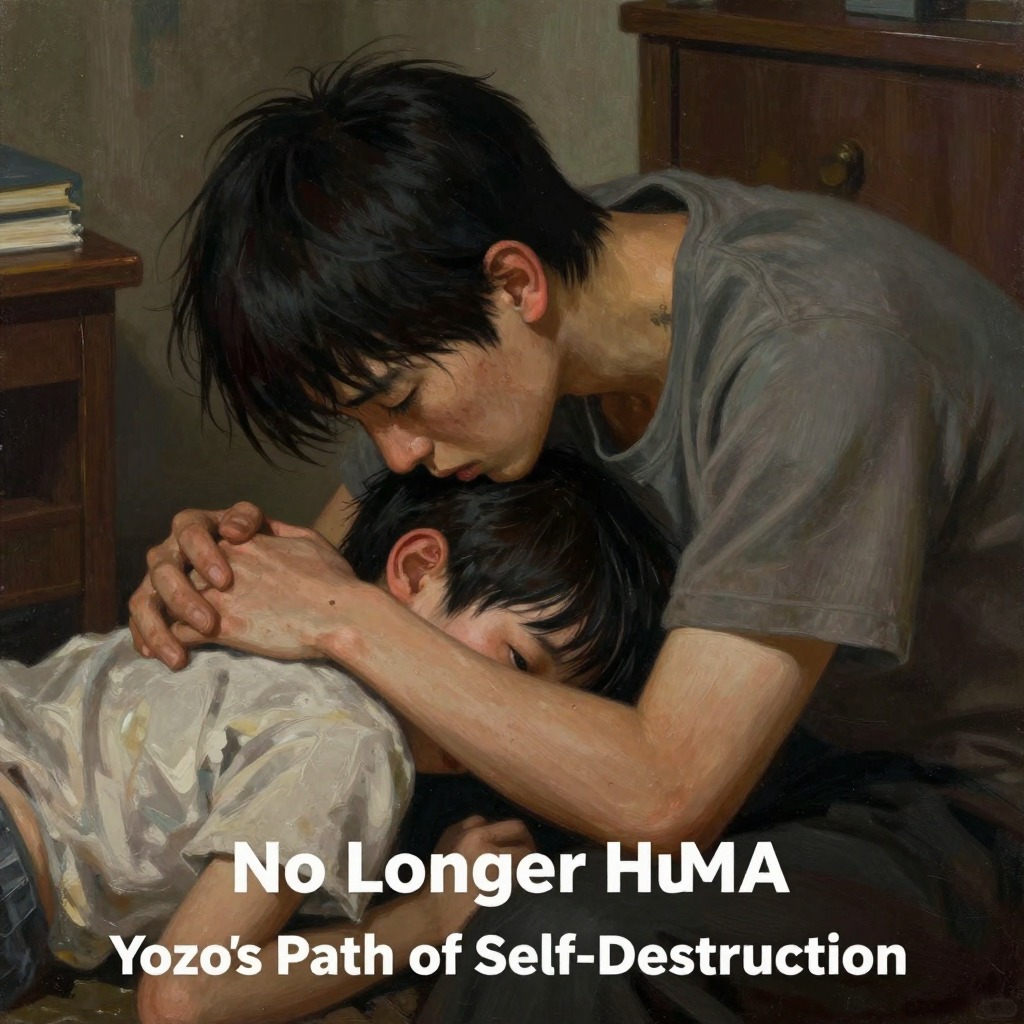
By the time Yozo realizes that drugs are as abominable and foul as gin—fouler, even—he has already become an out-and-out addict. He has reached the extreme of shamelessness. To obtain the drug, he begins again to make copies of pornographic pictures, and he has what he calls a "very ugly affair" with the crippled woman from the pharmacy. The more he works, the more morphine he consumes, and his debt at the pharmacy reaches a frightening figure. Whenever the woman catches sight of his face, the tears come to her eyes. Yozo also weeps. Their relationship is one of mutual recognition of suffering and mutual helplessness: she supplies the drug that destroys him, and he consumes it, and both of them weep. She is the last person to offer him care before his final collapse, but her care is the very instrument of his destruction.
Thematic Significance
The Pharmacist woman represents the final, degraded form of the female care that has sustained Yozo throughout his life. Like the prostitutes who offered him sleep, like Shizuko who kept him, like Yoshiko who trusted him, she offers him a substance that promises relief but delivers only deeper bondage. Her physical disability mirrors Yozo's own spiritual crippling, and her tears reflect his own. She is the last person to whom Yozo turns before his hospitalization, and the morphine she provides is the final stage of his descent into the state of being "disqualified as a human being." Her role underscores the novel's central theme: that the very things Yozo seeks for comfort—women, alcohol, drugs—are the instruments of his destruction, and that the people who try to help him are often the ones who enable his ruin.