Refusal of Morphine
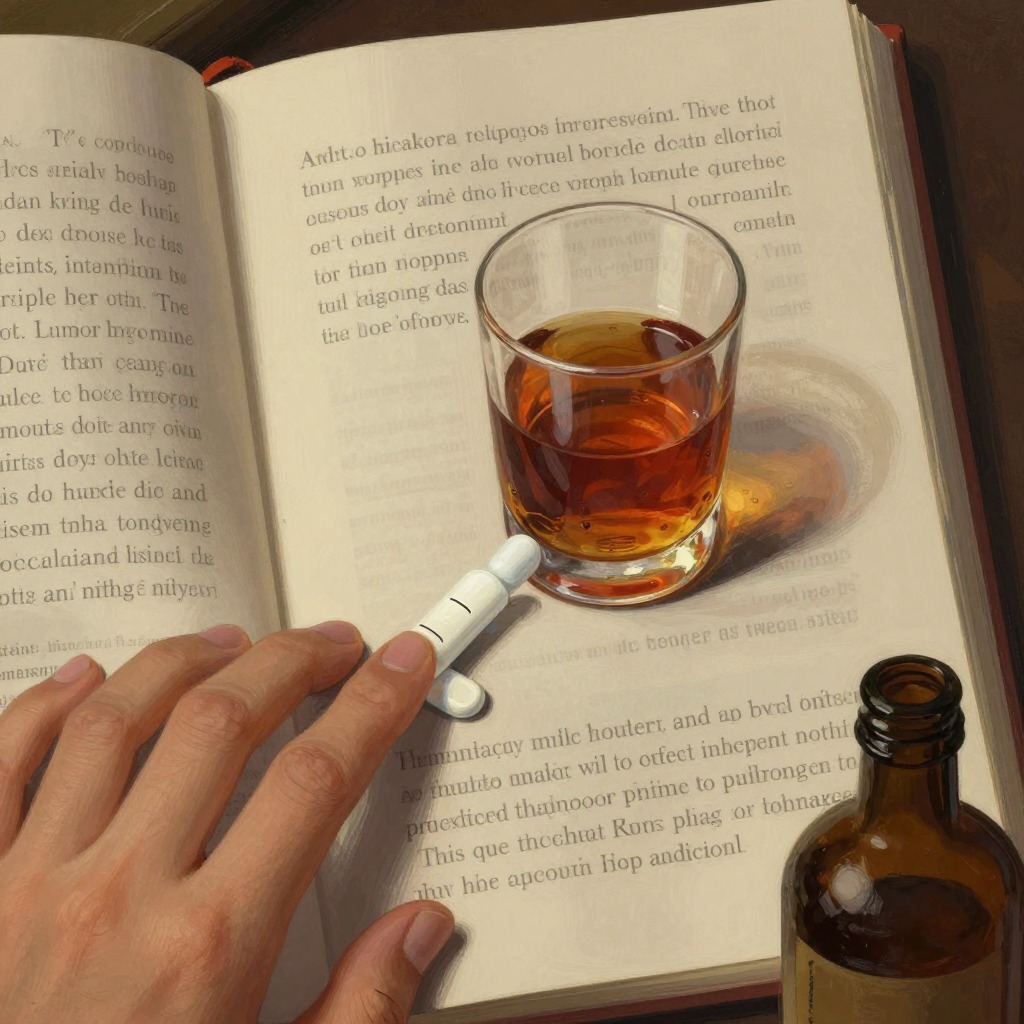
No Longer HumanThe Refusal of Morphine is the decisive, almost involuntary act that seals Yozo's fate as a man who has ceased to be human. After months of spiraling addiction to morphine, which he had taken up as a substitute for alcohol, Yozo finds himself at the entrance of a mental hospital. In a moment that defies his entire history of passive compliance, he refuses the hypodermic needle and the remaining medicine that his wife Yoshiko offers him. This single, uncharacteristic "no" is the culmination of his lifelong dread of human beings and his inability to resist their demands, and it immediately precedes his formal classification as a lunatic.
The Context of Addiction and Desperation
By the time of this event, Yozo had become a full-blown morphine addict. He had turned to the drug after the pharmacist woman, a crippled widow who ran a pharmacy near his apartment, assured him it was no more harmful than liquor. The injections initially swept away his insecurity and fretfulness, allowing him to work energetically on his cartoons, but he soon required four shots a day just to function. His debt at the pharmacy grew frightening, and he engaged in an ugly affair with the woman to obtain the drug. He had reached the extreme of shamelessness, copying pornographic pictures to pay for his habit, and his only remaining hope was a desperate letter to his father, which went unanswered. He had resolved to give himself ten shots that night and throw himself into the river.
The Arrival of Flatfish and Horiki
On the very afternoon Yozo had chosen for his suicide, Flatfish appeared with Masao Horiki in tow, seemingly having sniffed out his plan with diabolical intuition. Horiki, who had always treated Yozo with contempt, sat before him and offered a gentle smile, the like of which Yozo had never seen on his face. He said, "I hear you've coughed blood." This single, unexpected gesture of kindness shattered Yozo completely. He averted his face and wept, feeling so grateful and happy that he was utterly defenseless. He was bundled into an automobile, weeping helplessly, and obeyed whatever Flatfish and Horiki decreed, like a man bereft of all will and decision.
The Moment of Refusal
Yozo was taken to a large hospital in the woods, which he immediately suspected was a sanatorium. After a careful examination by a young doctor with a bashful smile, Flatfish, Horiki, and Yoshiko prepared to leave him there alone. As they were about to go, Yoshiko silently handed him a bundle containing a change of clothes and, from her handbag, the hypodermic needle and the remaining morphine. She apparently still believed it was merely an energy-building medicine. Yozo, in a moment that he himself would later call a really rare event, said, "No, I won't need it any more." This was the one and only time in his life that he refused something offered to him. His entire existence had been defined by his inability to say no, intimidated by the fear that declining would open a yawning crevice between himself and the other person. Yet now, struck by Yoshiko's divine ignorance, he refused the drug he had so desperately craved.
The Immediate Consequence: Confinement and Diagnosis
The young doctor immediately ushered Yozo to a ward, and the key grated in the lock behind him. He was in a mental hospital. His delirious cry after his earlier suicide attempt—that he would go where there were no women—had now materialized in a truly uncanny way: his ward held only male lunatics, and the nurses were also men. There was not a single woman. Yozo reflected that he was no longer a criminal but a lunatic, though he insisted he was definitely not mad. He had wept at Horiki's beautiful smile, forgotten prudence and resistance, and got into the car that brought him here. Now he had become a madman, forever branded on the forehead with the word "madman" or "reject." The act of refusal, far from being a sign of recovery, was the final step in his disqualification as a human being.
Thematic Significance: Non-Resistance as a Sin
The Refusal of Morphine crystallizes the novel's central paradox: Yozo's only genuine act of self-assertion is a refusal that leads directly to his social death. He had spent his life in a state of non-resistance, unable to contradict anyone to his face, and this passivity had been the source of his endless shame. Yet when he finally says no, it is not an act of rebellion but of surrender. He asks God, "Is non-resistance a sin?" The question hangs unanswered. The refusal is also the moment when his addiction ends—he wonders if he had already ceased to be an addict at that instant—but the cure is indistinguishable from the condemnation. The morphine, which had been his last desperate means of coping with the terror of human beings, is taken from him, and he is left with nothing but the empty label of madness.