Yozo's elder brother
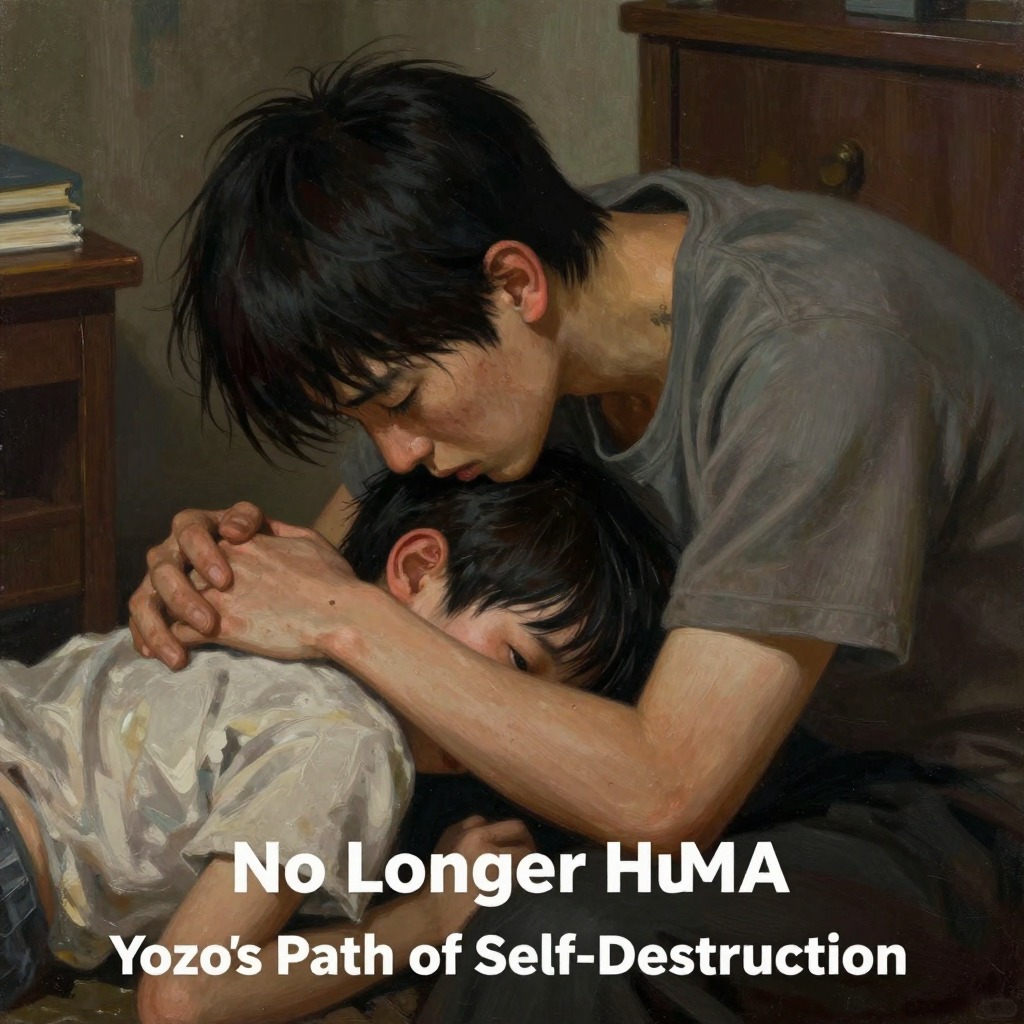
No Longer HumanYozo's elder brother is the family member who, after their father's death, takes responsibility for Yozo's future, arranging his release from a mental hospital and securing him a secluded life in the countryside, thereby acting as the final, distant authority that enforces Yozo's exile from society.
Identity and Family Role
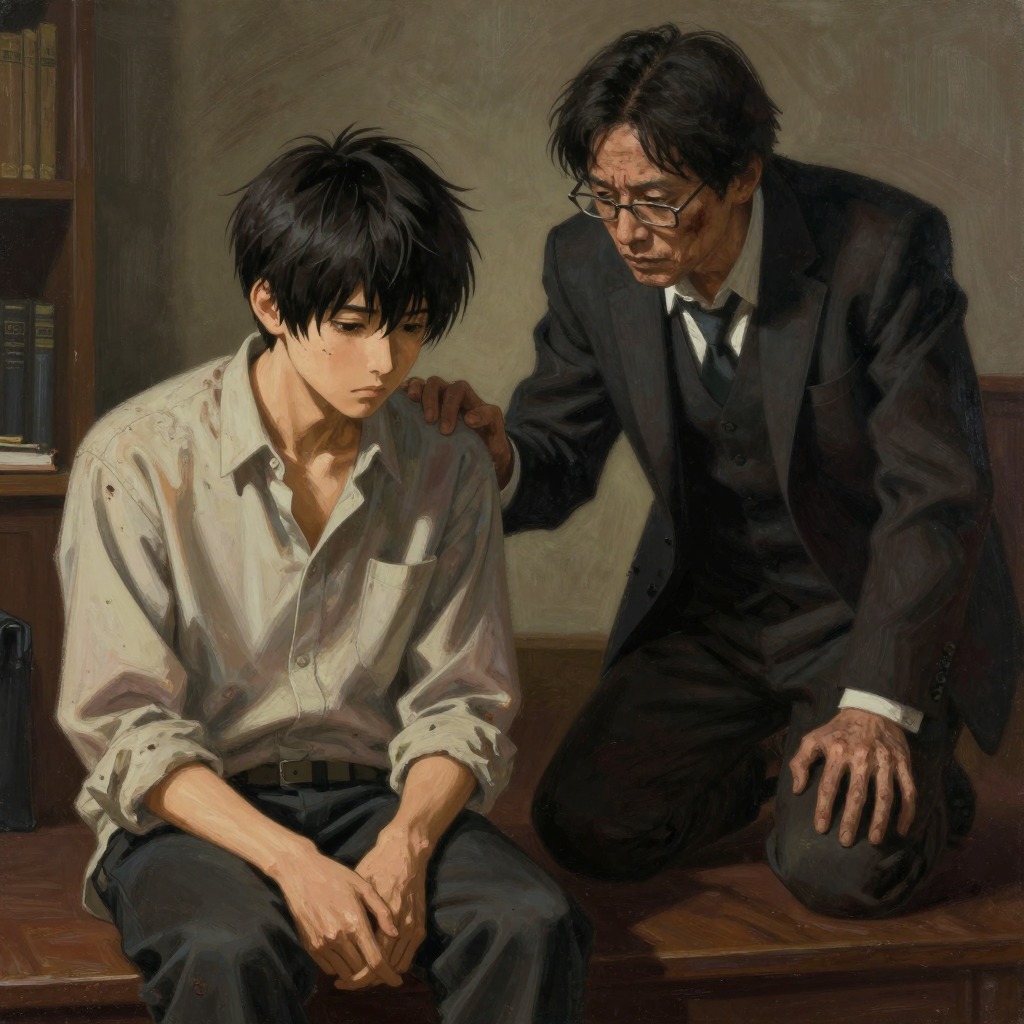
Yozo's elder brother is the son of a wealthy, politically connected family in a village in the Northeast of Japan. He is the one who, when Yozo is a college student, writes a long, sternly phrased letter on behalf of their father, warning Yozo to change his ways after the school sends a confidential report about his poor attendance. This act establishes him early as the family's enforcer of discipline, a role he maintains even after their father's death. He is described as rarely given to mirth, a contrast to Yozo's desperate clowning, and he speaks in a habitually serious, strained voice.
Arc Through the Plot: From Disciplinarian to Custodian
After Yozo's suicide attempt with Tsuneko, the elder brother acts on their father's behalf, sending a relative to handle arrangements and informing Yozo that the family is so enraged he might be disowned. This marks the beginning of Yozo's formal separation from the family. Later, when Yozo is institutionalized in a mental hospital, it is the elder brother who, three months after Yozo's admission, comes with Flatfish to take him out. He delivers the news of their father's death from gastric ulcers and lays out the terms of Yozo's future: no questions about the past, living expenses provided, but Yozo must leave Tokyo immediately and begin his convalescence in the country. The elder brother scrupulously carries out this promise, buying a thatch-covered, ancient-looking house with five rooms at a hot spring on the coast, about four or five hours by rail south of their hometown. He also sends an ugly woman close to sixty with horrible rusty hair, Tetsu, to look after Yozo.
Relationships and Conflict
The relationship between Yozo and his elder brother is one of distant authority and enforced obligation, never of warmth or understanding. Yozo's elder brother is the embodiment of the family's judgment and the practical executor of Yozo's banishment. Yozo, who has always been unable to answer back or contradict anyone, accepts his brother's decisions with a faint nod, feeling as though he could see the mountains and rivers of home before his eyes. The news of their father's death, delivered by his brother, eviscerates Yozo, making him feel as if the vessel of his suffering had become empty. The elder brother's actions, while providing material security, finalize Yozo's status as a "reject" — a man who has been removed from society and placed in a living tomb.
Change and Ending
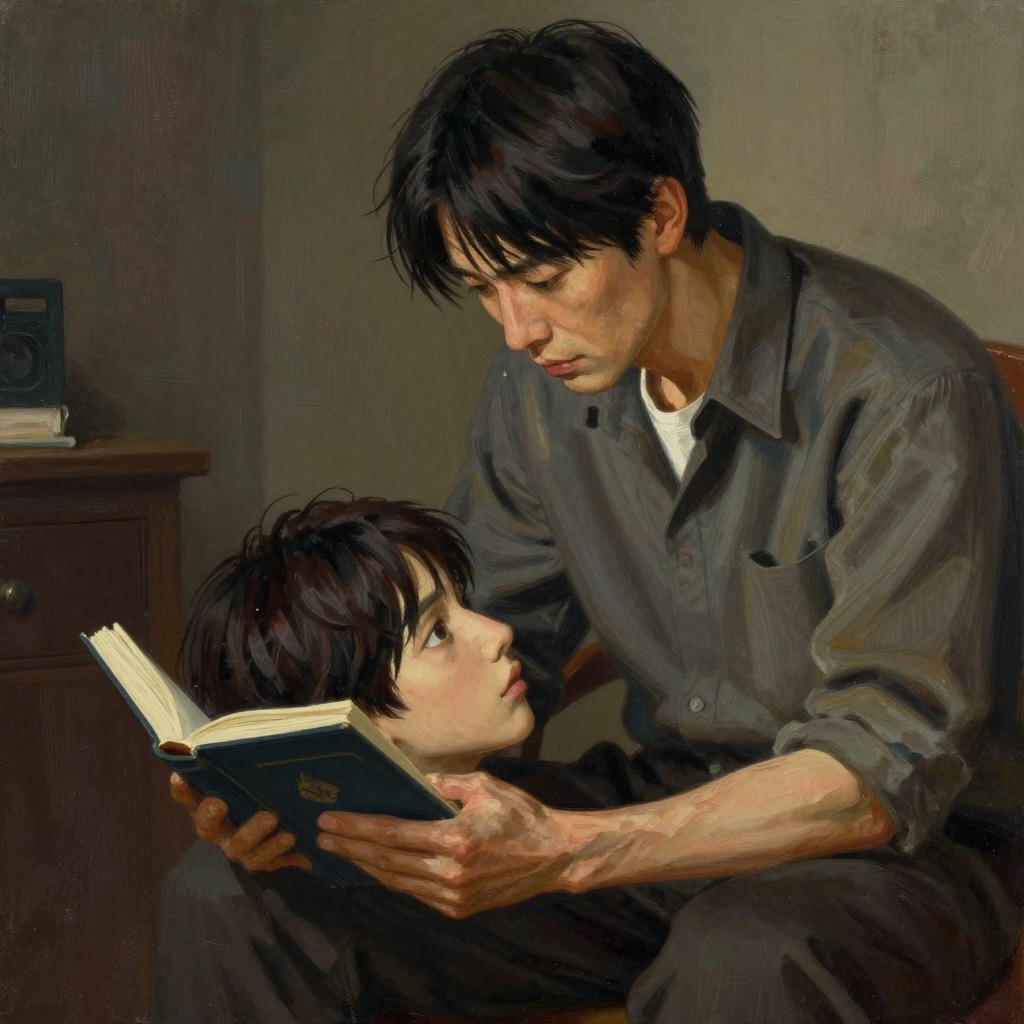
Yozo's elder brother undergoes a shift from a stern disciplinarian to a reluctant but dutiful custodian. After their father's death, he takes on the role of the family head, making the decision to isolate Yozo rather than attempt his reintegration. He ensures Yozo has no financial worries but demands his complete withdrawal from Tokyo and its attachments. This arrangement, which Yozo accepts without protest, leads to the final phase of Yozo's life: three years of seclusion in a decaying house, looked after by an old servant, with his chest ailment fluctuating and his hair turning much greyer. The elder brother's actions, though practical, seal Yozo's fate as a man who has ceased to be a human being in any social sense.
Thematic Significance
Yozo's elder brother represents the implacable, impersonal force of family and society that judges and disposes of those who cannot conform. He is the agent of the "world" that Yozo has always feared, the one who, without malice but with absolute finality, enforces the verdict that Yozo is disqualified from human life. His role underscores the novel's central theme: that the inability to resist, to argue, or to assert one's own will leads not to compassion but to exile. The elder brother's care is a form of burial, a quiet, decent disposal of a problem, and it is this very decency that makes Yozo's fate so inescapable and so tragic.
The brother's role in the novel's final section is further underscored by the sequence of events leading to Yozo's ultimate isolation. After Yozo's suicide attempt with soporific drugs, he is hospitalized and subsequently develops a morphine addiction, which results in his confinement to a mental institution. It is only upon his release from this institution that the brother intervenes, arranging for Yozo to move to a remote countryside location. This intervention, occurring after Yozo's complete psychological and social breakdown, solidifies the brother's position as the final arbiter of Yozo's fate, enforcing a quiet exile that mirrors the protagonist's own concluding sentiment of feeling neither happy nor unhappy.