
Industrial Decline and New Labor
NomadlandThe contrast between Empire and Amazon Town reveals a shift from stable industrial communities toward temporary, mobile work.
increasing Bearing strength in each event
 decreasing
Bearing strength in each eventdecreasingAn Older Employment Compact
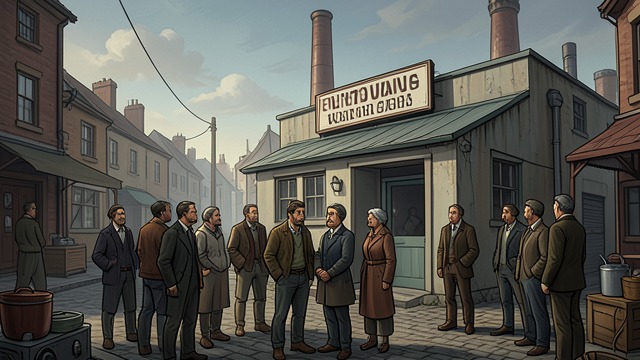
An Older Employment Compact
Work supports a town
Empire’s factory provides wages, housing, and a shared civic life. Residents can plan around work because the company subsidizes many basic expenses.
A system with one hinge
The town depends on a single industrial employer. Its apparent stability contains a structural weakness: the company can end the arrangement at once.
Temporary Workers Gather
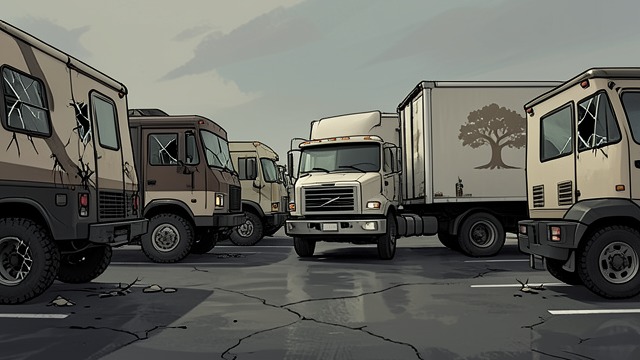
Temporary Workers Gather
Labor follows demand
Amazon CamperForce recruits mobile workers to meet the holiday rush. RV parks near warehouses become temporary settlements tied to a specific season.
Housing moves off the employer’s books
Unlike Empire’s subsidized homes, these workers bring their own shelter and pay their own costs. The arrangement gives employers flexibility while transferring risk to individuals.
A Changing American Landscape
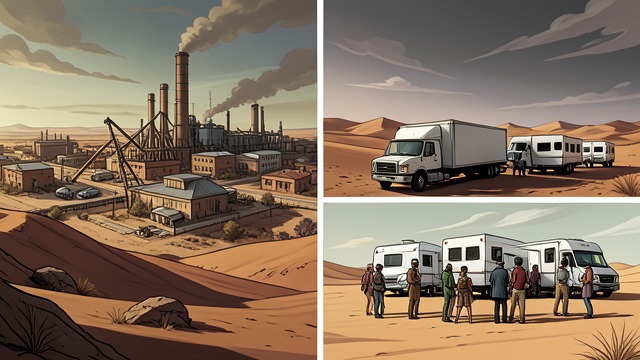
A Changing American Landscape
Two forms of insecurity
Empire’s closure and Amazon’s temporary settlements represent different moments in the same transformation. The stable job-and-home compact gives way to work that travels with workers and ends abruptly.
The human cost
Workers remain responsible for finding shelter and income through each transition. The comparison suggests that economic insecurity is not an exception but a reshaping of everyday life.
Before Empire closes in 2010
After 2008, during holiday seasons
In the book’s final reflections
