
Nomads as an Indicator Species
NomadlandThe book presents vehicle dwellers as early and visible signals of economic pressures affecting a much wider population.
increasing Bearing strength in each event
 decreasing
Bearing strength in each eventdecreasingThe Visible Edge

The Visible Edge
Unusual lives in public view
The foreword introduces older workers living in vans and trailers while traveling between difficult jobs. Their situations appear exceptional, but each is shaped by familiar costs and limited wages.
A broader pattern
The travelers make otherwise private economic distress visible. Their vehicles show how housing pressure can alter a person’s entire way of life.
The Same Arithmetic at Home
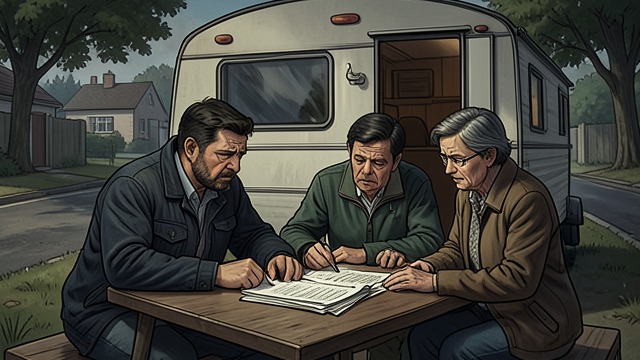
The Same Arithmetic at Home
Invisible compromises
Households outside the nomadic community also weigh rent, medical bills, student loans, and groceries against income. Their struggles may be less visible but share the same pressures.
The signal travels outward
The narrator argues that mobility is one extreme adaptation to a larger economic shift. The nomads’ circumstances therefore matter beyond the small community itself.
A Future of Further Adaptation

A Future of Further Adaptation
A question without closure
The book asks what further changes may follow if housing and wages remain out of balance. It offers no assurance that the current forms of insecurity are the last.
Escape and its limits
Some people find room to maneuver through mobility and shared life; others remain trapped by their circumstances. The open question is how many will be forced into equally radical adaptations.
At the book’s opening
In the closing pages
The final reflection
