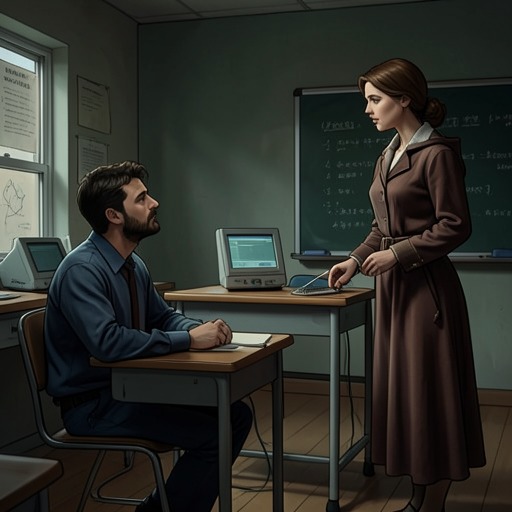
Connell refuses Paula Neary’s sexual advances
Normal PeopleConnell refuses Paula Neary’s sexual advances in an encounter that turns his attempt to drink away distress into a scene of sexual pressure and impaired perception. Drunk, disoriented, and unsure how he got home, he is kissed and touched by his former teacher; he tries to stop her, eventually saying he is going to be sick. Paula pulls away, and he wakes the next day fully clothed on his living-room floor, unable to remember how he returned there.
Background: Drinking to Disappear
After attending the anniversary Mass for Marianne Sheridan’s father, Connell goes drinking with people from school. He moves from Kelleher’s to McGowan’s and then to the Phantom nightclub, where he realizes he is not trying to socialize: he is drinking as much as he can without passing out, withdrawing from conversation and no longer listening to or laughing with the others. The encounter with Paula follows this deliberate retreat from awareness, rather than an evening of ordinary flirtation.
At the nightclub, his drunkenness distorts what he sees. Beside solid objects he perceives ghostly doubles; Paula’s necklace appears as a faint trace on her shoulder, and her eyes seem to multiply and move in the air. These visual dislocations continue at her house, where he cannot clearly distinguish the two Paulas he sees on the couch. The scene gives his impaired state a concrete form: even as he tries to assess what is happening, the basic evidence of his senses is unstable.
At Paula’s House
Connell does not remember whether he and Paula walk or take a taxi to her home. He describes the place as unusually bare, with no bookcases or musical instruments, and asks what she does at weekends. She says that she goes out and has fun; he finds the answer depressing. He sits on a leather sofa and drinks wine, using the glass to occupy his hands. When he asks about the school football team, Paula replies that it is not the same without him.
As Paula sits beside him, her dress slips to reveal a mole over her right breast. Connell thinks that he could have slept with her while he was still at school, though people would have been shocked if it had happened. When Paula says that secondary school is supposed to be the best time of a person’s life, he responds nervously that this would be a sad thought if it were true. She then kisses him. He experiences the contact as unpleasant, although his drunkenness also makes the moment feel strangely like a new direction in his life. His brief thought about whether the kiss is legal does not resolve his discomfort: it still feels substantially wrong.
Refusal and Aftermath
Each time Connell pulls away, Paula follows him forward. Confused about his position on the sofa, he tries sitting upright to check whether he is already reclining. When Paula begins unbuttoning his jeans, he panics and tries to push her hand away, but his gesture is so ineffective that she seems to take it as encouragement. He tells her he is really drunk and that perhaps they should stop. Paula puts her hand inside his underwear and says that she does not mind. Connell fears he may black out and wishes that he could, but he remains conscious. He tells her he is going to be sick; she jerks back, and he uses the opening to stand and button his jeans.
Paula cautiously asks whether he is all right. Connell apologizes, and the encounter ends without sex. The next day, he wakes fully clothed on the floor of his living room, with no memory of how he made it home. His refusal is expressed through confused, halting attempts to interrupt what is happening, not through confident command of the situation. The scene thus distinguishes his decision to stop from his limited ability, while drunk, to make that decision physically effective: he tells Paula he wants to stop, tries to move her hand, and finally gets away when she recoils at his claim that he will be sick.
Significance
The encounter places Connell in a position of vulnerability that his former schoolmates might not have expected. Paula had been his teacher, and Connell recalls having felt uncomfortable around her at school; now she initiates the kissing and continues touching him after he asks to stop. His intoxication complicates his capacity to act and even to orient himself, but it does not erase the boundary he states. The scene’s central reversal is not a change in attraction so much as a shift in who presses forward and who tries to withdraw: Connell, who once imagined that sleeping with Paula would have shocked people, now has to resist her advances while too drunk to make his refusal immediately understood.
Sexual Pressure and Impaired Agency
The physical sequence makes Connell’s refusal increasingly explicit even as his ability to enforce it remains impaired. When he pulls away from Paula’s kiss, she follows; when he tries to push her hand away as she unbuttons his jeans, the gesture is so feeble that she appears to interpret it as help. He says that he is really drunk and that perhaps they should stop, but Paula puts her hand inside his underwear and tells him she does not mind. Her reassurance addresses her own willingness, not his: Connell has already named his intoxication and tried to withdraw. He expects he may black out and wishes he could, yet remains conscious of what is happening. His final opening comes when he says he is going to be sick. Paula jerks back, and he stands and buttons his jeans.
The scene’s disorienting details do not make the refusal ambiguous. Connell struggles to tell whether he is sitting upright or leaning back, tests his position by trying to sit up, and mistakes a stereo’s standby light for a light on the ceiling. Even Paula seems doubled: after she recoils, he sees two clearly delineated versions of her on the couch and cannot tell which is real. Against this unstable perception, his words and movements form a repeated effort to stop the encounter. The narration keeps the reader close to his confusion without treating confusion as consent; his lack of physical force is part of the vulnerability the scene depicts, not evidence that he welcomes what is happening.
A Former Teacher and a Reversed Power Dynamic
Paula’s former role as Connell’s Economics teacher gives their encounter an uneasy history. In school, he had felt uncomfortable around her, and he remembers that others joked he could have slept with her but would have been shocked if it had actually happened. At Paula’s house, the old possibility becomes real in a way he does not control: she initiates the kiss and keeps moving toward him when he pulls away. The reversal is sharpened by the contrast between Connell’s earlier imagined confidence and his actual drunken vulnerability. Rather than turning the encounter into a conquest, the scene makes his difficulty refusing unmistakable.
Paula’s comments about school and the football team briefly place the two of them in a shared past: she says the team is not the same without Connell, then calls secondary school the best years of a person’s life. Connell answers that it would be sad if that were true, in a nervous, goofy laugh. The exchange does not establish a mutual romance; instead, it precedes a sudden shift from reminiscence to unwanted physical intimacy. Connell experiences Paula’s kiss as unpleasant, even while his impaired state makes the moment feel, briefly and confusingly, like his life might be taking a new direction.
Resolution and Lasting Reversal
The immediate outcome is narrow but decisive: Paula stops when Connell says he is going to be sick, and Connell gets up, fastens his jeans, and leaves the encounter without sex. Her cautious question about whether he is all right follows his escape rather than the earlier attempts to pull away or ask her to stop. The next morning supplies no reassuring account of how he got home: he wakes fully clothed on the floor of his living room and still cannot remember the journey. The scene therefore ends not with mastery or a clear recollection, but with a boundary finally enforced through an opening created by Paula’s reaction and with the night’s disorientation extending into its aftermath.
That ending sharpens the reversal in their former teacher-pupil relationship. Connell remembers having been uncomfortable around Paula at school, and recalls that people joked about the possibility of sex while treating its actual occurrence as something that would have shocked them. At her house, the imagined possibility becomes an encounter in which Paula advances and Connell tries to withdraw. His intoxication leaves him struggling to orient himself and to make his refusal physically effective; it does not turn that refusal into consent. The episode’s significance lies in this contrast: the person once imagined as a surprising sexual partner is now vulnerable to pressure from a former teacher, and gets free only when his words that he is about to be sick make her pull back.