Connell's grief and guilt after Rob's suicide
Normal PeopleConnell's grief and guilt after Rob's suicide become the central pressure behind Connell's emotional collapse in early 2013. The loss is inseparable from the distance that had grown between the friends: Connell had not replied to Rob's last message, had scarcely seen him, and cannot tell himself that he knew what Rob was experiencing. Their funeral brings those absences into public view, while memories of the friendship and the return of Marianne make grief part of Connell's present relationships rather than a feeling confined to the past.
The news and the unanswered message
A few days into the new year, Connell receives a late-night group text from Rachel Moran asking whether anyone has seen or been in contact with Rob. Connell is returning from a night out with Helen; when Helen asks about the message, he brushes it aside as an ordinary group text. The next day Rob's body is recovered from the River Corrib. The abrupt sequence gives Connell almost no time to understand the warning before it becomes news of a death.
Afterward, Connell hears from friends that Rob had been drinking heavily in the preceding weeks and seemed out of sorts. Connell had not known: he had spent little time at home during the previous term and had not been seeing people. The information establishes the painful gap between Rob's worsening state and Connell's awareness, without suggesting that Connell could have recognized or prevented what happened.
Connell looks through Facebook for the last message Rob sent him. It dates from early 2012 and includes a photograph from a night out, with Connell beside Teresa, a friend of Marianne. Rob's teasing comment went unanswered. Connell had not seen Rob at Christmas and cannot remember for certain whether they met the previous summer. Even the attempt to recall Rob's face fails: an image seems to appear, then its features blur when Connell tries to hold it in focus. The old message is a small digital remnant, but its survival sharpens his sense of how much time had passed without contact.
Guilt, diagnosis, and the body of grief
In his first university counselling session, Connell tells Yvonne that a school friend died by suicide in January and says he feels guilty for not keeping in touch. He returns to the unanswered message as evidence against himself, stressing that he never replied, even though it was sent years earlier. Yvonne tells him that Rob's decisions were not Connell's responsibility and that people who lose someone to suicide commonly question whether they could have helped. Connell understands the reassurance, but it does not erase the specific regret attached to the message or the larger absence of contact.
Connell's distress has been accumulating since the death. His previously chronic, low-level anxiety becomes severe: ordinary interactions such as ordering coffee or answering in class can bring tingling in his hands, and he experiences major panic attacks marked by hyperventilation, chest pain, and pins and needles. During them, his senses seem detached from him and the world becomes slow and unreal. The episodes pass, but leave him physically exhausted and frightened by the possibility that his ability to make sense of things has broken down.
The counselling inventory makes the severity legible in a way Connell has struggled to do for himself. His Beck Depression Inventory score is forty-three, which Yvonne identifies as indicating very serious depression. She notes his negative view of himself and suicidal thoughts, takes them seriously, and recommends that he speak to a college GP about possible medication. Connell's grief is therefore not presented only as sadness or self-reproach: it is bound up with a broader, clinically significant deterioration in his mental state.
The funeral and the return of friendship
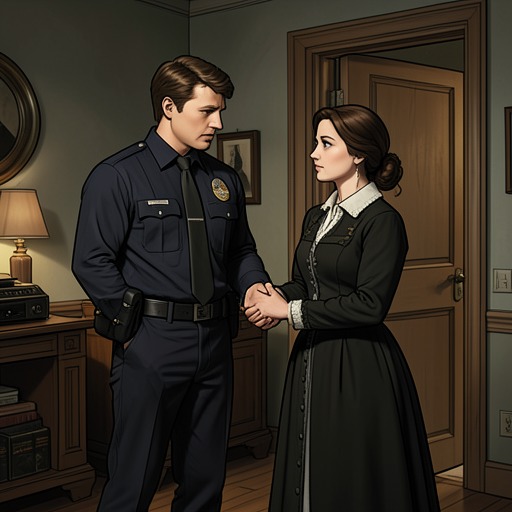
Helen comes with Connell to Carricklea for the funeral. As he dresses in the only suit he owns, a suit bought for a cousin's communion when he was sixteen, he is preoccupied with how it looks and feels. At the church, he encounters Marianne, who has returned from Sweden. They have not seen each other since Italy. Connell says her name without thinking, and they embrace while others watch. The reunion is tender, but it also places a living, intimate relationship beside the death that brought them together: the last time Connell saw Marianne, Rob was still alive, and a call or message to him had still been possible.
The funeral service confronts Connell with Rob's family and the fact of his loss. Rob's mother is crying as people file past. Rob's father, Val, takes Connell's hand and mentions his success at Trinity; Connell can only offer an apology and say he is sorry. His hands are wet and his legs shake as he waits in line. Afterward he sits in the church, shivering, while Lorraine gives him a tissue and reassures him that he has done his part. These small acts of support do not resolve his guilt, but they show him being cared for as he moves through the public duties of mourning.
At the gathering after the burial, Connell stands with Helen and Eric, a school friend. Eric asks about Helen and remarks that Connell rarely comes home now; Connell takes responsibility for the distance. When Marianne joins them, she and Eric exchange easy conversation. Connell watches her moving naturally among people and feels struck by the contrast with their school years, when he had understood how to behave and she had seemed to aggravate everyone. The scene places his grief within a changing social world: the people gathered around Rob are not simply the unchanged friends of their school days.
Memory, shame, and aftermath
The funeral also makes Connell remember the kinds of closeness that had been possible between him and Rob. In fifth year, after Connell scored a goal for the school football team, Rob ran onto the pitch and embraced him exuberantly. Connell recalls the force of Rob's arms and the permission that a football match gave them to express affection otherwise kept small in everyday life. The memory is not offered as proof that their friendship was uncomplicated. It restores its warmth while making the lost time and their later estrangement more painful.
Connell's recollection also connects their friendship to the pressure of popularity. He remembers Rob showing others photographs of Lisa on Debs night and thinks that Rob cared intensely about approval and status, sometimes betraying confidence or kindness for social acceptance. But Connell does not treat this as a reason to condemn him: he recognizes that he too had tried to appear normal while concealing parts of himself that felt shameful and confusing. He credits Marianne with showing him that other ways of living were possible. The grief thus reopens not only questions about what Connell failed to do for Rob, but also the history of how the friends learned to manage vulnerability and public standing.
Two weeks after the funeral, Connell and Helen break up following an argument about his reunion with Marianne. Helen feels he did not want her there and notices how happy he seemed to see Marianne; Connell objects that the funeral was not an occasion for jealousy. He acknowledges that he was glad to see Marianne, but is exhausted and cannot sustain the argument. By then, grief has coincided with panic, crying fits, and emotional numbness: he appears to feel more than before while also feeling internally frozen. The breakup is not simply a consequence of the funeral, but it makes visible how little capacity he has left to manage intimacy while mourning.
Rob's death also remains present for Marianne, who thinks back to the bullying she experienced at school and to Rob's insecurity and cruelty. She reflects that cruelty can wound the person who inflicts it as well as its target, and remembers the uncertainty of reading condolence messages on Rob's Facebook page after his death. Her response does not cancel Connell's grief or settle what Rob meant to either of them. Instead, the surviving friends' different memories expose the distance between public tributes to a dead person and the complicated relationships those tributes cannot contain. Connell's guilt persists alongside affection, shame, anger, and the recognition that neither the funeral nor an unanswered message can make the past fully knowable.