Marianne's abusive family environment
Normal PeopleMarianne's abusive family environment is a long-running condition of degradation and intimidation, not a single quarrel. Alan repeatedly belittles and threatens her, while Denise treats his conduct as sibling conflict rather than intervening. The violence shapes Marianne's self-understanding and her expectations of intimacy; when she finally tells Connell what home is like, she explains that the emotional harm is more demoralising than being hit. The pattern reaches a crisis when Alan injures her and Connell takes her away.
A Home Shaped by Isolation
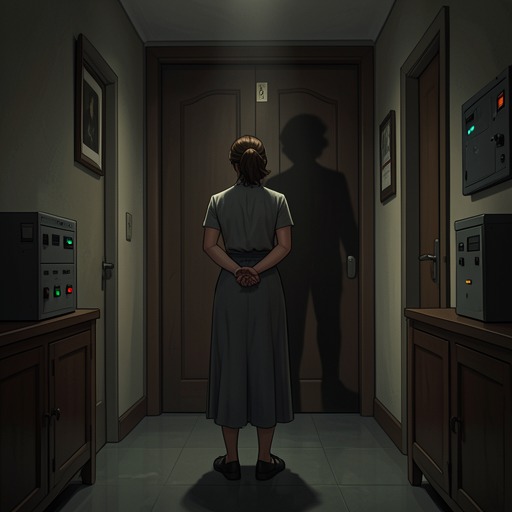
Marianne's world in Carricklea is narrow: she goes to school, attends Mass with her family, and visits Connell's house when it is empty. She knows little about the town beyond familiar routes and places, and cannot readily tell which families are considered respectable. Her own family is regarded as a good one; her mother and late father were solicitors. The contrast between that standing and the atmosphere at home makes the abuse especially difficult to name or expose. From outside, social respectability offers little indication of how Marianne is treated in private.
The strain appears not only in dramatic confrontations but also in repetitive domestic life. Marianne describes long, empty weekdays spent wiping surfaces and wringing damp sponges into the sink. The work and isolation form the everyday background against which Alan's control operates, making the home feel less like refuge than a place she must continually endure.
Alan's Repeated Intimidation
At Christmas, after relatives have left, Alan follows Marianne into the kitchen while she washes their teacups. He accuses her of boasting about her exam results, calls her pathetic, and mocks her for having no friends. When she responds with dry detachment rather than submission, he pulls her away from the sink by the arm and spits on her skirt. Alan leaves; Marianne returns to washing the dishes, noticing a tremor in her hand. The encounter shows how an ordinary household task can become an occasion for humiliation and sudden aggression, while Marianne's composure does not make the threat harmless.
Another episode begins when Alan demands that Marianne apologise after an argument the previous night. He will not leave her bedroom door until she complies. Marianne says that this pattern is familiar: he follows her around the house, enters her room even when she is asleep, and sometimes hits her. She distinguishes the physical incidents from the psychological pressure, which she says is more demoralising. Her description makes clear that the harm consists not only of isolated assaults but also of the persistent expectation that she must answer to Alan and manage his moods.
The pressure continues even after Marianne has moved away from home for college. When she visits, Alan looks for her around the house, knocks on her door, and insists on revisiting disagreements. He asks whether she is frightened of him and presents himself as someone trying to be nice, while Marianne is left to apologise so he will go away. She recognises that he may believe his own account, but that does not change the repetitive nature of the encounters. The relationship remains organised around his demand for reassurance and her need to end the confrontation.
Denise's Failure to Protect Her
Denise's response reinforces Marianne's isolation. When Alan insults and physically intimidates Marianne after the family gathering, Denise is not described as stepping in to stop him. Marianne later tells Connell that, on another occasion, Alan said nobody would miss her if she were dead because she had no friends. Denise was present and, in Marianne's recollection, told Alan not to encourage her. Instead of challenging the threat or protecting her daughter, she leaves Marianne to live with its implications.
On Christmas Day, Denise gives Marianne five hundred euro in a small brown-paper envelope, then says she is concerned about her daughter's future. She warns that university is a protective environment and that the real world may be a shock. Marianne replies that being spat at during a disagreement would be frowned upon at work. Denise dismisses the abuse as sibling rivalry and strikes the kitchen table with her open palm; Marianne flinches but does not let go of the envelope. The exchange sets material provision beside emotional neglect: Denise gives money, yet refuses to recognise the danger and humiliation Marianne describes.
What Marianne Can Say—and What She Cannot
For a long time, Marianne keeps her family's behaviour from Connell. When she eventually tells him, she explains that she did not want him to think she was damaged and feared he might no longer want her. Her disclosure is halting and accompanied by uncertainty about whether the abuse is deserved. She says that Alan may follow her through the house when he is in a bad mood, enter her room without regard for whether she is sleeping, and sometimes hit her; she regards the psychological treatment as the more demoralising part.
Connell initially reaches for the general reassurance that Marianne's family and friends love her. Her account exposes the distance between that comforting assumption and her home life: she tells him that her family hates her and that he does not know them. The conversation changes what Connell understands about her silence. He is distressed and apologises, then holds her as they comfort one another; when intimacy begins to develop, Marianne stops it. The scene links disclosure to trust without suggesting that telling the story immediately resolves the conditions she describes.
The Assault and Its Aftermath
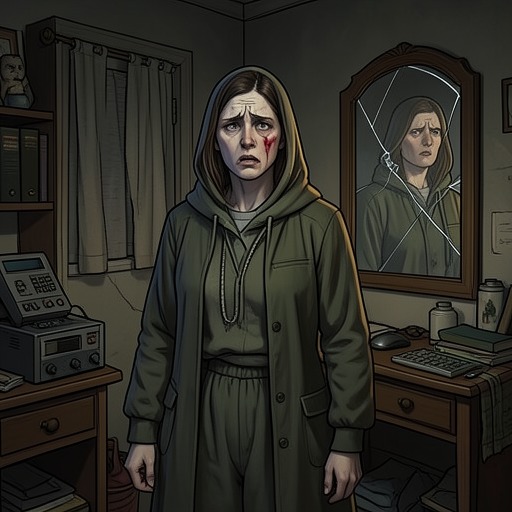
During a later visit home, Alan blocks Marianne's way upstairs and objects to her seeing Connell, invoking what people in town might say about her. When she refuses to care about local opinion, he throws a beer bottle; it smashes behind her. She runs upstairs and braces herself against her bedroom door. Alan follows, kicks the door, and forces it open. The door strikes Marianne's face, leaving her bleeding and disoriented. Even as she is hurt, her thoughts turn inward to the conviction that she is corrupted and bad, showing how thoroughly the family's treatment has shaped her sense of herself.
Connell arrives at the house and finds Marianne at the door with blood on her clothes and a tissue held to her face. She says that she thinks her nose is broken, though she has looked online and does not believe it requires emergency treatment. When Connell asks whether Alan caused it, she nods; with Alan coming down the stairs behind her, Connell tells her to get in the car. The episode makes visible the danger that Marianne has described privately and turns her disclosure into an immediate act of protection. The family environment is not shown to be repaired, but this time Marianne does not have to face its aftermath alone.