Violence and abuse
Normal PeopleViolence and abuse are recurring conditions in Marianne Sheridan’s life, taking forms that range from family intimidation and physical aggression to sexual harassment and abusive intimacy. The novel treats these harms as connected rather than exceptional: repeated humiliation narrows Marianne’s sense of what she can expect from others, while the responses of witnesses and loved ones reveal whether care can interrupt that pattern.
Family Violence and the Failure of Protection
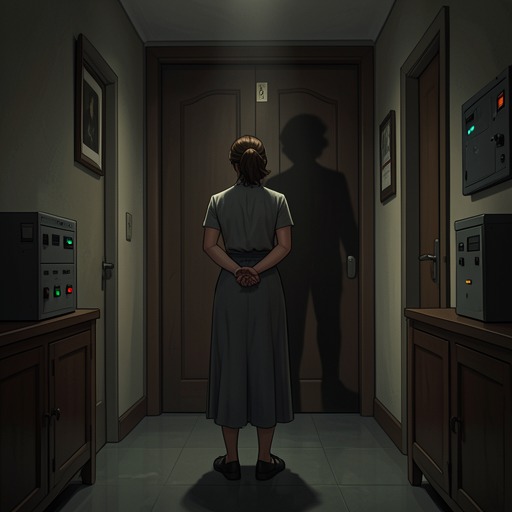
At home, Marianne’s brother Alan combines verbal degradation with physical intimidation. When she tries to leave the house, he blocks the door, mocks her for having no friends, and grabs her arm as she turns toward the garden. She manages to leave, but the pain in her arm follows her into the street; her message to Connell that she is on her way becomes an effort to reach someone outside the immediate conflict. Alan’s conduct makes even an ordinary walk into a confrontation over her freedom of movement.
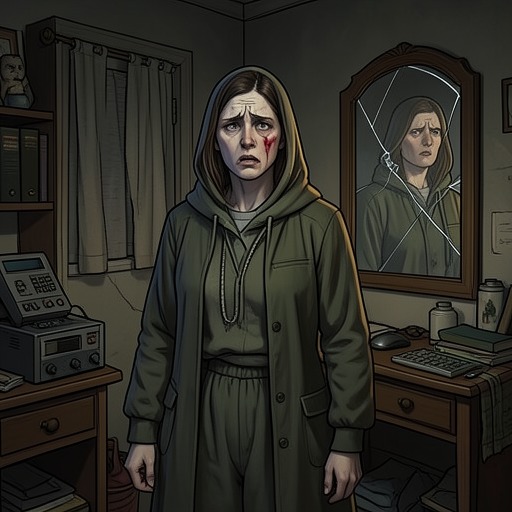
The harm is sustained through humiliation as well as physical force. During Christmas, after Marianne’s exam results become a subject of conversation with relatives, Alan follows her into the kitchen and calls her pathetic. As she continues washing teacups, he taunts her, imitates her response, and says that people in town talk about her. When she laughs at the absurdity of this claim, he pulls her back from the sink and spits on her skirt. She resumes the dishes, but notices a tremor in her hand. The incident is presented as part of a domestic pattern whose effects persist after the immediate encounter has ended.
Marianne has learned to meet family conflict by withdrawing, remaining silent, or leaving the room. These strategies do not reliably protect her; the narration says they can instead lead her to be treated as the instigator. Nor does she expect meaningful intervention from her mother, Denise Sheridan. When Marianne later tells Connell that Alan has said nobody would miss her if she were dead, she adds that Denise was present and answered by telling him not to encourage her. This disclosure makes clear why Marianne has not treated home as a dependable place to seek help: the abuse is not only Alan’s action but also a situation in which a parent fails to defend her.
Harassment, Witnesses, and Social Consequences
At a school fundraising dance, an older man puts an arm around Marianne, ignores her attempt to move away, comments on her dress, and touches her without consent. She leaves the room in distress. Karen comes out to support her, but Eric and Rachel initially minimize what happened as a joke; Rachel says she found it funny, and Eric defends the man as someone who is usually agreeable. Their reaction compounds the original violation by placing the burden on Marianne to absorb it as amusement.
Connell breaks with that response. He tells the others that the incident was not funny, asks Marianne if she is all right, and offers to drive her home. In the car, he acknowledges that the others were behaving badly and listens when she says the man’s action hurt her. At his house, Marianne asks whether Connell would ever hit a girl. She tells him that her father used to hit her mother and had sometimes hit her too. Connell answers that he would never hurt her and tells her that he loves her. The exchange links her immediate experience of harassment to a longer history of violence, while establishing the importance of being believed and treated gently.
Abuse also extends beyond the moment in which it occurs through gossip and unequal judgments of women’s sexuality. After Marianne ends her relationship with Jamie, people in their social circle turn away from her, while Jamie’s account of the breakup helps shape the group’s response. Marianne asks Joanna about the rumors and later asks Lukas to delete photographs of her, although none had been posted online. The shame feels overwhelming for a time, but it eventually recedes; she recognizes that the episode has ended and that she has survived it. Connell observes that Jamie’s reputation does not seem to suffer in the same way, and Marianne identifies the gendered difference: men are judged differently. The social aftermath thus becomes another form of pressure, attaching reputational consequences to Marianne while leaving the man who harmed her comparatively unmarked.
Violence Within Intimate Relationships
Marianne’s account of her relationship with Jamie complicates any simple distinction between chosen sexual dynamics and abuse. She tells Connell that she had suggested being submissive, but describes Jamie’s response as physical acts she does not enjoy, including hitting her with a belt and choking her. Her explanation—that submission would mean little if she only submitted to what pleased her—shows how she understands the arrangement, while her uncertainty about whether she wants it and her belief that she may deserve bad treatment expose the self-loathing entangled with that choice. The novel presents her stated initiative without treating it as proof that the resulting harm is harmless.
The contrast with her earlier intimacy with Connell is central to what she tells him. With Jamie, she says, she is acting a part and pretending to be in his power; with Connell, the dynamic had felt real, and she believes she would have done anything he wanted. Connell is alarmed by her description and struggles to take in the possibility that she thinks herself deserving of mistreatment. His response makes visible both their closeness and the limits of what they have communicated: she had not told him about her experience before, and he learns only now how differently she understood their past relationship.
Coercion and the Erosion of Choice
The novel distinguishes Marianne’s stated willingness to enter a submissive dynamic from the broader conditions that make her vulnerable to harm. She describes the idea as hers, but also says she does not enjoy what Jamie does and wonders whether she deserves bad things. Her reasoning—that submission would not count if it involved only what she enjoyed—shows how she gives pain meaning, while her uncertainty and self-condemnation complicate any simple account of free choice. The violence is not made benign by her having proposed the arrangement; instead, her account reveals how a desire to surrender control can become entangled with a belief that she is unworthy of care.
This pattern is reinforced by Marianne’s family environment. When she tells Connell that Alan has threatened her and that her mother was present without protecting her, she describes a home where seeking help has not reliably brought safety. She also says Alan has sometimes hit her, though less since she moved away, and that the psychological harm is more demoralizing. The distinction does not diminish the physical violence; it shows how repeated degradation and the expectation of hostility continue to shape her experience even when an assault is not occurring.
Violence as a Pattern of Control
The novel also shows how intimidation works by making ordinary choices feel unsafe. In one confrontation, Alan tells Marianne not to see Connell and invokes what people in town might say about her. When she tries to pass him, he blocks the stairs and throws a bottle; it misses her, but she runs upstairs and braces herself against her bedroom door as he follows and kicks it. The episode escalates from a command about whom she may see to a threat inside the home, showing how family violence constrains both movement and relationships. Its force lies not only in the immediate danger but in the accumulated expectation that no evasive gesture will necessarily stop him.