Capsized boat
Not Without HopeThe Capsized boat is the overturned but still-floating 21-foot Everglades fishing boat at the center of the 2009 Clearwater boating accident. It changed from a recreational vessel into a dangerous mechanical trap, then into the only shelter and source of supplies available to Nick Schuyler and Will Bleakley. Its survival on the surface made human survival possible, but its low profile amid storm-driven whitecaps also helped conceal the men from the search effort.
Definition and Physical Condition
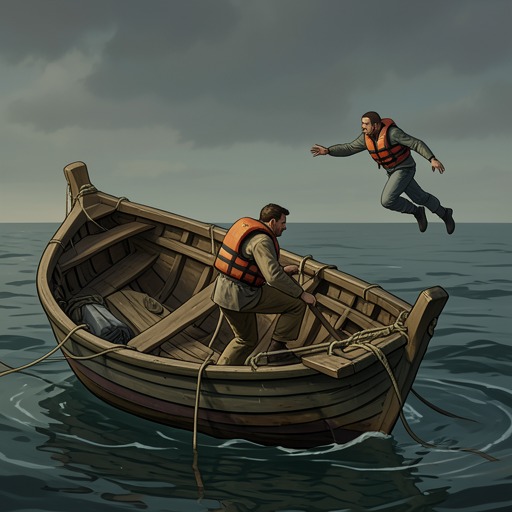
The boat was a 21-foot Everglades vessel weighing more than 3,000 pounds, later identified in the search effort as an overdue Everglades boat. When it capsized, the stern submerged, the bow rose, and the vessel rolled toward the port side after the anchor line was placed at the rear and the engine was throttled forward. The sudden change left the boat inverted, with only a small portion of its white hull visible above the moving sea.
The overturned vessel did not sink because Everglades boats used the Rapid Molded Core Assembly Process, or RAMCAP. The process chemically bonded the hull, deck, and structural core under extreme pressure, creating closed-cell pockets of air that resisted water absorption. Captain Timothy Close compared the effect to Styrofoam rather than a sponge: even when overturned in severe seas, the boat retained enough buoyancy to remain afloat. That buoyancy became decisive, although it did not make the vessel easy to find or safe to use.
Causes of the Capsizing
The accident followed a chain of worsening conditions rather than a single isolated failure. Marquis Cooper had monitored an approaching cold front and warned that the water might become rough enough to shorten the trip. By the afternoon, the chop had become seven-foot swells, and the men had already decided to head back. The anchor, however, would not come free from the bottom despite repeated attempts by Will Bleakley and Corey Smith to pull it up while Marquis Cooper maneuvered the boat.
Will Bleakley proposed tying the one-inch anchor line to a cleat at the stern and using the engine to yank the anchor loose. The plan was made while Nick Schuyler was severely seasick and unable to help. The line may have been caught on a shipwreck, cable, debris, or material embedded in the muck roughly 150 feet below, but the obstruction could not be seen. When Marquis Cooper tightened the line and gunned the motor, the anchor blades appear to have dug in more deeply. The stern squatted, water poured aboard, the bow lifted, and the boat capsized before the men could make a Mayday call.
The Florida Fish and Wildlife Conservation Commission later identified three contributing factors: improper attachment of the anchor line to an eye bracket on the port side of the transom, attempting to throttle forward to free the anchor, and failing to leave sufficient slack in the line. Together, those conditions allowed the stern to submerge. The boat’s capsizing therefore illustrates how a seemingly practical recovery maneuver can become a direct loading mechanism against the vessel itself, especially in heavy seas.
Attempts to Right the Vessel
After the men cut the still-tight anchor line from the propeller, the stern rose slightly and the boat began to drift. They initially believed that releasing the line would allow them to flip the vessel upright. Instead, Nick Schuyler and Corey Smith lay across the stern and kicked downward while trying to pull the hull toward them; Marquis Cooper and Will Bleakley pulled from near the bow and then entered the water to push upward from the starboard side.
The attempt failed because the men could not gain leverage. The submerged center console acted as a large resistant rudder, and the harder Marquis Cooper and Will Bleakley pushed, the farther they disappeared beneath the surface. Their combined strength, developed through intense athletic training, was irrelevant against the boat’s position and the forces of the water. The vessel did not come close to rolling upright; the failure was not a matter of one more effort or one more person. The overturned hull had become physically unmanageable.
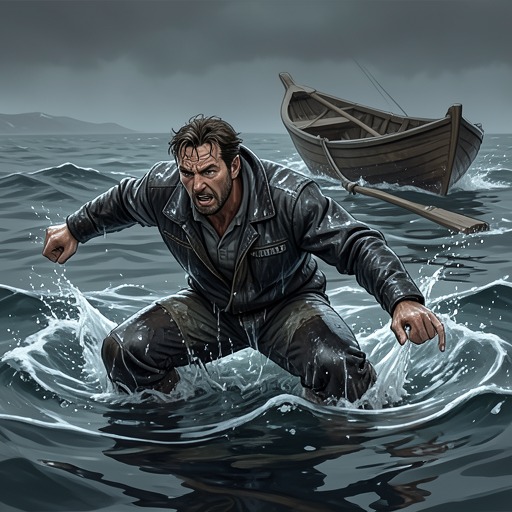
The boat nevertheless remained the group’s fixed point in an otherwise shifting sea. As darkness approached, Will Bleakley took charge of gathering supplies and asked about drinking water, flares, communications equipment, and the location of the life jackets. The vessel offered the possibility of shelter and resources, but its compartments and fittings were difficult to reach from below, and the men had entered the water without wearing life jackets.
Refuge, Supplies, and Final Use
The capsized boat preserved a small inventory that sustained the survivors. Will Bleakley recovered life jackets and limited food, including Gatorade, though the supply was scarcely more than a tease against the cold, exhaustion, and hunger. The men repeatedly clung to the hull as waves struck their backs and forced them underwater. When daylight returned with rain and stronger waves, the boat remained the only dependable object to which they could return.
Nick Schuyler eventually made repeated attempts to enter the boat from beneath. Before diving, he pictured the canopy and the white cooler under the captain’s bench, secured by a front clasp, large side handles, and a red bungee cord. He believed it might contain sandwiches, snacks, water, and more Gatorade. On a timed dive, he saw gas cans still secured by bungees, fishing rods missing from the canopy, other poles latched into side grooves, and the cooler resting between the deck and the captain’s chair. He touched it but could not reach it fully, striking his back against the railing and surfacing after only seconds, gasping.
The boat’s preserved flotation ultimately allowed Nick Schuyler to remain alive until rescue, but it also became the site of the last desperate calculations of his survival. With his body cut, swollen, cold, and nearly exhausted, he considered entering the water again and understood that he might not return. The vessel was at once refuge, obstacle, and boundary: it held the supplies he needed, yet its overturned geometry made those supplies almost inaccessible.
Search Problem and Narrative Significance
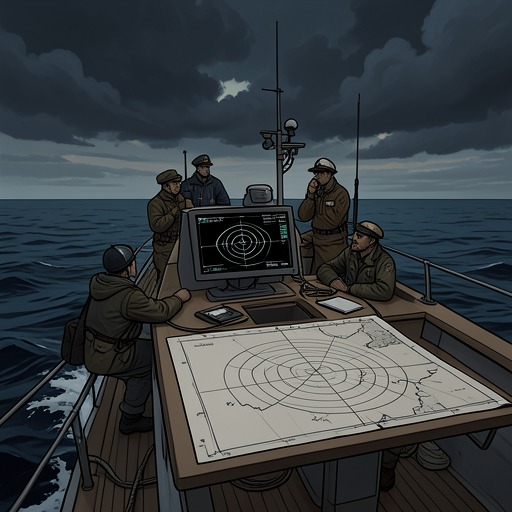
For the Coast Guard, the capsized boat was a difficult object to locate. An upright vessel would present a larger visible profile, whereas an overturned 21-foot boat offered searchers only a fingernail of white hull amid hundreds of thousands of whitecaps. The storm-churning cold front reduced the available light, the moon provided little illumination, and the boat had transmitted no distress signal because it lacked an Emergency position-indicating radio beacon. The absence of that device meant that the vessel’s survival on the surface did not automatically reveal its position.
Search lookouts had to distinguish the hull from floating debris such as milk jugs, rafts, and refrigerators while both ship and sea bucked continuously. A boat that remained afloat could disappear into wave troughs and become indistinguishable from the surrounding water. The Coast Guard’s combined searches by boat, plane, and helicopter therefore treated the vessel not simply as wreckage but as a moving, partially hidden location in a large and unstable field.
The Capsized boat embodies the accident’s central reversal. The same vessel whose anchor arrangement caused the stern to plunge became the platform that kept Nick Schuyler alive. The same buoyant construction that prevented total loss also created a low, hard-to-see search target. In retrospect, the boat concentrates the disaster’s chain of preventable vulnerabilities—rough weather, an improvised anchor maneuver, insufficient slack, absent distress equipment, and unused life jackets—while also marking the boundary between death and survival. Its continued flotation did not rescue the men by itself, but without it, the possibility of endurance, repeated returns, recovered supplies, and eventual discovery would have been radically diminished.