Cold-water immersion
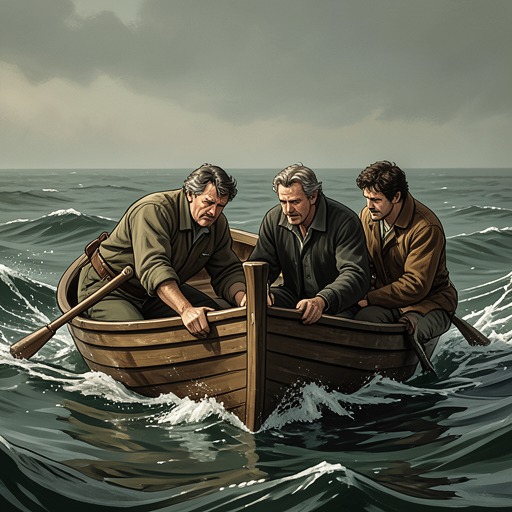
Not Without HopeCold-water immersion is the central physical condition of the 2009 Clearwater boating accident: after the anchor operation pulled the stern under and capsized Marquis Cooper’s 21-foot Everglades boat, Nick Schuyler, Marquis Cooper, Corey Smith, and Will Bleakley were suddenly exposed to cold Gulf of Mexico water without life jackets. What begins as a shock of temperature becomes a cumulative physiological crisis, shaping their movements, speech, strength, judgment, and chances of survival over roughly fifteen hours before Nick Schuyler is rescued.
Definition and Immediate Shock
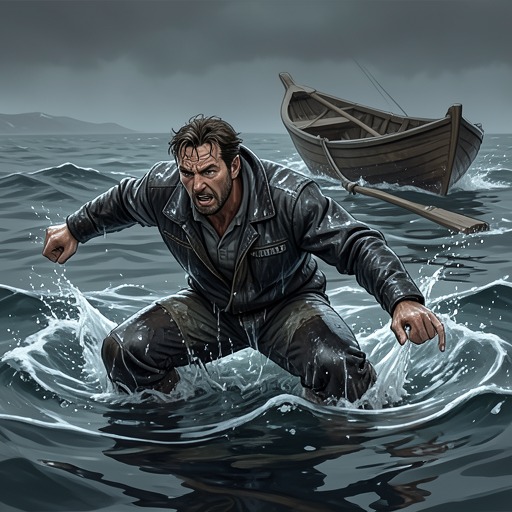
Cold-water immersion in the book is not a single sensation but an escalating state produced by exposure, wet clothing, exertion, wind, waves, and delay. The water temperature was described by the Coast Guard as approximately sixty-four degrees, cold enough to make prolonged survival uncertain even for young, physically fit men. When Nick Schuyler first went under, the cold was immediately shocking. He had only just managed to get dry aboard the boat, and the sudden return to the water stripped away that temporary protection. Although fear and exhaustion were present, the cold also triggered an abrupt alertness: his nausea seemed to recede as endorphins surged, leaving him frightened, awake, and intensely attentive.
The contrast between the familiar and the catastrophic sharpens the scene. For a moment, Nick Schuyler’s response resembled the startled amusement of falling from a Jet Ski and swimming back to turn it upright. The comparison collapses almost at once. This was not a small recreational craft near the shoreline of Lake Erie but a 3,400-pound boat in seven-foot swells in the Gulf of Mexico. The overturned hull became the men’s only platform, while the water became both the medium keeping them afloat and the force steadily taking their heat.
Exposure After the Capsizing
The immersion was made more dangerous by the accident’s mechanical chain. Marquis Cooper spent approximately half an hour maneuvering over a stuck anchor while Will Bleakley and Corey Smith pulled at the line. When the engine was gunned, the anchor blades dug in further, the stern squatted, water poured in, and the bow rose before the boat listed and rolled. The men entered the water too quickly to make a Mayday call, and none was wearing a life jacket. Their first efforts therefore centered on escaping the immersion by righting the hull, but those efforts consumed energy without producing leverage.
After the anchor line was cut, the stern rose slightly, yet the boat still could not be flipped. Nick Schuyler and Corey Smith lay across the stern and kicked downward while Marquis Cooper and Will Bleakley pushed from the starboard side. The submerged center console acted as a resistant rudder, and the men plunged deeper whenever they tried to force the hull upward. The effort was not a near success defeated by a little more strength; the boat did not come within five percent of being righted. Every failed attempt prolonged exposure, increased fatigue, and left the men shivering in soaked wind jackets, wind pants, sweatpants, and jackets.
About forty-five minutes after the capsizing, the reality of the immersion became unmistakable. The four men were cold, frightened, and in shock, and they understood that rescue before dark was unlikely. Will Bleakley began organizing the search for life jackets, drinking water, flares, a working radio, and any emergency beacon. Their survival depended on remaining close to the overturned boat, but the hull offered only limited shelter while waves repeatedly threw them away from it. Cold water thus turned every practical task—cutting the line, finding supplies, climbing onto the hull, or holding position—into an expenditure of diminishing physical reserves.
Physiological Progression
The book presents the effects of immersion as a time-based decline rather than as evidence that the men simply chose to stop fighting. Coast Guard medical explanations describe hypothermia as beginning when body temperature falls below ninety-five degrees. Blood vessels in the limbs constrict to preserve heat for the heart, lungs, and brain; shivering is followed by clumsy hands, rapid shallow breathing, blue lips, confusion, slurred speech, and irrational or confrontational behavior. The narrative’s later scenes closely follow that progression.
Marquis Cooper began responding more slowly when the others called his name. They had to call four or five times, and sometimes shake him on the hull before he answered. He slurred and rambled, had swallowed large amounts of salt water, gagged, dry-heaved, and shivered continuously. The deterioration occurred while waves were still crashing over the boat, making it difficult to separate exhaustion, salt-water exposure, and cold stress. A later period of violent waves repeatedly wiped all four men away from the hull, forcing them to scramble back within reach and adding further exertion to the physiological burden.
Corey Smith eventually displayed a more dramatic behavioral change. After twelve hours in the water, he developed a sudden, desperate energy and tried to climb onto the boat by pulling on Marquis Cooper’s legs and grabbing at anything available. His face appeared angry and mean, unlike the easygoing person Nick Schuyler knew. Corey Smith would struggle for ten or fifteen seconds, become lifeless, and then try again. Nick Schuyler understood that the man’s mind was no longer functioning normally: this was not ordinary aggression or a deliberate abandonment of the group, but cold taking control of behavior.
Medical testimony later clarified the meaning of these scenes. Hypothermia can cause delirium, lower potassium levels, and damage to heart-cell membranes until the heart can no longer contract. Marquis Cooper, Corey Smith, and Will Bleakley had not simply given up. Their confusion and eventual disappearance from the boat were consequences of a body losing the ability to maintain consciousness and cardiac function. The distinction matters because it prevents the deaths from being reduced to a moral judgment about courage or willpower.
Survival Variables and Unequal Vulnerability
The account rejects the assumption that athletic fitness guaranteed protection. The Coast Guard explained that younger, fitter people could be especially vulnerable because they often carried less body fat for insulation. A military survival guide estimated that an average twenty-five-year-old man immersed in sixty-five-degree water might remain functional for 9.9 hours and survive for fifteen hours, while a fifty-year-old man might remain functional for 11.6 hours and survive for 17.6 hours. Greater muscle mass could also reduce flotation and require more effort to remain above water.
That principle was particularly relevant because the men were strong athletes, including football players. Their training supplied power for pulling on the anchor, pushing against the overturned hull, and repeatedly returning through waves, but it did not provide the stamina required to tread water for many hours. Their bodies were adapted to short bursts of rapid movement rather than continuous exertion. The same physical identity that made them appear formidable on land therefore offered limited protection against prolonged cold-water exposure.
Clothing, nausea, and position also mattered. Nick Schuyler was already sick from the boat ride and had vomited breakfast and everything else he had eaten or drunk. He had put on more clothing than the others because he felt ill, including sweatpants, gloves, a skullcap, shoes, and a damp jacket. Even so, by dawn he had been immersed for about fifteen hours, awake for more than a full day, starving, thirsty, nauseated, and aware that his body was becoming thinner. The rain offered a possible source of fresh water, but salt and grit remained in his mouth, and constant chattering made his teeth feel as though they were being filed down.
Rescue, Shock, and Meaning
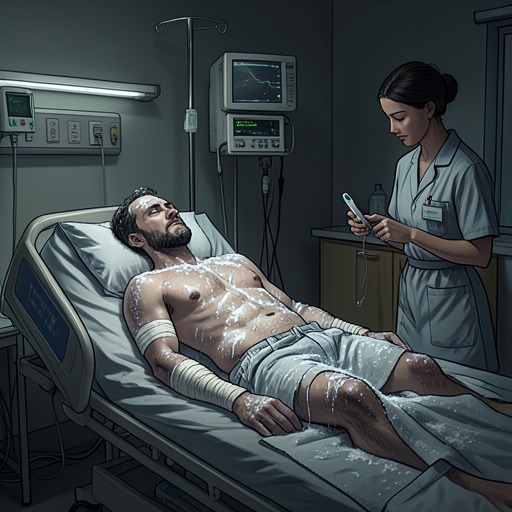
When Nick Schuyler was finally brought aboard USCGC Tornado, the consequences of immersion were medically visible. His temperature was 89.5 degrees rather than the normal 98.6. His breathing was labored, his lips were turning blue, his skin was cool and clammy, and he appeared to be entering the early stages of shock. He had leg pain and minor cuts worsened by salt water. After David Earles and Adam Best guided him to the bathroom, the crew removed his wet clothes, dressed him in Coast Guard coveralls, wrapped him in wool blankets, and gave him sandals so large that even the biggest pair aboard was too small for his size-fifteen feet.
Nick Schuyler remained mostly coherent and could state his name, location, and the month, although he could not remember who was president of the United States. His partial clarity illustrates the uneven nature of hypothermia: a person may still answer basic questions while suffering profound impairment. Adam Best observed that Nick Schuyler would laugh and then remember what had happened and become serious again, a fluctuation consistent with a mind moving between immediate survival and the recognition of loss.
The broader survival context made the outcome still more precarious. The Coast Guard searched under poor weather and limited visibility for what might have been only a small white portion of an overturned hull amid enormous whitecaps. The boat had no Emergency position-indicating radio beacon, whose automatic or manual signal could have transmitted its location and identification to search-and-rescue satellites. The absence of that device did not cause the immersion, but it lengthened the interval during which cold, waves, salt water, and exhaustion could act without interruption.
The Florida Fish and Wildlife Conservation Commission later attributed the capsizing to three linked failures: the anchor line had been improperly tied to an eye bracket on the port side of the transom; the engine was throttled forward in an attempt to free the anchor; and insufficient slack allowed the stern to submerge. The accident’s aftermath therefore shows cold-water immersion as the final environment in a chain of preventable hazards, not as an isolated natural misfortune. Nick Schuyler’s later doubts about the anchor arrangement, life jackets, distress equipment, exact location, and whether Will Bleakley might have lived longer in his warmer clothing reveal how the immersion continued after rescue—as a physical memory, a source of survivor’s guilt, and the condition through which the deaths of Marquis Cooper, Corey Smith, and Will Bleakley remained painfully intelligible.