Corey Smith
Not Without HopeCorey Smith’s place in the narrative is defined by a painful contrast: he was a reliable, good-natured man who fought through physical hardship, yet in the cold Gulf of Mexico he became confused, aggressive, and ultimately disappeared beneath the water. The book insists that these final actions were symptoms of hypothermia rather than evidence that Corey had given up or ceased to be himself. His death becomes both a personal wound for Nick Schuyler and a public question about how athletic toughness, bodily strength, and professional identity function when the body is overwhelmed by the elements.
Identity and Athletic Background
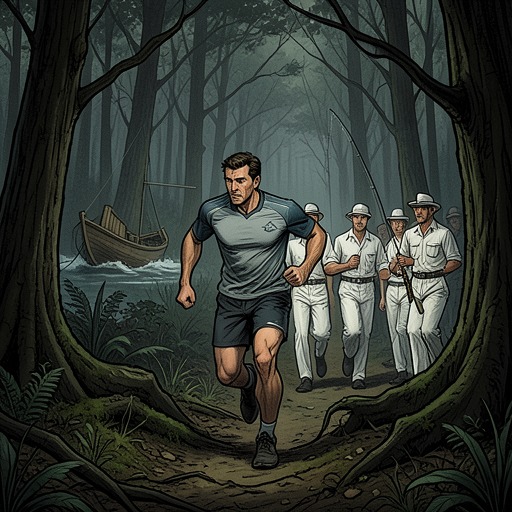
Corey was six feet three inches tall, weighed 265 pounds, and had approximately twelve percent body fat. Nick recognized him as an athlete at the gym because some of his clothing and equipment carried the NFL logo. As a defensive end, Corey was physically imposing but comparatively undersized for the position, sometimes facing offensive tackles who outweighed him by sixty or seventy pounds. He went undrafted out of North Carolina State in 2002, nevertheless made the Tampa Bay Buccaneers as a free agent, and played in six of the team’s first nine games as a rookie before ending the season on injured reserve. That injury kept him from playing in the Super Bowl, when Tampa Bay defeated the Oakland Raiders, and Nick was unsure whether Corey ever received a Super Bowl ring because Corey was modest about his accomplishments and did not wear one in Nick’s presence.
Corey’s career carried him from the triumph of joining a Super Bowl team as a rookie to the catastrophe of the 2008 Detroit Lions, who lost all sixteen games. Through those extremes he remained known as a durable and dependable backup. His reputation rested less on celebrity than on a willingness to keep performing when performance was painful. In one often-recalled 2007 game against Chicago, he had a strained hamstring and was supposed to be replaced on the kickoff-return team. Corey told Lions special-teams coach Stan Kwan, “Coach, I can give you one more play,” adding that he might not be able to walk afterward but could still give one more play. When the Bears attempted an onside kick, Detroit recovered; Corey made two blocks that opened the way for a touchdown, then limped to the sideline while his teammates celebrated. The next day, head coach Rod Marinelli showed the blocks to the team as an example of determination and toughness.
Personality and Friendships
Away from the field, Corey was quieter and more serious than his loud laugh first suggested. He was curious and preferred hearing other people’s stories, but he could answer disbelief with a broad, sarcastic “Whaaaat?” He liked brownies and ice cream, had tried yoga, knew how to juggle, tinkered with computers, and deliberately avoided the superstitious routines common among athletes. His stated pregame practice was an “antiroutine”: he tried to do something different before every game. He also did not drink alcohol and, according to Nick, never seemed eager to speak badly about anyone. After football, Nick believed, Corey might have entered coaching.
Nick met Corey at the gym a few months after meeting Marquis Cooper. Nick invited him to train with them, and the three men were together four or five days a week, often spending more than twenty hours training and having lunch. Their partnership combined the culture of professional football with Nick’s more varied conditioning program. Alongside bench presses, squats, and leg presses, they performed side raises, curls, shrugs, lunges, and combination exercises intended to build stamina, endurance, and conditioning rather than only raw strength. Corey’s bench press increased by twenty-five pounds in three months, reaching eight repetitions at 335 pounds. The training made physical gains visible, but it also created the ordinary intimacy of repeated work: shared meals, jokes about Nick’s punishing routines, and the trust that later mattered when the boat overturned.
Corey’s relationship with Will Bleakley developed more slowly. Their football positions kept them on opposite sides of the team’s social and tactical structure: Corey played defense, while Will was a tight end, and offensive and defensive players often practiced, dressed, and socialized separately. They eventually became friends because they lived near one another and began sharing rides. Will came to Corey’s home for dinner, and the two men adopted his mother’s pasta recipe—four kinds of cheese and bread crumbs—as “Betty’s pasta.” The friendship shows Corey not as an isolated athlete but as someone whose life was built through repeated, practical forms of companionship.
Final Hours in the Water
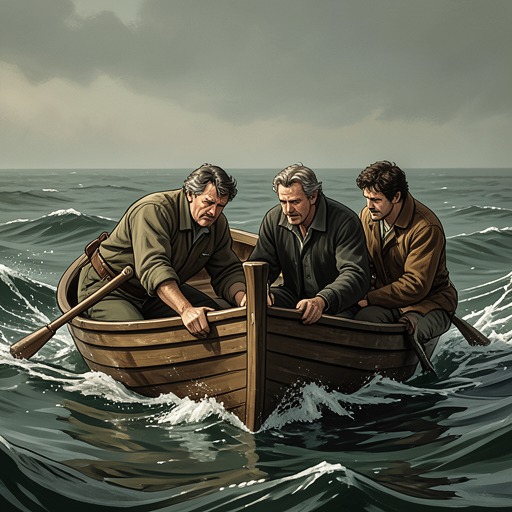
When the overturned boat became their only platform, Corey initially remained engaged in helping the others. He held on to the back of the boat while Nick and Will tried to keep Marquis Cooper secure. As the hours passed, however, Corey began sinking lower in the water. He had earlier been standing on a trim tab outside the water; now he was chest-deep, floundering, shivering, muttering, and occasionally releasing a sudden scream. The change was gradual enough to be witnessed physically: Corey descended inch by inch, became quieter, and lost the steadiness that had characterized him on land.
By about five on Sunday morning, after roughly twelve hours in the water, Corey was rambling and making moaning sounds. Nick and Will had to call his name four or five times before he answered. Then Corey seemed to awaken into a desperate effort to climb aboard. While Nick straddled the motor with Marquis lying across his lap, Corey pulled at Marquis’s legs and grabbed for anything that might lift him out of the water. His face looked angry and mean, and he repeatedly tried for ten or fifteen seconds before going lifeless and attempting again. Nick understood that this was not the calm, easygoing Corey he knew; the cold had begun to alter his mind as well as his body.
Corey soon tried to remove his life jacket, lifting it and pulling it over his head while Will repeatedly yanked it back down. He then attempted to propel himself away from the boat several times in rapid succession, bending his legs and catapulting himself at an angle. Near the motor, he managed to stand, seize Nick, and pull himself upward. Corey looked directly into Nick’s eyes and said, “Fuck you—I’m a kill you!” before repeating the threat. Nick recognized the words as alien to Corey’s character and did not take them as a deliberate expression of his friend’s ordinary will. When Corey jumped across the motor, Nick’s right arm struck the propeller area; the sharp pain caused him to pull his hand back, and he lost his grip on Corey.
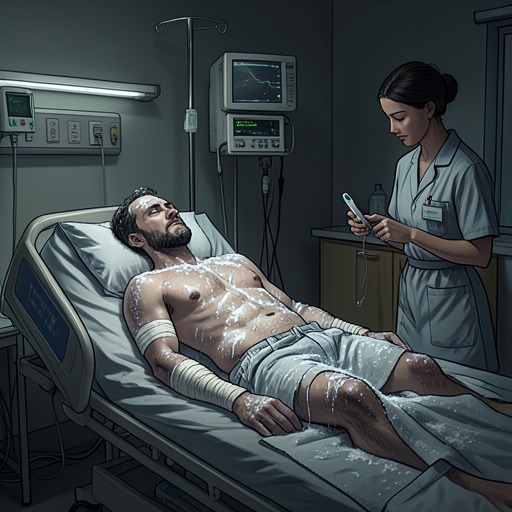
Corey vanished within seconds. Nick and Will saw him go under, briefly caught sight of his sneakers, and then watched them disappear for good. His death followed the loss of Marquis and intensified Nick’s sense that the men were being taken one by one by conditions they could not control. Later, medical explanations made the sequence legible: cold-water immersion could produce shivering, confusion, slurred speech, irrational confrontation, and finally cardiovascular failure. Hypothermia could also cause delirium and a fall in potassium levels, damaging heart-cell membranes until the heart could no longer contract. Corey’s apparent aggression was therefore not a moral betrayal or a decision to abandon the group; it was part of the physiological collapse that overtook him.
Death, Memory, and Survivor’s Guilt
Corey’s final words remained fixed in Nick’s memory, but Nick repeatedly separated those words from the friend who had spoken them. While awaiting rescue, Nick replayed Corey’s wide-eyed expression and the phrase “I’m a kill you,” yet insisted internally that the words came from a mind altered by cold, not from the Corey known by his friends and family. When Nick later described the death to Corey’s sisters and brother, he considered omitting the aggressive behavior because it was not representative of him. Instead, he told the complete account, believing that honesty from the person who had been there would matter more than a softened version delivered by someone else. Corey’s relatives immediately rejected the idea that the words expressed his true character; they knew he had been the easiest person to get along with and had never quit on anything.
Nick’s guilt centered on the moment he lost Corey’s life jacket and could not pull him back. He told Corey’s family that the four men had fought for one another and that without Corey, Marquis, and Will he did not think he would still be alive. The families’ grief made the survivor’s burden more complicated: Nick was not merely mourning a friend but confronting the fact that Corey’s relatives had lost a brother and son. Medical testimony later challenged the belief that the three men had simply given up. Dr. Mark Rumbak explained that hypothermia had confused them and that, even if Nick had tied them to the boat, their hearts might have stopped before rescuers found them. He said Corey’s death was not Nick’s fault and that survival did not mean Nick had killed or abandoned him.
Corey’s name also entered the book’s language of endurance. Nick’s tattoo includes the initials of Victor Marquis Cooper, William Ward Bleakley, and Corey Dominic Smith on the points of a Celtic cross, with a rope, an anchor, the date March 1, 2009, and the words of the Persian proverb “In the hour of adversity, be not without hope.” The tattoo binds Corey to the other three men and turns the physical body that failed in the water into a permanent site of remembrance. Its design was delayed until Nick’s atrophied arm had recovered enough muscle, making the memorial itself part of his bodily return from the disaster.
Public Memorial and Narrative Significance
Corey’s professional identity shaped the public remembrance that followed his death. Three weeks after the accident, the Detroit Lions announced that no player would wear number 93 during the 2009 season, honoring the number Corey had worn for the team. Teammates and team officials emphasized the relentless way he worked, extending the same language of effort that had defined his playing career into memorial language. The gesture transformed a jersey number from a functional part of football into a collective marker of absence.
Corey also remains essential to the book’s argument against rumor and moral simplification. Public attention was heightened because two of the four missing men had played in the NFL, but that visibility risked turning the survivors and dead into symbols rather than people. Nick’s account resists the claim that the men were careless, fighting, intoxicated, or abandoning one another. Corey’s last behavior could easily have been used to tell a story about weakness or betrayal; instead, the narrative places it within the observable progression of cold, salt-water exposure, confusion, and physical failure. His life on the field and his death at sea are thus held together by a difficult paradox: toughness mattered, but toughness could not cancel physiology. Corey is remembered not because he overcame every limit, but because the evidence shows him continuing to struggle, cooperate, and expend himself until the body and mind could no longer sustain the effort.