David Earles
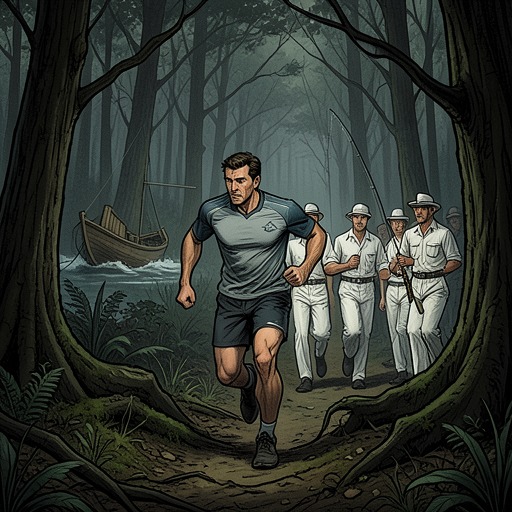
Not Without HopeDavid Earles is the Coast Guard rescue swimmer whose intervention turned the discovery of Nick Schuyler into an actual rescue. Less than two years into his Coast Guard service and facing his first water rescue, he entered dangerous seas beside the overturned boat, gave Nick flotation, and helped bring him aboard. His role is significant because the search did not end when Nick was sighted: Earles had to cross the remaining distance, manage a deteriorating survivor, and create a physical path from the capsized hull to safety.
Identity and Assignment
David Earles was twenty-five when he took part in the search for the missing boaters. He was serving aboard USCGC Tornado as its rescue swimmer, but he had never previously been called upon to perform a water rescue. Before the sighting, he had expected the missing boaters to be found and lifted from the water by helicopter, an expectation that shows how abruptly the mission changed from a distant search to an immediate personal encounter with a survivor.
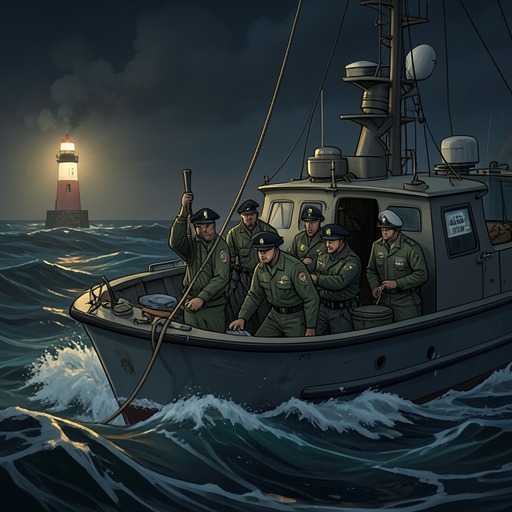
When the general alarm sounded, Earles was in the mess hall after lunch. He hurried to the bridge after being told that a person had been found in the water, then went aft, put on a short-sleeved wetsuit and a harness with a rope attached, and prepared to enter the sea. Within minutes, Tornado’s stern doors opened and a twenty-three-foot hybrid rescue boat, combining a rigid fiberglass hull with an inflatable collar, slid down the ramp. Earles therefore moved from an ordinary moment aboard the cutter into a rescue that required rapid preparation and direct exposure to the same hostile conditions that had overwhelmed the fishermen.
Approach to the Overturned Boat
The rescue boat carried a four-man crew toward the overturned boat while the survivor repeatedly disappeared behind waves and reappeared. The rough water made visual contact precarious: the man sat with his head down and shoulders slouched, holding the motor, wearing gloves, an orange life jacket, an orange winter jacket, and a hooded sweatshirt. The crew had to stand as tall as possible to keep him in sight, and the possibility remained that a different wave crest could have hidden him from the cutter altogether.
The rescue boat pulled alongside with the intention of taking the man directly from the capsized hull, but the seas were six feet, whitecapped, and rough. The rescuers backed away rather than risk an unsafe approach. Earles then asked whether the survivor was all right and learned that three other men had been with him but were gone. The exchange established both the urgency of the rescue and the scale of the loss: the Coast Guard had been searching for four men and a twenty-one-foot boat, but only one man was now visible.
The Water Rescue
Earles was ten yards from Nick when he prepared to enter the water. He instructed Nick not to move and told him that Earles was coming to him. When Nick asked whether he could swim toward the rescuer, Earles refused the proposal and repeated that he would make the approach himself. As Nick began to move, Earles directed him to lower himself into the water, preserving control over the meeting point instead of allowing an exhausted survivor to attempt a dangerous swim in rough seas.
After reaching Nick, Earles handed him a flotation device and told him to float on his back. A crew member in the rescue boat began reeling the pair in through the rope attached to Earles’s harness. Earles’s left arm went beneath Nick’s left armpit and around his chest while Earles swam for both of them; Nick later emphasized that he had nothing left to contribute physically. Earles asked whether Nick had any injuries, receiving the exhausted reply that his buttocks hurt, and continued the recovery while Nick repeatedly thanked him.
Only twelve minutes passed between the moment Nick was spotted and the moment he was aboard the rescue boat. The short interval was not a simple transit: the sea was still rough, the first boat-to-boat approach had failed, and Earles had to support a man whose body had been immersed so long that his feet had taken on a deeply wrinkled appearance. His method combined verbal control, flotation, harness security, and physical support, allowing the rescue crew to retrieve both men without requiring Nick to swim independently.
Significance in the Survival Narrative
Earles occupies the crucial threshold between detection and survival. Mark Briner’s sighting made rescue possible, but Earles’s decision to enter the water and take responsibility for Nick’s movement completed the chain. His instruction to remain still, his refusal to let Nick swim toward him, and his repeated reassurance that he had Nick under control converted a fragile visual contact into a coordinated recovery.
The scene also contrasts Earles’s inexperience with the demands of the moment. He had never before conducted a water rescue and had expected a helicopter extraction, yet he acted within minutes when the situation required a swimmer rather than a more distant rescue method. The narrative does not present him as the sole cause of Nick’s survival; the search crew, the rescue boat, the harness, the flotation device, and Nick’s continued attachment to the overturned boat all form part of the recovery system. Earles is the person who makes that system bodily and immediate.
His intervention gains further weight because Nick’s rescue was followed by confirmation that the other three boaters had died. Nick reached medical care alive, was found in Urgent Care connected to intravenous tubes, and reunited with Marcia Schuyler. Earles’s action therefore stands at the boundary between the sea’s losses and the survivor’s return to family, treatment, and mourning. In the book’s larger account of the disaster, he represents the moment when the search ceases to be a calculation of drift and becomes an act of care carried out against the waves.