Dehydration
Not Without HopeDehydration is the physiological crisis that turns the overturned boat’s ordeal into a narrowing contest between fluid loss and survival. After the four men were stranded in the Gulf, seasickness, vomiting, exertion, cold-water exposure, and the inability to obtain fresh water steadily stripped their bodies of usable reserves. The condition affected Marquis Cooper, Corey Smith, Will Bleakley, and Nick Schuyler differently and became inseparable from hypothermia, delirium, exhaustion, and the danger of drinking salt water. For Nick, survival depended not on escaping dehydration but on continuing to act while it progressively damaged his body and mind.
Definition and Physiological Danger
Dehydration in the narrative begins as a practical shortage and develops into a systemic threat. A person thrown into the Gulf could swallow large quantities of seawater, producing a poisonous sodium imbalance in the blood. Water would be drawn out of the cells, potentially leading to delirium, seizures, heart failure, and death from dehydration. The danger therefore came from both the absence of fresh water and the false promise of the surrounding sea: the water was everywhere, but it could not safely satisfy thirst.
The condition was intensified by cold. As body temperature fell, circulation would be redirected from the limbs toward the heart, lungs, and brain; shivering, clumsiness, confusion, slurred speech, and irrational behavior could follow. The account emphasizes the irony that younger, fitter men could be especially vulnerable because their low body fat offered less insulation. A twenty-five-year-old immersed in water around sixty-five degrees could be expected to remain functional for 9.9 hours and survive for fifteen, while a fifty-year-old, with potentially greater insulation and flotation, might remain functional for 11.6 hours and survive for 17.6. Muscle also imposed a cost: a heavily built athlete had to work harder to remain afloat.
Onset During the Ordeal
Nick’s dehydration became visible while the men were still trying to free the anchor and recover supplies. He had become seasick and could not keep down water; after hours without food or drink, he began cramping, and even the fixed position of his leg on the hull became painful. When Marquis Cooper relied on Nick’s foot for support, each cramp forced Nick to shift it, creating friction and conflict at the very moment his body was least able to spare energy.
The men’s condition was not explained simply by alcohol. Nick had consumed only a beer and a half and had vomited it, while Will had consumed seven or eight beers and Marquis five or six over ten hours; the account presents them as generally clearheaded. Their decline instead emerged from cold, exertion, seasickness, salt-water ingestion, sleeplessness, and the prolonged absence of nourishment. Marquis began slurring and rambling after taking in salt water and gagging repeatedly, while his teeth chattered continuously. Corey later showed comparable symptoms, and the narrative links their altered speech and behavior to the combined physiological effects of cold and dehydration rather than to a decision to surrender.
By dawn on March 1, Nick and Will had been in the water for about fifteen hours and awake for more than a full day. Nick was starving, nauseous, and so thirsty that his mouth felt dry and foul. His last real meal had been Will’s mother’s pasta recipe on Friday night, roughly thirty-six hours earlier. He believed his body was becoming thinner even though he had begun the ordeal weighing 240 pounds and being in excellent shape. The detail makes dehydration part of a larger metabolic collapse: the body first consumes fat and then begins consuming muscle.
Improvised Management and the Search for Fluid
The men repeatedly had to treat objects around them as inadequate substitutes for safety. Nick and Will clung to the hull and motor while waves repeatedly threw them into the water, expending energy that dehydration had already made scarce. When Will recovered a small bag of honey-mustard pretzels from beneath the boat, the food offered a brief resource but no real solution to their fluid crisis. They divided a bottle of Gatorade in carefully measured sips, with Nick drinking exactly half. The drink tasted intensely sweet, yet it barely relieved the pain in his throat, which felt as though it were cracking.
Their desperation made even bodily functions significant. When Will urinated in the water, he was astonished that he could do so despite being dehydrated. Nick wished he had been in the water to feel the warmth, a grim exchange that converts an ordinary bodily act into a momentary source of comfort. Nick also put salt water in his mouth, rinsed it, and spat it out merely to create moisture. He felt that the padding in his body had disappeared and that muscle was now being consumed, making the keel increasingly painful to sit on.
The lack of orientation magnified the condition. Nick did not know whether the drifting boat was near the Bahamas, Cuba, Texas, or the place where it had overturned, and he searched unsuccessfully for a buoy that might have offered a stationary object to hold. Fresh water remained unavailable, while every effort to remain attached to the boat—including swimming after Will when he drifted away—cost additional energy and fluids.
Dehydration, Behavior, and Delirium
Dehydration and hypothermia gradually changed the men’s behavior before they lost the ability to help themselves. Marquis’s responses became delayed, and he began slurring and rambling. Corey, after floating near the stern, developed a sudden burst of desperate energy and repeatedly tried to climb onto the hull by pulling at Marquis’s legs. His face looked angry and mean, unlike his ordinary easygoing character. He would struggle for ten or fifteen seconds, then go lifeless before trying again. Nick recognized that the person acting was no longer the familiar Corey, but a mind altered by the cold and the ordeal.
Medical explanation after the rescue rejects the idea that Marquis, Corey, and Will simply chose to give up. Hypothermia could cause delirium, lower potassium levels, and damage the heart’s cell membranes until the heart could no longer contract. Confusion, not a voluntary abandonment of survival, accounted for the men’s slurring, aggression, passivity, and eventual inability to remain engaged with the boat. Dehydration amplified this process by depriving the body and brain of fluid while salt-water exposure disturbed the blood’s chemistry.
Nick himself approached the same boundary. His stomach seemed to turn in every direction; he became dizzy and repeatedly recognized that he might be dying. His prayers became direct pleas for help and protection for his mother, sister, father, Paula Oliveira, and his dogs. Later, when he felt an urge to dive beneath the boat, hunger returned with unusual force. He understood that his body had exhausted its fat and was consuming muscle, and he made one last attempt to find food or drink because he believed organ damage would follow prolonged nutritional deprivation.
Rescue, Treatment, and Aftermath
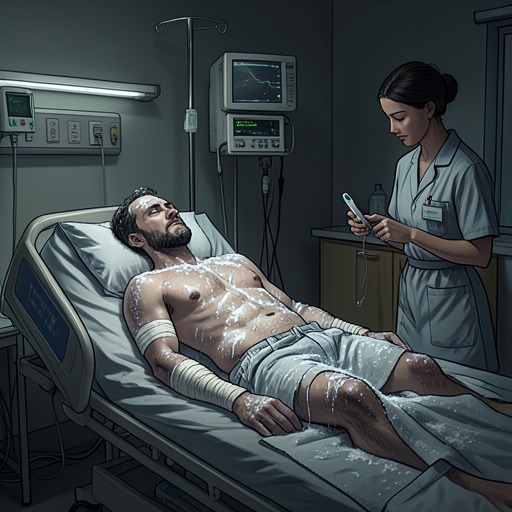
When the USCGC Tornado rescued Nick, thirst remained one of his clearest symptoms. The crew dried him, removed his wet clothing, dressed him in Coast Guard coveralls, and wrapped him in wool blankets. His temperature was 89.5 degrees, far below the normal 98.6; he was breathing with some difficulty, his lips were turning blue, his skin was cool and clammy, and he appeared to be entering the early stages of shock. The minor cuts on his legs felt worse because of the salt water, but the more serious threat was the interaction between fluid depletion and low body temperature.
The rescue team could not simply give him unlimited water. Adam Best administered only small sips because excessive drinking might make Nick vomit and worsen the dehydration or push him toward shock. Nick repeatedly demanded water, while Best insisted that he take it slowly. This controlled rehydration shows that dehydration had become a medical problem requiring management rather than a thirst that could be immediately quenched.
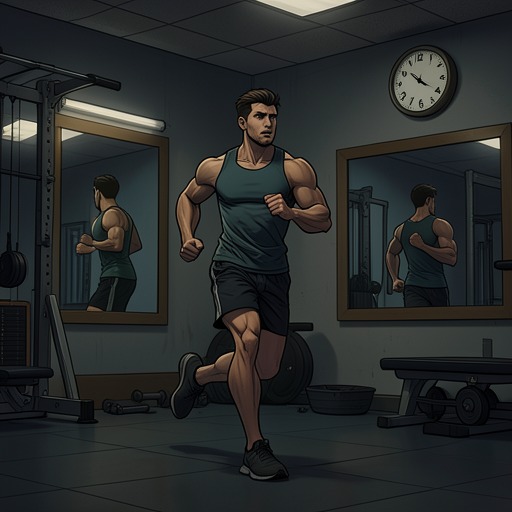
In the hospital, Nick drank large amounts of water, but the damage was still evident. His first urination burned severely and was dark yellow, confirming the intensity of the fluid loss. His legs were badly bruised and swollen, his ankles were twice their normal size, and his tissues were so tender that even treatment intended to improve circulation caused pain. His body had visibly atrophied: the arms that had represented his profession as a personal trainer had become thin and weak, and the ordeal had stripped away much of the physical condition he had built.
Significance in the Survival Narrative
Dehydration gives the survival story its physiological clock. It explains why thirst, dry mouth, nausea, cramping, altered speech, aggression, confusion, and weakness appear in succession, and why the men’s athletic identities could not protect them from the sea. Marquis Cooper’s exceptional strength and football conditioning did not make him immune; indeed, his muscular build and low body fat could increase the burdens of flotation and heat loss. Nick’s fitness helped him push through pain, but it also left him with little insulation, making perseverance a psychological and behavioral resource rather than a guarantee of physical safety.
The condition also complicates the language of willpower. Nick’s promise to Will that he would not let him die expresses loyalty and resistance, but the narrative’s medical account insists that the dead men were not defeated by a lack of courage. Their bodies were being altered by cold, salt water, fluid loss, and cardiac danger. Dehydration therefore functions as both a concrete medical state and a corrective to simplistic moral judgments: survival is shown as the outcome of shifting physical variables, improvised choices, clothing, body composition, effort, and chance, not merely of who wanted to live more strongly.
Nick’s later guilt grows within that distinction. He wondered why the NFL players had died while he and Will survived, and why two white men lived while two Black men died, fearing that others might turn the outcome into a racial incident. The medical explanation does not erase the question, but it resists the idea that Nick caused the deaths. Dehydration and hypothermia made the men vulnerable at different rates, while Nick’s jacket, continued movement, refusal to stop, and ability to receive carefully controlled water helped carry him beyond the point at which the others could no longer recover.